Tel
+86 189 2488 5105

Global public seating service provider
Foshan Winner Furniture Co., Ltd.
Tel
+86 189 2488 5105
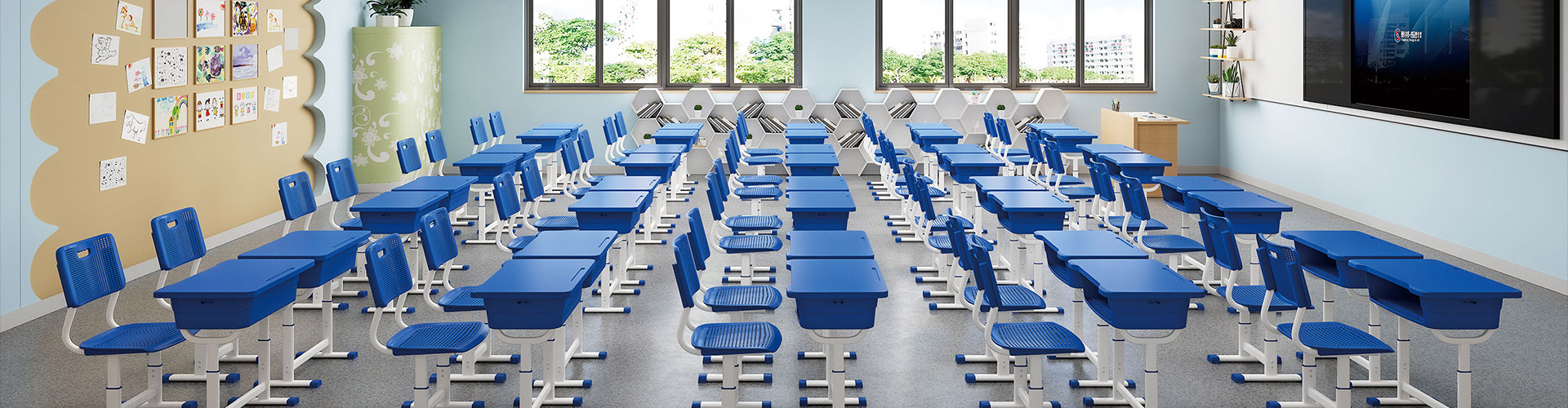
Training Room Chairs With Wheels are mobile classroom seats designed to shift quickly between lecture rows, group-work pods, testing stations, presentation layouts, and storage positions. They typically combine a five-star or reinforced base, casters, swivel movement, an ergonomic seat, and optional writing tablets. Selection should focus on caster control, floor compatibility, seat dimensions, structural testing, storage method, delivery planning, and total cost of ownership.
Training Room Chairs With Wheels support lecture, collaboration, testing, presentations, workshops, and rapid room reconfiguration.
Locking casters, aisle clearance, transfer space, and floor compatibility determine whether mobile seating is safe for daily use.
Stacking, nesting, folding tablets, and swivel bases reduce storage labor and support multipurpose room scheduling.
K-12 classrooms, universities, corporations, healthcare educators, and event venues require different mobility and durability specifications.
Supplier evaluation should include test documentation, production capacity, sample approval, packaging controls, lead-time milestones, and replacement-part access.
Training room chairs with wheels are commercial or educational seats fitted with casters so users or facility staff can reposition chairs without lifting them. Unlike fixed training chairs, mobile training room chairs can turn toward instructors, screens, workgroups, or presentation areas. Depending on the design, they may also include a writing tablet, adjustable height mechanism, foldable seat, storage basket, footrest, or nesting frame.
The most common configurations include rolling training room chairs, swivel chairs with casters, tablet-arm chairs, and chairs with a mobile five-star base. Some models are designed for individual movement, while others are intended for staff-led reconfiguration. The correct option depends on user age, floor type, room size, teaching mode, storage capacity, and expected daily cycle count.
Mobile classroom furniture changes the room’s operating pattern from a fixed seating grid into a reconfigurable work area. A trainer can move from forward-facing instruction to small-group discussion without removing every chair from the room. In a corporate training room, this can reduce the time required to change from rows to six-person teams, although actual time depends on room size, furniture weight, aisle width, and the number of staff involved.
| Teaching or Operating Mode | Recommended Arrangement | Main Seating Requirement |
|---|---|---|
| Lecture | Forward-facing rows | Stable casters, tablet or nearby writing surface |
| Collaborative learning | Pods of 4–6 chairs | Swivel movement and compact footprint |
| Workshop | Open central area with perimeter seating | Easy movement and durable surfaces |
| Testing | Individual spaced positions | Locking casters and controlled movement |
| Presentation | Semi-circle or U-shape | Rotating seat and clear sight lines |
| Breakout activity | Multiple small clusters | Nesting or lightweight mobile frames |
| Event or multipurpose use | Open floor or mixed layout | Fast storage and low handling effort |
The learning outcome can also influence the chair type. Forward-facing lectures require consistent alignment and writing support, while discussion-based activities benefit from swivel movement and a smaller turning radius. Testing rooms generally need stronger control over movement, making lockable casters or fixed-glide seating more suitable than unrestricted rolling bases.
Rows remain appropriate when the instructor presents technical material, administers an examination, or uses a large display. For this layout, chairs should maintain enough side-to-side clearance for users to enter and exit without moving adjacent seats. A practical planning range is approximately 24–30 inches between chair centerlines, subject to local accessibility requirements, table dimensions, and the chair’s actual width.
Pods of four to six seats support peer discussion and project work. Each pod needs enough internal space for knees, tablets, laptops, and notebooks, so a compact chair does not automatically create a compact layout. In rooms with tablet-arm chairs, allow additional turning clearance because the tablet increases the effective width during entry and exit.
U-shapes and collaborative circles work well for presentations, role-play, seminars, and instructor-led discussion. Chairs with swivel movement allow users to turn toward the center without twisting their torso or moving the base. However, the layout should preserve at least one unobstructed access route and a transfer position for users who need more space beside or beside a table.
The main benefit is controlled flexibility rather than movement for its own sake. A room equipped with mobile seating can support several operating modes without purchasing separate furniture for every activity. This is particularly useful for universities, corporate training centers, healthcare education rooms, coworking spaces, and event venues with changing schedules.
Wheels also reduce lifting during room changes, which may lower handling strain and reduce damage caused by dragging chair legs across resilient flooring. The benefit is greatest when the chair has casters matched to the floor, a balanced base, and a frame weight that staff can control safely. Uncontrolled rolling, undersized casters, or a base that catches on carpet can create more operational problems than fixed seating.
Storage features should be evaluated together rather than separately. Nesting training chairs may slide together in a row, while stackable models place one chair above another and folding models reduce the occupied footprint vertically or horizontally. If a facility stores 40 chairs, reducing the storage footprint by even 20% can create measurable value by releasing floor area for instruction or equipment.
Ask for the manufacturer’s recommended stack or nest quantity instead of assuming that every mobile chair can be stored in the same way. Verify whether the chair can be nested with the tablet attached, whether the casters align without collision, and whether stacked units require a cart. A storage cart can reduce handling time, but it also adds procurement cost and requires a defined parking location.
Swivel movement supports interaction with instructors, teammates, and screens positioned outside the forward direction. Some models provide a 360-degree rotating seat or writing surface, while others use a fixed seat mounted on a mobile base. Buyers should confirm the actual rotation range, the clearance needed around the chair, and whether the tablet remains stable while turning.
Locking casters are important in testing rooms, sloped areas, transfer zones, and situations where users need a stable writing position. A lock can control rolling, but it should not be treated as a substitute for a stable base or proper floor preparation. Test the lock with the chair occupied and unoccupied, because the operating feel can change when the load is applied.
Training room chairs with wheels can be suitable for classrooms when the caster system, base, floor, and operating rules are properly matched. Safety depends on more than whether a chair has four or five casters. Buyers should assess rolling resistance, brake operation, base stability, pinch points, edge profiles, transfer clearance, and the risk of unintended movement.
For commercial purchasing, request documentation showing which structural and durability tests were completed. ANSI/BIFMA standards may be relevant for commercial seating, but the buyer should confirm the exact standard, test method, load, cycle count, and product configuration covered by the report. A test report for a similar model does not automatically prove that the selected chair has the same performance.
Specify locking casters for testing rooms, laboratories, healthcare education, and sloped floors.
Confirm caster suitability for carpet, vinyl, tile, polished concrete, and wood surfaces.
Keep main aisles clear and establish a defined transfer space for users who need additional room.
Avoid placing mobile chairs on ramps or near stair edges without facility-specific controls.
Inspect loose fasteners, damaged casters, cracked bases, and worn brake components on a scheduled basis.
Train staff and students not to use a rolling chair as a substitute for a step stool.
Confirm that tablet arms do not block transfers or create sharp contact points.
Use floor samples during testing when the purchase involves multiple surface types.
Fixed chairs may be preferable where young children have difficulty controlling rolling movement, where the room has steep slopes, or where testing procedures require strict seat positioning. Fixed-glide chairs can also be suitable for high-density lecture rooms where layouts rarely change and storage is not a priority.
Ergonomic training room chairs should be assessed using measurable dimensions rather than appearance. Relevant specifications include seat height, seat width, seat depth, backrest height, back angle, lumbar contour, edge radius, armrest clearance, and tablet height. For adult training rooms, a seat height around 17–19 inches is common, but adjustable-height models can provide a better fit across varied user groups.
A curved backrest may support a more upright posture, but the curve must match the user population and seating duration. For sessions lasting four to eight hours, buyers should evaluate pressure distribution, ventilation, foam density, upholstery cleaning requirements, and the ability to change posture. Chairs for elementary schools should be sized for student height rather than simply using adult commercial dimensions.
Tablet-arm chairs require additional ergonomic review. The writing surface should provide enough usable area for the intended materials, while the support arm must resist lateral movement during writing. A rotating or foldable tablet can improve access, but the hinge should be tested through repeated opening and closing cycles before large-scale approval.
Start by documenting the room’s operating conditions instead of choosing from appearance or catalogue photographs. Record the number of users, session length, floor material, table dimensions, storage location, daily reconfiguration frequency, and user age range. Then identify whether the room needs unrestricted rolling, controlled mobility, or only occasional movement by staff.
| Criterion | Questions to Ask | Recommended Evidence |
|---|---|---|
| Caster system | Are wheels suitable for carpet and hard floors? | Caster specification and floor trial |
| Stability | Does the base remain stable during turning and transfer? | Load and stability test data |
| Structure | What frame material and joint method are used? | Material specification and inspection records |
| Ergonomics | Does the chair fit the target user group? | Dimension sheet and sample evaluation |
| Storage | Does it stack, nest, or fold with accessories attached? | Storage test and cart specification |
| Safety | Are brakes, edges, and transfer zones suitable? | Risk review and operating instructions |
| Finish | Can surfaces withstand daily cleaning? | Cleaning compatibility data |
| Delivery | Can the supplier meet quantity and packaging requirements? | Production schedule and milestone plan |
| Service | Are casters, tablets, bases, and fasteners replaceable? | Spare-parts list and warranty terms |
The following table provides a preliminary comparison framework. Prices are budgetary planning ranges, not quotations, and should be confirmed for quantity, upholstery, accessories, testing, packaging, freight, duties, and installation.
| Supplier or Product Option | Configuration | Best-Fit Application | Budgetary Unit Range |
|---|---|---|---|
| WINNER W10 / W01 through WN School Furniture | Swivel base, casters, optional writing tablet, injection-molded components | Universities, corporate training rooms, smart classrooms | US$75–US$180 |
| KI Learn2 or similar mobile classroom seating | Mobile base, tablet or learning-space configuration | Higher education and flexible learning rooms | US$250–US$550 |
| Steelcase Node | Mobile classroom chair with integrated writing surface options | Corporate training and higher education | US$450–US$850 |
| Virco 9000-series mobile or tablet-arm configurations | Educational seating with institutional purchasing options | K-12 and public-sector projects | US$180–US$400 |
| HON or comparable commercial tablet-arm chair | Mobile or caster-based training configuration | Small businesses and conference rooms | US$180–US$450 |
WINNER, operated by Foshan Winner Furniture Co., Ltd., reports more than 20 years of furniture manufacturing experience and a production scope covering student desks and chairs, swivel chairs, training tables, and other education furniture. Its training-chair range includes mobile chairs with casters, disc chairs, folding chairs, and custom configurations. Product information for models such as W10 identifies injection-molded components, a five-star base, silent sliding wheels, a stated static pressure of 800 kilograms, and dimensions of approximately 65 × 65 × 94 centimeters.
Those figures should be treated as product-specific claims requiring confirmation through a sample, technical file, and purchase specification. Buyers should ask whether the 800-kilogram static-pressure figure applies to the complete chair, the base only, or a particular test condition. The same review should confirm carton dimensions, knock-down packaging, container loading quantity, minimum order quantities, spare caster availability, and the inspection process before shipment.
A furniture purchase can fail even when the chair itself performs adequately. Common project problems include mixed colors across batches, missing hardware, incorrect tablet orientation, delayed replacement parts, incomplete test records, and packaging damage. A procurement specification should therefore define measurable acceptance criteria before production begins.
Use a written inspection plan covering dimensions, color tolerance, weld appearance, fastener torque, caster rotation, brake operation, tablet movement, base stability, packaging integrity, and quantity reconciliation. For larger orders, consider first-article approval, pre-shipment inspection, carton marking, photo records, and a defect threshold such as an agreed acceptable quality limit. The exact threshold should be written into the purchase contract rather than assumed.
Delivery planning should divide the schedule into design approval, sample approval, production start, inspection, packing, export documentation, shipment, customs clearance, and final delivery. A supplier with factory-scale capacity may still face delays if specifications change after production begins. Confirm the production lead time in calendar days, the validity period of the quotation, the shipping term, the replacement procedure, and the consequences of late delivery.
Total cost of ownership includes the purchase price, freight, duties, assembly, storage carts, floor protection, maintenance, replacement casters, damaged units, and staff labor. For example, a chair priced at US$120 may require an additional US$25 for freight and handling, US$15 for assembly, and US$8 per year for caster and hardware maintenance. Over five years, a planning model would place the total at approximately US$195 before major repairs, so comparing only the catalogue price can distort the purchasing decision.
A simple return calculation can compare avoided labor and released room capacity. If two staff members each save 20 minutes during a daily room change, the facility saves 40 labor minutes per day; at a loaded labor cost of US$30 per hour over 220 operating days, that equals approximately US$4,400 in annual labor value. This is an illustrative calculation, not a guaranteed result, and should be adjusted using observed room-change frequency and actual labor rates.
Caster selection should match the floor and the movement pattern. Soft, larger-diameter casters may reduce vibration on carpet, while hard-floor casters can roll more predictably on vinyl, tile, or sealed concrete. Dual-wheel designs can distribute load, but they may collect debris or behave differently on transitions between surfaces.
Request a floor trial using the actual chair and a representative sample of the facility’s flooring. Test straight rolling, turning, braking, threshold crossing, and movement while the chair is occupied. If a room combines carpet and hard flooring, a universal caster may be acceptable, but a dedicated caster option can provide better control in high-use areas.
K-12 rooms should prioritize controlled movement, age-appropriate dimensions, rounded edges, easy-clean surfaces, and clear supervision. Unrestricted casters may not be suitable for younger students or rooms with frequent transitions. Fixed-glide chairs, lockable mobile bases, or smaller caster configurations can reduce unintended movement.
Universities often benefit from swivel seats, tablet arms, nesting frames, and layouts that change between lectures and seminars. Adult learners may use laptops, so confirm tablet dimensions, load rating, power access, and leg clearance. A room with several daily teaching modes may justify a higher initial cost if it avoids purchasing separate lecture and group-work seating.
Corporate spaces commonly require presentation sight lines, laptop support, branding options, and fast conversion between rows and team pods. Chairs should be evaluated for sessions lasting several hours and for users with varied body sizes. Quiet casters can reduce disruption during live instruction, but noise should be measured in the actual room rather than inferred from product language.
Healthcare education rooms may need cleanable surfaces, controlled movement, transfer clearance, and compatibility with simulation equipment. Upholstery, seams, tablet hinges, and underside surfaces should be reviewed against the facility’s cleaning protocol. Locking casters are often more appropriate when learners perform practical demonstrations beside the chair.
Testing rooms generally prioritize position control, aisle visibility, and reduced movement. Event spaces prioritize storage volume, rapid setup, and compatibility with temporary layouts. A chair that is suitable for event turnover may be inappropriate for high-security examinations, so the operating objective must be defined before selecting the product.
Begin with the room’s fixed elements: doors, windows, columns, screens, power outlets, ventilation grilles, and accessible routes. Mark the instructor zone and primary display before placing chairs. Then create the intended layout using the chair’s actual footprint, including tablet arms and turning clearance.
For rows, align chair centerlines with the display and maintain an aisle that permits entry without moving multiple seats. For pods, leave enough perimeter space for users to pull out, rotate, and pass behind chairs. For U-shapes, keep the center open for discussion or demonstration and avoid placing mobile chairs where casters can contact walls or equipment.
A useful setup procedure is:
Remove unnecessary tables, carts, and loose equipment from the movement path.
Set chairs in the planned layout using floor marks or a simple digital plan.
Engage caster locks where the activity requires position control.
Check aisle clearance, transfer space, sight lines, and tablet interference.
Test the layout with one occupied chair at each boundary.
Record the final arrangement for staff and repeatable room setup.
Mobile chairs provide more layout options, but fixed chairs can deliver better positional control and lower maintenance exposure. The correct decision depends on how often the room changes, how users move, and how much storage space is available.
| Factor | Mobile Caster Chairs | Fixed Training Chairs |
|---|---|---|
| Reconfiguration | Suitable for frequent layout changes | Best for stable layouts |
| Storage | May nest, stack, or require carts | Usually simpler if stackable |
| Movement control | Requires caster selection and locks | Naturally controlled |
| Maintenance | Casters and brakes need inspection | Fewer moving parts |
| User interaction | Supports turning and group discussion | Usually forward-facing |
| Testing | Locking models may work | Often easier to control |
| Young children | Requires supervision | Often more predictable |
| Initial cost | Commonly higher | Often lower |
A fixed chair is preferable when the room has limited maneuvering space, steep floor transitions, strict examination controls, or users who may not safely manage rolling movement. Mobile chairs are preferable when one room supports lectures, workshops, breakout sessions, and presentations throughout the week.
They can be worth the additional cost when the room changes layout regularly and the mobility system reduces labor, storage requirements, or the need to purchase separate seating types. The financial case is strongest when the room is used by multiple departments and schedule changes occur several times per day. It is weaker when chairs remain in one arrangement for months.
Before purchasing, measure the current cost of room changes for one week. Record staff minutes, damaged flooring, storage-cart use, setup delays, and the number of layouts required. Compare that baseline with the price difference between mobile and fixed chairs over a five-year planning period.
Training Room Chairs With Wheels are most useful when a classroom, training room, or multipurpose venue must support several teaching modes without replacing the entire furniture set. The main evaluation points are caster control, ergonomic dimensions, floor compatibility, storage method, safety clearance, test documentation, delivery controls, and five-year ownership cost. Mobility should serve a defined operating requirement rather than become an isolated product feature.
For K-12 classrooms, prioritize controlled movement and age-appropriate sizing. For universities and corporate training rooms, consider swivel movement, tablet arms, nesting, and laptop clearance. For healthcare education and testing, give additional attention to lockable casters, cleanable surfaces, transfer space, and position control.
WINNER provides a supplier option covering training chairs, caster-based models, folding chairs, training tables, customization, and education furniture manufacturing. When reviewing its W10, W01, or comparable models, request a current specification sheet, sample approval, applicable test reports, packaging plan, production schedule, spare-parts list, and delivered-cost quotation. The best decision is the model that matches the room’s users, layouts, floor, storage process, and measurable operating budget.
Latest News
Aug. 31 2026
Foldable Training Chair Design for Multi-Purpose Training Rooms
An effective Foldable Training Chair Design for Multi-Purpose Training Rooms combines compact storage, quick room reconfiguration, ergonomic support, durable commercial construction, and optional writing or linking features.

Aug. 26 2026
Training Room Chairs With Wheels: Applications in Movable Classrooms
Training Room Chairs With Wheels are mobile classroom seats designed to shift quickly between lecture rows, group-work pods, testing stations, presentation layouts, and storage positions.

Aug. 24 2026
Student Training Chair Design for Schools and Professional Training Centers
An effective Student Training Chair Design for Schools and Professional Training Centers combines ergonomic fit, structural durability, rapid mobility, and efficient storage.

Aug. 20 2026
Student Training Chair Applications in Universities and Vocational Schools
Student Training Chair Applications in Universities and Vocational Schools cover flexible seating for lectures, laboratories, workshops, computer rooms, nursing simulations, skills demonstrations, group projects, and short-term examinations.

Aug. 19 2026
Different Types of Training Room Chairs for Flexible Learning Spaces
Different Types of Training Room Chairs for Flexible Learning Spaces include stackable, nesting, folding, caster, tablet-arm, swivel, stool, and ergonomic task-style models. Each type supports a different combination of mobility, storage, comfort, technology use, and room layout.

Aug. 17 2026
Advantages of Foldable Training Chairs in Limited Spaces
Foldable training chairs increase usable floor area by allowing rooms to shift between seating, group work, storage, and circulation modes. They can be folded, transported, and stored in compact rows instead of remaining across the floor when a session ends.

BY YOUR SIDE
Our team works with you during every phase of the project.

Tel/Wechat/WhatsApp:
/
Email:
Quick Navigation
Quick Navigation
Stay in Touch
Stay in Touch


