Tel
+86 189 2488 5105

Global public seating service provider
Foshan Winner Furniture Co., Ltd.
Tel
+86 189 2488 5105
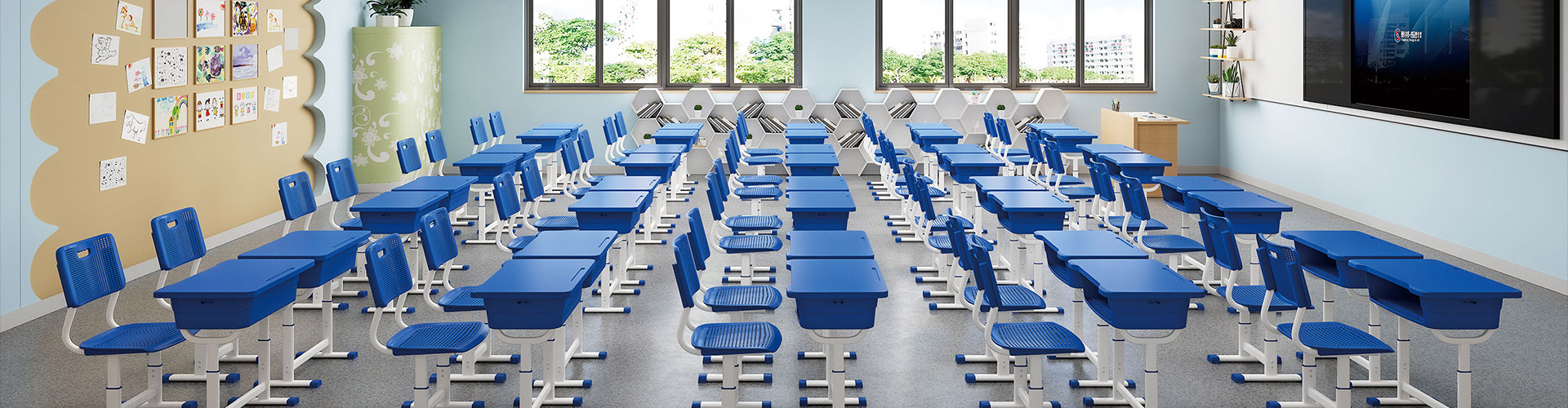
Training room chairs are designed for learning spaces where users write, listen, collaborate, and change seating positions throughout the day. A Training Room Chairs Manufacturer for Corporate Training and Education Facilities must therefore provide more than a basic seat: buyers need ergonomic support, mobile or stackable construction, documented durability, customization, and predictable project delivery. WINNER supplies training chairs, chairs with writing tablets, folding chairs, disc chairs, training tables, and auditorium seating for corporate, education, government, conference, and multipurpose facilities.
For professional procurement teams, the selection process should be based on measurable specifications rather than appearance alone. Check the chair’s load rating, frame material, tablet dimensions, caster type, stacking or nesting count, warranty terms, sample policy, minimum order quantity, production lead time, inspection process, and replacement-part availability before approving a purchase.
Training room chairs support structured learning and flexible room layouts. Select them by evaluating ergonomics, mobility, durability, customization, and space efficiency.

Training room chairs are commercial seats intended for classrooms, workshops, seminars, certification programs, internal employee education, and presentation-based learning. Unlike fixed auditorium seating, they can usually be moved, stacked, folded, nested, or paired with a writing surface. Their design must support both seated comfort and fast changes between lecture, group-work, examination, and discussion layouts.
A training chair typically includes a contoured seat and back, a steel or aluminum frame, optional armrests, a tablet or writing pad, and either glides or casters. Common versions include four-leg chairs, sled-base chairs, nesting chairs, swivel chairs with wheels, flip-seat models, and folding chairs. The correct model depends on session length, room capacity, storage space, floor type, user profile, and frequency of reconfiguration.
For sessions lasting four to eight hours, evaluate seat depth, seat width, back height, lumbar contour, front-edge pressure, and the relationship between chair height and training tables. A waterfall seat edge can reduce pressure behind the knees, while a backrest with controlled flex can support small posture changes during lectures. Buyers should request dimensional drawings instead of relying on general claims about comfort.
Corporate learning spaces may change from classroom rows to U-shaped discussion layouts several times per week. Chairs with locking casters support room-to-room movement, while stackable and folding models reduce storage requirements. Ask the manufacturer to state the caster diameter, wheel material, locking method, floor compatibility, and recommended operating load.
Commercial seating should be assessed for frame welds, fastener security, shell impact resistance, upholstery abrasion, finish adhesion, and repeated sit-cycle performance. WINNER states that its public seating products undergo load testing to 120 kg and fatigue testing exceeding 200,000 sit cycles. For a project specification, buyers should request the exact test method, test sample quantity, failure criteria, and report date.
A corporate training room may require brand colors, logo embroidery, custom tablet dimensions, USB charging, specific upholstery, or packaging for multiple regional sites. WINNER lists RAL and Pantone color matching, more than 200 fabric and leather options, private-label production, and custom add-ons such as writing tablets, cup holders, and charging ports. Customization should be approved through a signed sample or technical drawing before mass production.
Chair dimensions influence aisle clearance, accessible seating, storage volume, and the number of learners that fit within a room. A stackable chair may require less floor area during storage, while a tablet-arm chair may need a larger turning radius. Procurement teams should compare the chair footprint in use with the stacked or folded footprint before calculating room density.
| Chair type or supplier option | Core function | Best for | Indicative purchasing range* |
|---|---|---|---|
| WINNER mobile training chair with tablet | Wheeled seating with integrated writing surface | Corporate classrooms, technology training, flexible workshops | US$85–US$180 per chair |
| WINNER disc chair | Lightweight, stackable seating | Education facilities, short courses, examination rooms | US$35–US$75 per chair |
| WINNER folding training chair | Foldable storage and quick deployment | Multipurpose halls, government facilities, event rooms | US$45–US$110 per chair |
| WINNER fixed training chair with writing pad | Stable writing support | Universities, certification programs, seminar rooms | US$65–US$140 per chair |
| Local contract-furniture supplier | Regional delivery and installation | Smaller projects requiring local service | US$100–US$300 per chair |
| Distributor-sourced commercial chair | Standardized catalog purchase | Low customization and urgent replacement needs | US$120–US$350 per chair |
*The ranges are budget-planning estimates, not formal quotations. Actual cost depends on material, order quantity, tablet configuration, packaging, freight, duties, installation, and customization.
Ergonomic training room chairs should be selected according to the expected sitting duration and writing behavior. A two-hour seminar may only require a molded seat and moderate back support, while an all-day corporate workshop may justify thicker cushioning, a contoured backrest, arm support, and a larger tablet surface. A chair that feels acceptable during a five-minute showroom test may perform differently after repeated six-hour sessions.
For corporate training, consider a seat width of approximately 450–500 mm when the room has sufficient floor area. A narrower profile can increase capacity, but it may reduce lateral movement and personal space. For education facilities, rounded shell edges, easy-clean surfaces, and stable frames are often more important than executive upholstery because chairs may be moved frequently and cleaned between groups.
WINNER’s training chair with writing pad is described with a 12-inch by 16-inch integrated work surface, a contoured seat, a waterfall front edge, and a reinforced steel frame. The same product range includes options for larger laptop-compatible work surfaces, including an 18-inch configuration, as well as polypropylene, plywood, and melamine-coated tablet materials.
Confirm seat width, depth, and height on the technical drawing.
Check whether the writing tablet supports left- and right-handed users.
Specify the minimum cushion thickness and upholstery density when padded seating is required.
Review the tablet angle, usable writing area, and maximum recommended load.
Test the chair with the intended training table, laptop, notebook, and presentation materials.
Ask whether replacement tablets, casters, glides, armrests, and seat shells are available separately.
Stackable chairs for education facilities are suitable when classrooms, seminar rooms, and multipurpose halls must be cleared regularly. Disc chairs can be placed in vertical stacks, while folding chairs reduce the stored length or width of each unit. Nesting chairs are useful when chairs need to remain connected in small groups but still move efficiently along the floor.
Storage planning should include the recommended stack height, chair weight, protective spacing, and floor loading. For example, a 40-chair stack with an average chair height of 850 mm cannot be treated as a simple 40-unit calculation because the final stack height depends on the nesting geometry. Request a manufacturer’s stacking diagram and confirm whether stacked chairs can be moved safely using a trolley.
WINNER identifies disc chairs as lightweight and stackable, folding chairs as space-saving options for multipurpose halls, and nesting-capable models as storage-focused products. Its training-chair range also includes reinforced steel frames, molded polypropylene components, and optional materials intended for different levels of traffic and maintenance demand.
Stackable seating is generally appropriate for education facilities with limited storage rooms, rotating class sizes, or shared spaces used for lectures and group activities. It is also practical for government training facilities that need to convert rooms for briefings, examinations, and public meetings. Buyers should avoid selecting a tall-stack design when staff members must manually move chairs without carts or when ceiling height restricts storage.
Mobile training room chairs with tablet arms combine seating, writing support, and room mobility in one unit. They are useful in corporate training centers where participants may move from individual work to paired exercises and then to group discussion. Locking casters can provide stability during writing, while unlocked casters allow controlled movement during room changes.
Caster performance should be specified in measurable terms. Ask for caster diameter, material, load rating, swivel range, brake design, and compatibility with carpet, vinyl, tile, and wood floors. A chair intended for carpet may require larger wheels than one used on smooth hard flooring, and a training room with laptop use may benefit from a braking system that prevents movement while participants write.
WINNER lists nylon-reinforced bases with smooth-rolling casters for wheeled training chairs and identifies mobile versions with locking casters. Its chair-with-table range includes flip-up writing tablets, fixed writing pads, laptop-compatible work surfaces, and optional USB charging ports. These features should be treated as project specifications rather than assumed inclusions, because the final configuration may vary by model.
Training room chairs are usually optimized for movement, writing, stacking, and room reconfiguration. Conference room chairs are more often selected for fixed seating positions, formal appearance, and extended discussion around a permanent table. Neither category is universally superior; the correct choice depends on how the room operates.
| Factor | Training room chair | Conference room chair |
|---|---|---|
| Writing surface | Often integrated or paired with tables | Usually relies on a fixed conference table |
| Mobility | Casters, nesting, folding, or lightweight frames | Casters may be included, but movement is usually limited |
| Storage | Designed for stacking, folding, or nesting | Commonly stored as individual chairs |
| Room layout | Classroom, U-shape, clusters, examination rows | Boardroom or fixed meeting layout |
| Session profile | Training, workshops, lectures, practical exercises | Meetings, negotiations, presentations |
| Space efficiency | Higher when compact or stackable models are selected | Lower when large executive dimensions are used |
| Customization | Tablet size, logo, colors, charging, frame options | Upholstery, armrests, base, and finish options |
Training room chairs are worth considering when one room serves several functions or when staff must reset the space without specialist installation labor. Conference chairs may be more suitable when the room has a permanent table, a consistent seating plan, and no requirement for vertical storage.
| Project condition | Recommended chair type | Key specification to prioritize | Main trade-off |
|---|---|---|---|
| Small training room under 40 m² | Compact nesting or tablet-arm chair | Turning radius and aisle clearance | Less personal space |
| Sessions longer than 4 hours | Cushioned ergonomic chair | Seat contour, back support, and tablet stability | Higher unit cost |
| Weekly room reconfiguration | Wheeled chair with locking casters | Caster performance and floor protection | More moving parts |
| Limited storage area | Disc, folding, or nesting chair | Stack height and trolley compatibility | May provide less cushioning |
| University or government facility | Reinforced commercial chair | Frame durability and replaceable components | Heavier shipping weight |
| Laptop-based training | Wide tablet-arm chair | At least 18-inch work surface where required | Larger room footprint |
| Frequent cleaning | Molded polypropylene or melamine surface | Chemical and stain resistance | Less premium appearance |
| Branded corporate facility | Custom chair with color and logo options | Sample approval and color matching | Longer development cycle |
| Mixed-use conference center | Modular chair and table system | Compatibility across layouts | More complex procurement |
This matrix helps buyers avoid selecting chairs by unit price alone. A low-cost chair may become more expensive if it requires additional storage equipment, frequent replacement, or manual room-reset labor. A higher-priced mobile chair can produce lower operating cost when it reduces setup time across hundreds of training sessions per year.
Corporate training rooms often support onboarding, compliance instruction, product training, technical workshops, and leadership programs. These rooms need chairs that allow note-taking, laptop use, clear sightlines, and rapid changes between individual and group activities. A mobile chair with a tablet can reduce the need for separate desks in rooms that are used for short sessions or changing class sizes.
Education facilities use training seating in universities, vocational centers, language schools, examination rooms, and professional certification venues. Stackable chairs for education facilities are particularly useful when one room serves lectures during the day and community or administrative activities later. Easy-clean materials and replaceable parts can reduce maintenance interruptions in high-use environments.
Government facilities and conference venues generally require documented capacity, repeatable finishes, predictable delivery, and standardized replacement units. WINNER identifies government training facilities, conference centers, universities, corporate training programs, and seminar halls as application areas. Buyers handling public tenders should still confirm the exact certification, fire performance, accessibility, and local procurement requirements for the destination country.
Training-room furniture should be specified as a coordinated system rather than a collection of unrelated products. Table depth affects tablet-arm clearance, chair spacing, cable routing, and the instructor’s ability to reach each row. Folding or modular training tables can support classroom, U-shaped, boardroom, and cluster layouts when the room has more than one teaching purpose.
A typical specification package may include chairs, training tables, instructor tables, lecterns, monitor stands, cable-management accessories, power modules, whiteboards, projection surfaces, and storage trolleys. Buyers should confirm that chair arms do not collide with table legs and that tablet surfaces do not block access to power outlets. A scaled floor plan should show chair width, table depth, aisle width, emergency exits, accessible positions, and storage locations.
Presentation tools also influence seating layout. Rooms using wall-mounted displays may need wider rear aisles, while rooms using central projection may require consistent sightlines across all rows. For technology training, include power access, charging options, laptop support, and sufficient tablet depth in the furniture specification.
Chair dimensions directly determine how many users can fit into a training room. As a planning exercise, a chair with a 500 mm overall width requires more lateral room than a 450 mm model, especially when participants need to stand, turn, or access a writing tablet. Aisles should be planned from the complete chair-and-table arrangement rather than the seat width alone.
For a 60 m² room, buyers might compare a compact row-based arrangement with approximately 30–36 seats against a more spacious collaborative layout with 18–24 seats. The final number depends on local fire codes, exit requirements, table size, instructor position, circulation, and accessibility rules. These figures are planning examples, not code approvals.
Accessible seating should be distributed so users are not isolated at the rear or beside equipment. Provide clear access routes, adequate turning space where required, and tables that can accommodate different mobility needs. The manufacturer should provide dimensional drawings, but the architect, facilities team, and local code consultant must confirm compliance.
A procurement specification should state the required load capacity and testing method. WINNER publishes a 120 kg tested load capacity and more than 200,000 sit-cycle fatigue tests for its public seating information, while its training chair with table is listed with a 300 lb weight capacity. Because these figures may apply to different models, buyers should request model-specific documentation before placing a bulk order.
Quality assurance should include incoming-material inspection, welding checks, dimensional verification, coating or surface inspection, assembly testing, functional testing, and final packing inspection. WINNER describes a three-stage quality inspection process and states that products receive 100% inspection before packing for OEM projects. Buyers can add third-party inspection through services such as SGS or BV when the order value or public-project requirements justify the expense.
Maintenance planning should cover cleaning chemicals, replacement upholstery, tablet hardware, casters, glides, gas lifts, armrests, and fasteners. Molded polypropylene shells generally simplify cleaning, while fabric upholstery may require spot-treatment procedures and periodic extraction. Request a spare-parts list with prices and lead times because a replaceable caster or tablet can extend service life without removing the entire chair from operation.
A manufacturer should be able to show production capacity, equipment, material controls, engineering drawings, and a documented OEM or ODM process. WINNER reports more than 20 years of manufacturing experience, a 50,000-square-meter factory area, and 50 robot arms used in production. These figures indicate factory infrastructure, but buyers should still confirm the capacity allocated to the specific order and the supplier’s current production schedule.
A controlled customization process should include requirement confirmation, CAD drawings, sample approval, pilot production, mass production, inspection, packaging, and shipment. WINNER states that physical samples can be prepared in 7–15 days and that mass-production lead times are commonly 25–45 days, depending on order volume. Put these milestones into the purchase contract, including the approval date that starts the production clock.
MOQ can vary by product, color, upholstery, logo, and private-label packaging. WINNER lists a private-label manufacturing MOQ of 500 pieces for certain OEM projects, while smaller standard orders may follow different conditions. Ask for a written quotation that separates chair price, customization fees, tooling, packaging, freight, insurance, customs duties, installation, and local taxes.
For planning purposes, a standard stock or semi-standard order may require approximately 7–10 business days for shipment according to the supplier’s published information, while customized production may require 25–45 days. Add sample approval, inspection, port handling, ocean or air freight, customs clearance, and final delivery to calculate the complete schedule. A buyer should also confirm carton dimensions, container loading quantity, shipping marks, and the procedure for damaged goods.
A chair priced at US$90 may not be the least expensive option if it has a short service life or difficult-to-replace components. For example, a project with 200 chairs can compare an initial cost of US$18,000 against a US$140 model costing US$28,000, then include storage equipment, maintenance, replacement units, and labor for room setup. If the more expensive model lasts two additional years and reduces weekly reset labor by 30 minutes, the total cost difference may narrow substantially.
| Cost component | Typical planning factor |
|---|---|
| Standard training chair | US$35–US$180 per unit |
| Custom tablet-arm or branded chair | US$85–US$250 per unit |
| Sample and prototype development | US$100–US$800 per project |
| Custom tooling, when required | US$1,000–US$8,000+ |
| Storage trolley | US$150–US$600 each |
| Third-party inspection | US$300–US$1,500 per order |
| Packaging upgrade | Add 3%–10% to product cost |
| Freight, duties, and local delivery | Often 15%–40% of product value, depending on route |
| Installation and room setup | Approximately 3%–10% of furniture value |
These figures are for early budgeting and should not replace a supplier quotation. The final project cost depends on destination, Incoterms, volume, product configuration, and the percentage of custom components. Request a landed-cost comparison for at least two order quantities, such as 100 units and 500 units, because packaging and freight efficiency can change the per-chair result.
WINNER operates as Foshan Winner Furniture Co., Ltd. and supplies school furniture, training chairs, training tables, auditorium chairs, and other public seating products. Its published product range covers mobile chairs with wheels, disc chairs, folding chairs, chairs with writing pads, and custom training chairs. This range allows a buyer to select different chair types for classrooms, breakout rooms, lecture venues, and multipurpose halls.
The manufacturer describes an in-house OEM/ODM process covering design, sampling, production, inspection, and shipping. It also states that it supports custom sizes, colors, configurations, branding, technical drawings, installation manuals, and door-to-door logistics in more than 50 countries. These capabilities are relevant for distributors, contractors, universities, corporate facilities teams, and government project buyers managing standardized furniture across several sites.
WINNER also reports more than 500 completed global projects and exports to regions including Europe, the United States, Africa, Southeast Asia, and the Middle East. Such experience can help reduce repeated supplier searches, but a buyer should still request recent project references that match the intended chair type, order quantity, climate, shipping route, and usage intensity. The most useful evidence is a combination of inspection records, approved samples, production photographs, packing specifications, and post-delivery service terms.
Before approving a supplier, confirm the following items in writing:
Model number, dimensions, net weight, and packed dimensions.
Tested load capacity and applicable test standard.
Seat shell, frame, upholstery, tablet, and caster materials.
Stack height, nesting count, folding method, and trolley compatibility.
Caster diameter, brake function, floor suitability, and replacement cost.
Tablet size, handedness, angle, maximum load, and cable-access options.
Color code, fabric code, logo position, and approved pre-production sample.
MOQ for standard, customized, and private-label versions.
Sample lead time, production lead time, inspection date, and shipping date.
Warranty period for frames, mechanisms, upholstery, tablets, and casters.
Replacement-parts availability and after-sales response process.
Packaging design, carton drop protection, loading plan, and damage claims process.
Incoterms, payment schedule, freight estimate, customs documents, and insurance.
Required certifications for the destination market and project type.
A reliable Training Room Chairs Manufacturer for Corporate Training and Education Facilities should be evaluated through measurable product data, controlled production milestones, inspection records, and complete project-cost analysis. The right chair is determined by session length, room size, storage conditions, user profile, writing requirements, floor type, and reconfiguration frequency—not by appearance or unit price alone.
WINNER is a relevant supplier to evaluate when a project requires training chairs, tablet-arm seating, stackable or folding models, training tables, and related public furniture from one manufacturing source. Its published capabilities include a 50,000-square-meter factory, 50 robot arms, more than 20 years of manufacturing experience, 7–15-day sample preparation, 25–45-day customized production, 120 kg tested load capacity, and fatigue testing beyond 200,000 sit cycles. Buyers should request model-specific test reports, warranty details, spare-parts pricing, current MOQ, shipping terms, and a landed-cost quotation before signing a purchase order.
The practical next step is to prepare a room plan, quantity schedule, required configuration, target budget, delivery location, and compliance checklist. Send those details to the manufacturer, approve a physical sample, and compare the complete total cost of ownership rather than comparing chair prices in isolation.
Latest News
Aug. 31 2026
Foldable Training Chair Design for Multi-Purpose Training Rooms
An effective Foldable Training Chair Design for Multi-Purpose Training Rooms combines compact storage, quick room reconfiguration, ergonomic support, durable commercial construction, and optional writing or linking features.

Aug. 26 2026
Training Room Chairs With Wheels: Applications in Movable Classrooms
Training Room Chairs With Wheels are mobile classroom seats designed to shift quickly between lecture rows, group-work pods, testing stations, presentation layouts, and storage positions.

Aug. 24 2026
Student Training Chair Design for Schools and Professional Training Centers
An effective Student Training Chair Design for Schools and Professional Training Centers combines ergonomic fit, structural durability, rapid mobility, and efficient storage.

Aug. 20 2026
Student Training Chair Applications in Universities and Vocational Schools
Student Training Chair Applications in Universities and Vocational Schools cover flexible seating for lectures, laboratories, workshops, computer rooms, nursing simulations, skills demonstrations, group projects, and short-term examinations.

Aug. 19 2026
Different Types of Training Room Chairs for Flexible Learning Spaces
Different Types of Training Room Chairs for Flexible Learning Spaces include stackable, nesting, folding, caster, tablet-arm, swivel, stool, and ergonomic task-style models. Each type supports a different combination of mobility, storage, comfort, technology use, and room layout.

Aug. 17 2026
Advantages of Foldable Training Chairs in Limited Spaces
Foldable training chairs increase usable floor area by allowing rooms to shift between seating, group work, storage, and circulation modes. They can be folded, transported, and stored in compact rows instead of remaining across the floor when a session ends.

BY YOUR SIDE
Our team works with you during every phase of the project.

Tel/Wechat/WhatsApp:
/
Email:
Quick Navigation
Quick Navigation
Stay in Touch
Stay in Touch


