Tel
+86 189 2488 5105

Global public seating service provider
Foshan Winner Furniture Co., Ltd.
Tel
+86 189 2488 5105
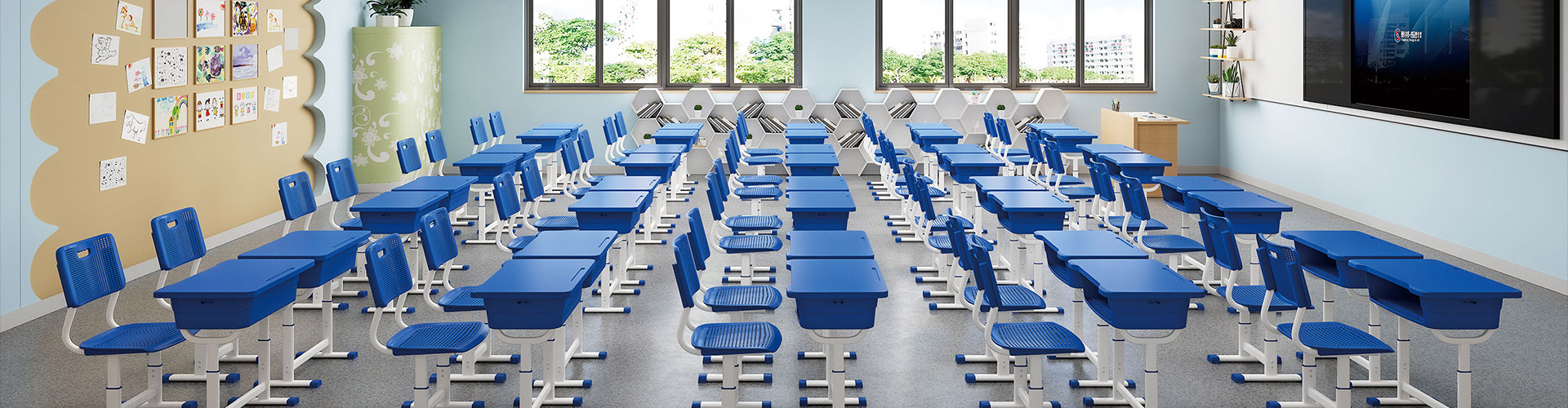
An effective Student Training Chair Design for Schools and Professional Training Centers combines ergonomic fit, structural durability, rapid mobility, and efficient storage. The design should support students and adults during extended writing or digital work, provide stable tablet or desktop compatibility, tolerate repeated daily use, and allow rooms to change from lecture rows to group layouts without excessive labor.

Effective student training chairs balance posture support, writing-surface access, mobility, storage efficiency, and institutional safety requirements.
Seat height, seat depth, backrest contour, and tablet-arm clearance determine comfort during extended classroom and workshop sessions.
Stackable, folding, wheeled, and swivel models serve different room-reconfiguration, storage, supervision, and cleaning requirements.
Schools should verify load capacity, frame thickness, stability, material composition, safety testing, warranty terms, and replacement-part availability.
WINNER offers training chair models for schools, universities, corporate training rooms, conference facilities, and government learning spaces.
Total ownership cost depends on purchase price, shipping volume, maintenance labor, repair frequency, storage space, and expected service life.
Student training chair design refers to the engineering of chairs used for classrooms, vocational schools, universities, adult learning centers, corporate training rooms, and other instructional environments. Unlike a basic visitor chair, a training chair is usually designed around writing, reading, tablet use, group discussion, frequent movement, and repeated room changes. It may include a tablet arm, storage basket, casters, swivel function, folding mechanism, or stacking geometry.
The main difference between a student training chair and a traditional classroom chair is the relationship between seating and learning activity. Traditional classroom chairs are often paired with fixed desks in rows, while training chairs may combine seating and writing support in one movable unit. A suitable design must still maintain stable four-point or multi-point floor contact, controlled movement, and adequate space for knees, bags, books, and electronic devices.
For schools, the chair must serve different body sizes, cleaning schedules, and supervision conditions. For professional training centers, it may need to support adults for workshops lasting four to eight hours, frequent seating changes, laptop use, and fast room turnover. The correct specification is therefore a procurement decision involving ergonomics, structural engineering, logistics, safety, and total cost of ownership.
Ergonomic classroom seating begins with the relationship between the user, the seat, and the writing surface. A practical adult training chair commonly uses a seat height of approximately 430–480 mm, while school environments may require several sizes or adjustable mechanisms for different age groups. The final height should allow the user’s feet to rest on the floor, knees to remain near a 90-degree angle, and forearms to reach the writing surface without raising the shoulders.
Seat depth should support the thighs without pressing behind the knees. A working range of approximately 380–460 mm can suit many student and adult applications, but buyers should compare the dimension with the intended user population. Seat width commonly falls between 400 and 500 mm, with wider options useful for adult learning rooms, vocational instruction, and users who require additional lateral space.
The backrest should support the lower and middle back without preventing natural movement. A slightly flexible polypropylene shell, molded backrest, or breathable mesh panel can reduce pressure during longer sessions, while a rigid panel may be suitable for short-duration classrooms with frequent movement. Backrest height, shell curvature, ventilation openings, and edge radius should be recorded in the technical schedule rather than left to visual judgment.
Writing-surface compatibility is equally important. Tablet arms should provide enough usable area for a notebook, writing instrument, and compact laptop, with a common working target of approximately 500–650 mm wide and 300–400 mm deep where room permits. The support should resist downward and lateral force, avoid sharp edges, and provide sufficient clearance for adult knees, especially when the chair is used with a fixed training table.
Flexible training room furniture should match the way the room is used. A lecture room with fixed rows may need tablet-arm chairs with narrow footprints, while a multipurpose classroom may benefit from chairs that stack, fold, or nest. Professional training centers often require three or more layouts in one day, such as classroom rows in the morning, a U-shape after lunch, and small project groups in the afternoon.
Casters support quick movement but require careful floor and stability assessment. A five-arm base with casters can provide smooth movement, while a tripod base may reduce weight and storage volume. Locking casters or load-activated braking systems can help prevent unintended rolling during writing, but buyers should confirm the mechanism’s serviceability and replacement cost.
Swivel bases support discussion and allow users to turn toward instructors, displays, or group members without lifting the chair. However, swivel mechanisms add components that may require inspection, lubrication, or replacement. For schools with limited maintenance staff, a simpler four-leg or sled-base chair may produce a lower long-term service burden.
Stackable training chairs are appropriate when the same room must be cleared regularly or when storage space is limited. Buyers should request the safe stacking quantity, stacked height per chair, recommended storage orientation, and maximum stack height for handling. A product that stacks 10 units at 90 mm per chair occupies approximately 900 mm before allowing clearance for a trolley, protective padding, or uneven floors.
The frame should resist deformation when chairs are repeatedly lifted and placed into stacks. Tubular steel with a powder-coated finish is common for institutional seating, while polypropylene shells can reduce weight and simplify cleaning. Floor glides should be replaceable and matched to the floor surface because worn glides can cause noise, scratches, and instability.
Folding chairs can reduce storage volume further, but hinges and locking points become inspection areas. A folding mechanism should include a positive lock, protected pinch points, and a visible confirmation that the chair is fully open. For high-frequency school use, stacking may be easier to supervise than folding if staff and students move the chairs repeatedly.
Material selection affects both service life and maintenance labor. Injection-molded polypropylene is often selected for student seating because it is non-porous, wipeable, and available in multiple colors, while steel frames provide a familiar structural solution for high-use rooms. Upholstered fabric may improve comfort but can increase cleaning time and may require stain-resistant treatment, removable covers, or replacement panels.
WINNER’s training chair range includes reinforced steel or aluminum frame options, polypropylene components, PU leather, fabric, and mesh upholstery depending on the model. One rotating training chair model uses polypropylene components and a 32 mm round steel pipe support with a 1.5 mm wall thickness, according to the listed product specification. This type of information should be confirmed for every selected model because frame dimensions vary across product families.
Cleaning protocols should be written before purchase. Non-upholstered shells can normally be cleaned with a neutral detergent and diluted disinfectant approved for the material, followed by drying with a soft cloth. Avoid unverified solvents, abrasive pads, and prolonged liquid exposure around fasteners, caster housings, tablet-arm joints, and exposed plywood edges.
A maintenance register should record chair count, inspection date, damaged components, repair action, and return-to-service date. A monthly visual inspection can identify loose fasteners, cracked shells, bent frames, unstable bases, damaged glides, and tablet-arm movement. In high-use facilities, a quarterly functional inspection is appropriate for casters, swivel joints, folding locks, and storage baskets.
A procurement team should convert design preferences into measurable requirements. The following checklist can be included in a tender document or supplier quotation request.
| Specification area | Recommended information to request |
|---|---|
| Seat height | Fixed or adjustable range in millimeters; intended age or user group |
| Seat dimensions | Width, depth, front-edge radius, and allowable dimensional tolerance |
| Backrest | Height, width, shell material, ventilation, flex behavior, and attachment method |
| Writing surface | Width, depth, tilt, load rating, handedness, edge radius, and clearance |
| Frame | Steel or aluminum grade, tube diameter, wall thickness, weld method, coating |
| Base | Four-leg, tripod, five-star, sled, swivel, caster type, and braking method |
| Load capacity | Static and dynamic load rating, test method, and safety factor |
| Stability | Anti-tip behavior, floor contact points, and testing documentation |
| Stackability | Safe stack quantity, stacked height, trolley compatibility, and handling weight |
| Safety | Pinch-point protection, rounded edges, chemical resistance, and fire requirements |
| Maintenance | Replaceable glides, casters, tablet parts, fasteners, and upholstery panels |
| Compliance | Applicable local standards, test reports, inspection records, and factory QC process |
| Logistics | Carton dimensions, units per container, lead time, Incoterms, and spare-parts ratio |
Load capacity should be stated as a tested figure rather than a general phrase such as “heavy-duty.” For adult training rooms, buyers may specify a minimum tested user load of 120–150 kg depending on institutional policy and applicable standards. The supplier should explain whether this is a static load, impact load, or repeated-cycle test, because the three measurements are not interchangeable.
Stability testing should cover forward, side, and rear loading, particularly for chairs with tablet arms or casters. Tablet-arm chairs should be tested with the writing surface loaded and the user seated at different positions. For school furniture, buyers should also check edge radius, entrapment risks, fastener access, and the presence of floor-contact materials that do not create excessive noise.
Applicable standards vary by market and product category. A project specification may reference ANSI/BIFMA seating standards for institutional or commercial seating, EN 1729 dimensions for educational furniture where relevant, and local fire, chemical, accessibility, or public procurement requirements. The purchaser should ask for the exact test report, model number, date, laboratory, and tested configuration rather than accepting a general certificate covering unrelated products.
| Chair category | Core function | Best for | Indicative unit price |
|---|---|---|---|
| Stackable four-leg training chair | Simple seating and efficient storage | Schools, exam rooms, multipurpose classrooms | $35–$95 |
| Folding training chair | Rapid storage and temporary layouts | Training halls, event rooms, community facilities | $45–$120 |
| Tablet-arm training chair | Integrated writing and device support | Universities, vocational classrooms, workshops | $70–$220 |
| Wheeled swivel training chair | Fast movement and collaborative learning | Corporate training centers, smart classrooms | $90–$280 |
| Premium mobile classroom chair | Adjustable worksurface and advanced mobility | Universities, executive learning rooms | $400–$1,255 |
| Custom OEM training chair | Project-specific color, dimensions, branding, or accessories | Distributors and large institutional projects | Quote required |
Prices vary with order volume, materials, packaging, upholstery, certification, shipping terms, and customization. A $70 chair with a 12-unit carton may have a different delivered cost than a $95 chair packed individually with replacement parts. Procurement teams should compare landed cost, not only the factory or catalog price.
The supplier comparison below is intended for early-stage budgeting. Prices are indicative planning ranges, not fixed offers, and every supplier should confirm current specifications, production capacity, shipping terms, and project conditions in writing.
| Supplier | Product positioning | Indicative pricing | MOQ or purchasing condition | Indicative lead time |
|---|---|---|---|---|
| WINNER Furniture | OEM/ODM school and training seating, including tablet-arm, rotating, wheeled, stackable, and customized models | $35–$180 per chair for many project configurations | Quote required; varies by model, color, and customization | Commonly 25–45 days after approved sample and deposit; confirm by project |
| Steelcase | Premium mobile classroom and corporate learning seating, including Node configurations | Approximately $800–$1,255 for listed premium configurations | Dealer or contract quotation; no public project MOQ generally stated | Often 8–16 weeks depending on configuration and region |
| Virco | Education-focused classroom and chair-desk products with institutional procurement channels | Approximately $100–$300 for many chair-desk or tablet-arm categories | Dealer, school contract, or project quotation | Often 4–12 weeks depending on inventory and configuration |
| Foshan Jiansheng Furniture Group | China-based school and university training furniture for bulk projects | Approximately $35–$100 for basic project models | Example project MOQ: 100 sets | Listed project delivery example: about 35 days |
| Regional contract furniture dealer | Local installation, warranty coordination, and compliance support | Approximately $150–$600 for institutional training chairs | Usually project-based quotation | Commonly 6–14 weeks |
WINNER Furniture, operated by Foshan Winner Furniture Co., Ltd., presents itself as a school furniture manufacturer with more than 20 years of manufacturing experience. Its listed product range includes school desks and chairs, training chairs, training chairs with tables, auditorium seating, rotating models, wheeled models, folding chairs, and custom configurations. The company also describes design, mold development, production, packaging, OEM, and ODM capabilities.
A quotation request to WINNER should include chair model, seat dimensions, shell material, frame finish, tablet-arm size, writing-surface load requirement, carton quantity, color, logo requirements, spare-parts ratio, destination port, and target delivery date. Buyers should also request pre-production samples, packing photographs, inspection records, and a parts list. For a project of 500 chairs, a spare-parts allowance of 1–3% for glides, fasteners, tablet-arm hardware, or casters can reduce service delays.
Steelcase is positioned at the premium end of the market, with the Node chair offering casters, swivel options, adjustable worksurfaces, tablet support, and multiple base configurations. Its published pricing tool shows a listed configuration at $1,255, placing it in a different budget category from direct-import school furniture. This type of product may suit institutions that prioritize dealer support, documented product systems, and extensive configuration options over minimum purchase price.
Virco focuses on education and institutional furniture categories, including chair-desks and training-oriented seating. Its procurement model is more commonly connected to dealer, school contract, or public-sector purchasing channels. This can simplify local support and installation, although the delivered price may include distribution, freight, and contract services that are not visible in a factory quotation.
Identify whether the primary users are children, teenagers, university students, vocational learners, or adults. Record average session duration, expected daily occupancy, use of laptops or tablets, and the number of room changes per day. A chair for a 45-minute school lesson does not need the same adjustment range or cushion specification as a chair used for an eight-hour professional workshop.
Measure room length, width, door clearance, storage area, aisle requirements, and accessible circulation routes. A training chair footprint of 550–650 mm wide can significantly affect capacity when used in rows, while chairs with casters may need additional clearance for movement. Confirm that stacked chairs can pass through doors, elevators, and storage corridors before selecting a large quantity.
Choose four-leg chairs for predictable row layouts, stackable chairs for frequent storage, folding chairs for event rooms, and castered swivel chairs for collaborative environments. Do not specify wheels simply because they appear flexible; wheels can increase cost, maintenance, and unintended movement. The correct choice depends on the balance between room reconfiguration speed, floor condition, supervision, and service capacity.
A sample should be tested by users representing the intended population. Check seat pressure, back contact, writing-surface position, elbow clearance, device stability, chair weight, movement noise, and ease of cleaning. If possible, conduct a two-hour trial with note-taking and laptop use rather than relying on a five-minute showroom impression.
Ask the supplier for material declarations, test reports, inspection procedures, coating information, weld inspection records, and packaging standards. A factory QC plan should identify incoming-material inspection, first-article approval, in-process checks, final assembly inspection, carton drop testing, and pre-shipment sampling. The purchase order should state tolerances and acceptance criteria for color, dimensions, hardware, and surface finish.
Use the following formula:
Total cost of ownership = purchase price + freight + import charges + installation + maintenance labor + replacement parts + storage cost − residual value.
For example, a $90 chair with $18 freight, $4 installation, and $8 expected maintenance over five years has a preliminary five-year cost of $120 before taxes and facility overhead. A $180 chair with lower repair frequency may produce a similar five-year cost if it reduces annual maintenance by $12 and remains serviceable for eight years.
The best chair for a training room depends on the room’s dominant activity. A stackable chair is usually suitable for rooms that change layouts occasionally and require compact storage, while a wheeled swivel chair is more suitable for collaborative instruction and frequent reconfiguration. A tablet-arm chair is practical when users need an individual writing surface without a full-size desk.
For professional training centers, prioritize seat comfort, back support, laptop clearance, caster control, and cable or bag management. For schools, prioritize rounded edges, cleanable surfaces, stable bases, appropriate seat heights, and replacement parts. The final selection should be based on a sample trial and room capacity calculation rather than a product photograph.
Training chairs with tablet arms are better when the room lacks fixed desks or must change between individual and group work. They reduce the need for separate tables and can increase layout flexibility, especially in universities, workshops, and adult learning centers. However, tablet arms add weight, cost, moving hardware, and a potential maintenance point.
The writing surface should be large enough for the intended activity and rated for the expected load. Buyers should verify whether the tablet is handed or reversible, whether it folds for storage, and whether the support interferes with entry or exit. In elementary classrooms, a separate desk may provide more writing space and better bag storage than a compact tablet arm.
Stackable chairs are generally better for storage efficiency, examination rooms, and multipurpose spaces where chairs are moved in batches. Wheeled chairs are better for rooms designed around group work, collaborative learning, and frequent individual repositioning. A hybrid facility may use stackable chairs in standard classrooms and wheeled chairs in professional training rooms.
Storage planning must include trolleys, turning radius, door width, and staff handling limits. A wheeled chair that cannot be safely parked may reduce aisle safety, while a stackable chair that weighs 12 kg may be difficult for students or staff to move repeatedly. The purchasing decision should consider labor time as well as furniture function.
Inclusive design requires more than a standard chair size. Provide a mix of seat heights, clear approach space, accessible table positions, and at least some chairs that can accommodate users with mobility, balance, or transfer requirements. Training rooms should maintain clear circulation routes and avoid placing stacked chairs or chair arms in accessible paths.
Sustainability should be assessed through service life, material separation, recycled content, packaging volume, and repair options. A chair with replaceable glides, casters, tablet hardware, and seat components can remain in service longer than a sealed design that must be discarded after one damaged part. Buyers should request packaging dimensions and units per container because freight volume affects both cost and environmental impact.
A written cleaning and repair policy protects the investment. Staff should use approved cleaning agents, tighten accessible fasteners at scheduled intervals, isolate damaged chairs, and maintain a small stock of common replacement parts. For large projects, the supplier should provide assembly drawings, exploded parts diagrams, installation instructions, and a defined response process for defects.
Flexible seating can reduce room-change labor when chairs are designed for the actual operating schedule. If two staff members spend 20 minutes converting a room before and after each session, five daily changes can consume more than three staff-hours per day. A chair with controlled casters, nesting geometry, or integrated writing support may reduce that time, but the saving should be measured during a pilot rather than assumed.
Storage efficiency can also affect facility costs. If stackable chairs reduce storage volume by 30% compared with non-stackable models, a school may avoid renting additional storage or repurposing instructional space. The financial result depends on local property costs, storage dimensions, chair count, and the number of times the room is cleared each month.
A five-year comparison should include at least three purchase options: basic stackable, tablet-arm, and mobile swivel. Record unit price, delivered cost, expected service life, annual repairs, cleaning labor, replacement parts, and room-change labor. This approach identifies whether a more expensive chair produces savings through reduced maintenance, faster room turnover, or longer usable life.
Student Training Chair Design for Schools and Professional Training Centers should be selected through measurable requirements rather than appearance alone. The essential criteria are ergonomic fit, seat and back dimensions, writing-surface compatibility, tested load capacity, stability, material durability, cleaning procedures, repairability, storage method, and room mobility. Schools should match chair size and safety features to student age groups, while professional training centers should give additional attention to adult comfort, laptop use, and extended sessions.
WINNER is a relevant supplier to evaluate when a project requires school furniture, training chairs, rotating models, wheeled seating, tablet-arm configurations, OEM colors, or bulk production. Its more than 20 years of stated manufacturing experience and product range provide a starting point for quotation and sample review, but buyers should still verify every specification, test document, production schedule, and spare-parts arrangement.
The next step is to measure the room, define the user group, select two or three chair categories, request samples, and compare delivered five-year cost. A chair is suitable when it meets the required dimensions, safety criteria, maintenance capacity, layout needs, and procurement budget at the same time.
Latest News
Sep. 28 2026
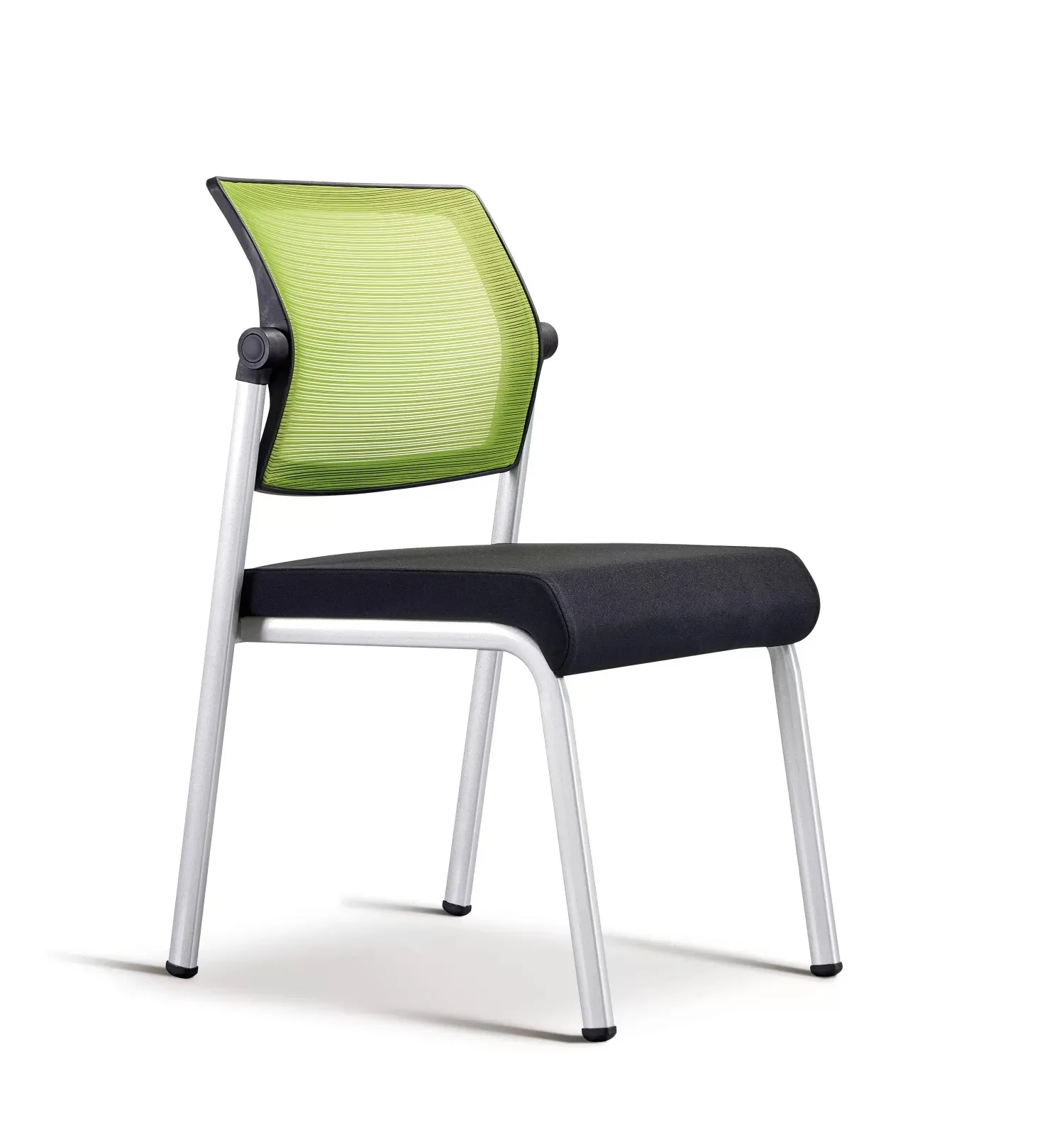
Folding Conference Room Chairs for Space Efficient Meeting Areas
This guide compares folding, stacking, and nesting conference chairs, with space-planning calculations, ergonomic criteria, storage advice, supplier considerations, and layout examples for flexible meeting areas.
Sep. 23 2026
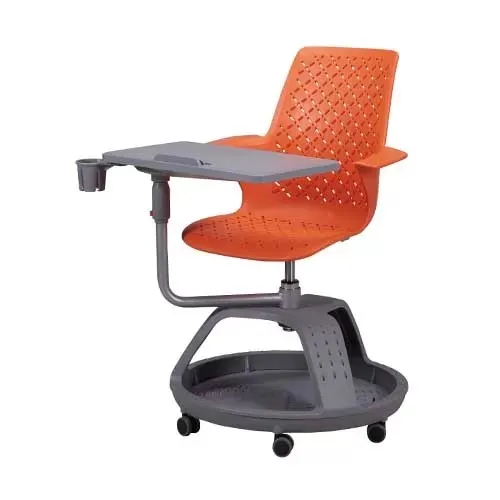
Folding Conference Room Chairs Applications in Training Centers and Event Venues
This guide explains Folding Conference Room Chairs Applications in Training Centers and Event Venues, covering layouts, storage, durability, comfort, transport, and procurement decisions.
Sep. 18 2026
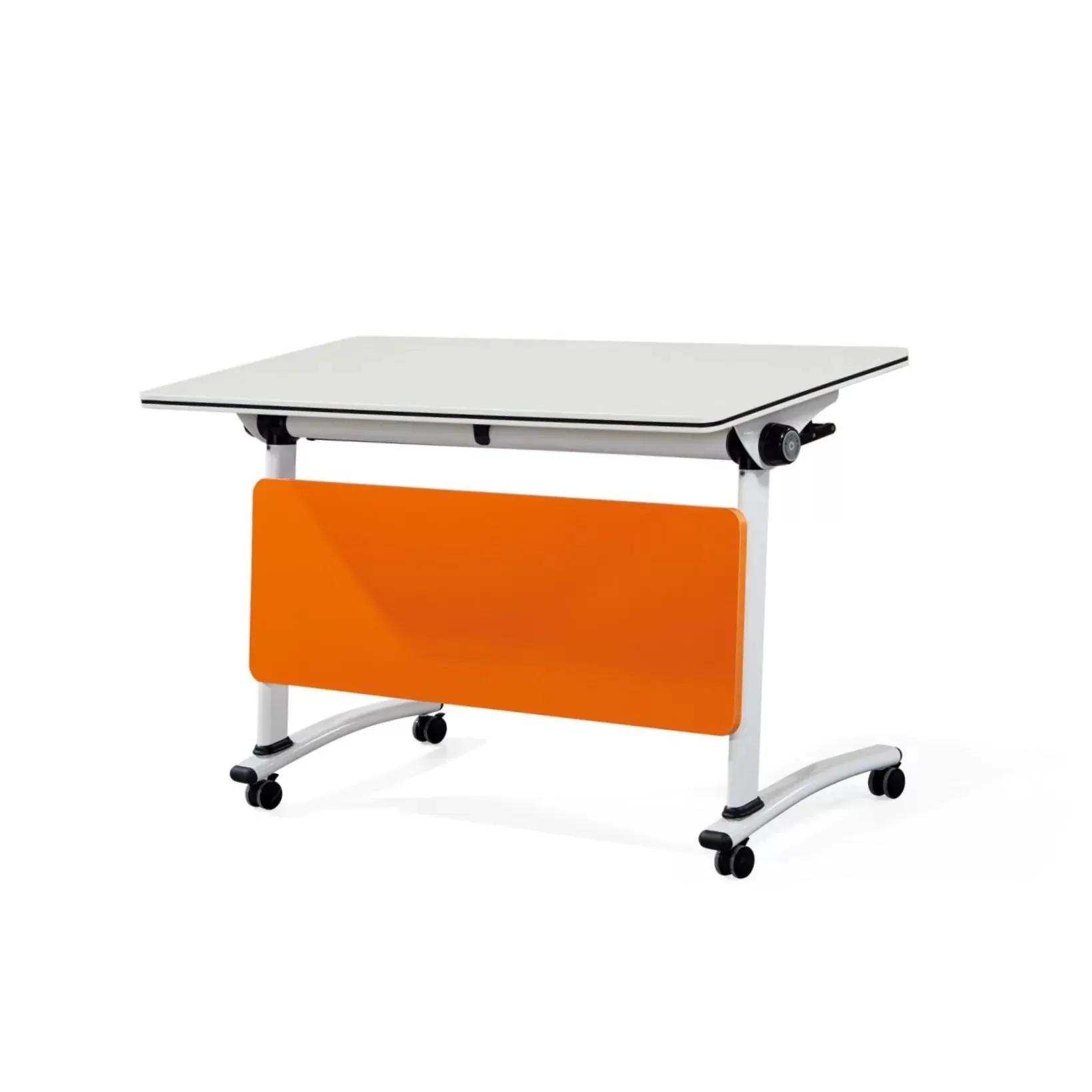
Flip Top Training Tables and Chairs Combination Solutions for Education Spaces
This guide explains how flip top training tables and chairs support flexible education spaces through mobile layouts, compact storage, durable construction, and practical procurement planning.
Sep. 16 2026
Customized Training Chairs for Universities, Companies and Learning Centers
This guide compares customized training chairs for universities, companies and learning centers by ergonomics, mobility, customization, durability, procurement risk and indicative pricing.
Sep. 11 2026
Benefits of Flip Top Training Tables in Training Rooms and Conference Centers
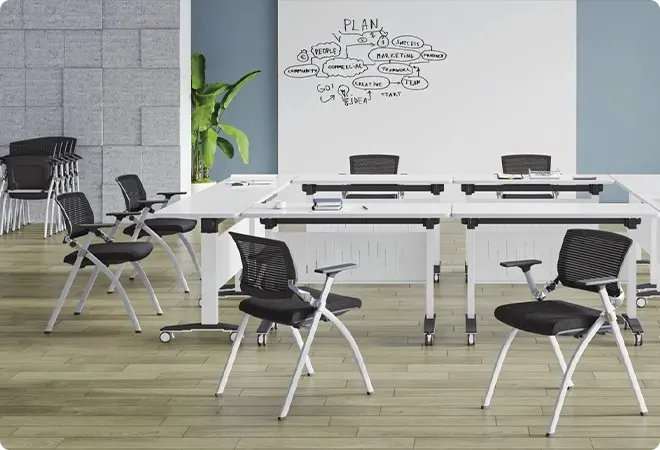
The benefits of flip top training tables include faster room changes, compact storage, mobile layouts, and practical support for frequent commercial use.
BY YOUR SIDE
Our team works with you during every phase of the project.

Tel/Wechat/WhatsApp:
/
Email:
Quick Navigation
Quick Navigation
Stay in Touch
Stay in Touch


