Tel
+86 189 2488 5105

Global public seating service provider
Foshan Winner Furniture Co., Ltd.
Tel
+86 189 2488 5105
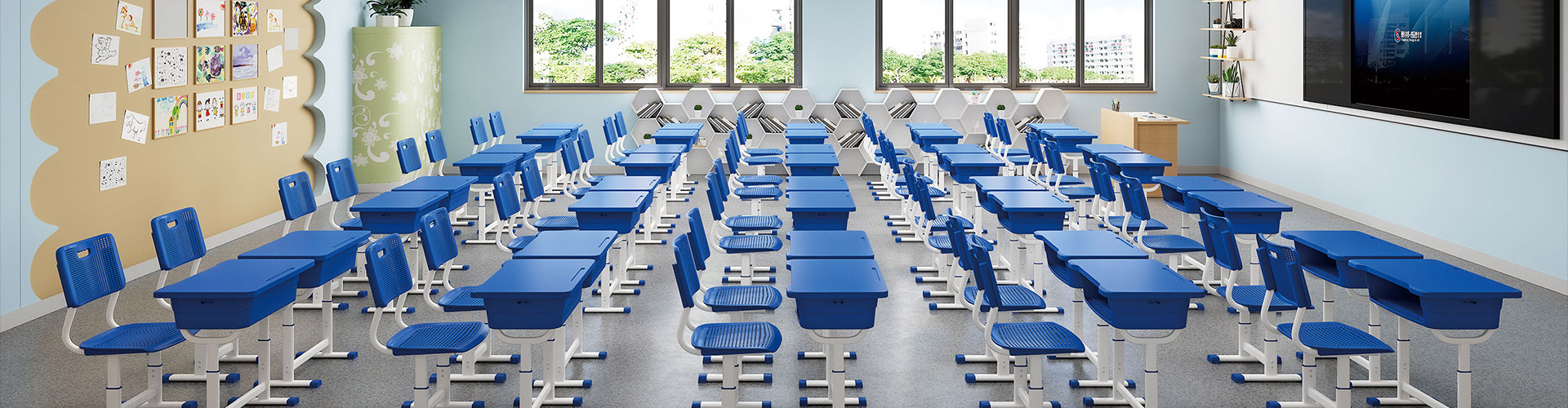
Student Training Chair Applications in Universities and Vocational Schools cover flexible seating for lectures, laboratories, workshops, computer rooms, nursing simulations, skills demonstrations, group projects, and short-term examinations. Unlike fixed classroom chairs, a Student Training Chair may combine mobility, a writing tablet, storage, adjustable height, folding functions, or casters to support different teaching activities. The correct selection depends on room layout, student body, teaching method, safety requirements, storage capacity, and the institution’s purchasing schedule.
Student training chairs support lectures, laboratories, workshops, simulations, computer training, and collaborative practical education.
Chair selection should match teaching activities, room dimensions, mobility requirements, storage capacity, and student accessibility needs.
Writing tablets, stackability, adjustable seating, floor protection, and repairable components affect long-term institutional value.
WINNER offers rotating, folding, wheeled, tablet-equipped, and customized training chair configurations for education projects.
A lifecycle purchasing model should include acquisition cost, freight, maintenance, storage, replacement parts, and replacement cycles.
A student training chair is a movable or configurable seat designed for education spaces where students must write, use devices, collaborate, observe demonstrations, or change position during a session. Common configurations include four-leg chairs, folding chairs, tablet-arm chairs, wheeled training chairs, rotating chairs, and chairs with integrated storage. Their applications extend beyond ordinary classrooms because the furniture must support practical teaching, rapid room reconfiguration, and repeated daily use.
The five main application categories are:
University lecture and training rooms: individual note-taking, presentations, certification courses, and seminars.
Laboratories and simulation rooms: observation, documentation, equipment-based instruction, and clinical practice.
Vocational workshops: technical demonstrations, tool preparation, team instruction, and practical assessment.
Computer and technology rooms: laptop use, keyboard work, screen viewing, and movement between stations.
Flexible collaborative classrooms: group projects, flipped learning, peer instruction, and short activity cycles.
A furniture procurement team should distinguish between student training chair applications and unrelated uses of the term “chair,” such as a department chair, student leadership position, or academic committee role. This article addresses seating products used by students and instructors in education facilities.
A suitable chair must be evaluated against the intended teaching activity rather than selected only by appearance or unit price. A lecture room may need a writing tablet and compact storage footprint, while an engineering workshop may require a simpler chair that can tolerate dust, frequent movement, and contact with work surfaces. A nursing simulation classroom may place greater emphasis on cleanable surfaces, stable seating, and clear circulation around beds or training equipment.
Mobility: Casters, rotating bases, or low-weight frames help students turn toward demonstrations and join group work. Mobility should be paired with braking or stable base design where uncontrolled movement could create a safety issue.
Stackability and storage: Stackable or folding models reduce the floor area required between sessions. The purchasing specification should state the maximum stack height, recommended handling method, and storage-room dimensions.
Writing tablet design: A tablet should support notebooks, tablets, or laptops without obstructing the student’s knees. One WINNER rotating model lists a writing board measuring approximately 59 × 32 × 2.1 cm, which provides a measurable starting point for tablet-size comparison.
Ergonomics: Seat height, back support, seat depth, edge shape, and user posture affect students who sit for two-hour lectures or extended computer sessions.
Durability and repairability: Frame thickness, weld quality, fastener access, replaceable casters, and availability of spare parts influence maintenance cost over the furniture’s service life.
Safety and accessibility: Specify load capacity, tip resistance, smooth edges, floor-glide performance, aisle clearance, and options for students with mobility or postural requirements.
Classroom flexibility: The chair should support the actual frequency of room changes. A heavy fixed chair may be suitable for a stable lecture hall but inefficient in a multipurpose training room.
| Education application | Recommended chair type | Important specifications | Main operational reason |
|---|---|---|---|
| University lecture room | Tablet-arm or compact training chair | Writing surface, stable frame, under-seat clearance | Supports note-taking without permanent desks |
| Smart classroom | Rotating or wheeled training chair | 360-degree movement, locking or controlled casters, device space | Allows students to face screens, teams, and instructors |
| University laboratory | Adjustable or mobile chair | Easy-clean surfaces, stable base, height range | Supports observation, recording, and movement between stations |
| Nursing simulation room | Cleanable tablet-arm or mobile chair | Non-porous surfaces, stable movement, rounded edges | Supports briefings, patient-care observation, and documentation |
| Engineering workshop | Reinforced four-leg or stool-style training chair | Steel frame, replaceable glides, abrasion-resistant finish | Tolerates repeated movement near practical workstations |
| Computer training room | Wheeled computer training chair | Caster design, back support, tablet or desk compatibility | Supports keyboard work and movement between equipment |
| Small vocational school | Stackable or folding chair | Low storage volume, manageable weight, simple maintenance | Makes one room usable for multiple courses |
| Examination or certification room | Stable tablet-arm chair | Controlled movement, writing surface, clear spacing | Provides individual work positions during assessments |
The table demonstrates why there is no single best chair for every institution. A chair with casters may help in a collaborative university classroom but may be unsuitable beside machinery if the wheels are not lockable. Conversely, a four-leg chair may provide greater stability in a workshop but require more labor when staff reconfigure the room.
Ergonomic classroom seating for universities should be specified around the duration and type of student activity. A 45-minute seminar, a three-hour design studio, and a full-day certification course create different seating demands. The procurement team should record session length, average student height range, desk or tablet height, expected laptop use, and whether students need to rotate toward demonstrations.
A practical evaluation can measure whether students can place both feet securely, maintain a neutral working posture, and use the writing surface without excessive shoulder elevation. If the chair is adjustable, the institution should document the adjustment range and confirm that controls can withstand repeated use. If the chair is not adjustable, seat height should be matched to the fixed desk, laboratory bench, or tablet position before bulk purchasing.
WINNER’s W01 rotating training chair lists a 360-degree rotating seat and writing board, a lifting function, a footrest, and a 300-pound weight capacity. These specifications may suit interactive training rooms, but buyers should still verify local compliance requirements, user dimensions, warranty coverage, and test documentation before approving a project.
Traditional classroom chairs generally support forward-facing instruction with a separate desk. Student training chairs add value when the teaching model requires fast changes between individual work, group discussion, observation, and presentation. They do not automatically improve teaching outcomes; the benefit comes from matching the chair’s movement and work-surface features to the course structure.
Flexible training room furniture for vocational schools must accommodate several teaching modes within the same room. A technical school may use a room for theory instruction in the morning, group planning after lunch, and practical assessment later in the day. Folding, nesting, or stackable chairs can reduce the time and labor needed to change the space between activities.
For small vocational schools, storage efficiency can be more important than advanced mechanisms. A simple polypropylene chair with a reinforced steel frame may be easier to maintain than a wheeled model with multiple moving parts. If the room changes layout four times daily, however, casters or lightweight frames may reduce staff handling time and protect floors from dragging damage.
A vocational-school layout should reserve clear routes between seats, tools, instructor demonstrations, and emergency exits. The purchasing specification should include the stored footprint, maximum stack height, chair weight, floor-glide type, and the number of staff required to move a full room set. These details help prevent a common procurement error: purchasing chairs that fit the classroom when occupied but cannot be stored safely between sessions.
University laboratory seating solutions should be selected according to the laboratory’s equipment and contamination controls. In a biology or chemistry classroom, surfaces should be easy to wipe and resistant to the cleaning agents used by the facility. In an engineering or electronics laboratory, the chair may need to move between benches while remaining stable during measurement, assembly, or inspection.
Nursing simulation classroom chairs support a different pattern of use. Students may listen to a briefing, write observations, move around a simulated patient, and return to a group discussion within the same class period. A compact chair with a tablet can reduce dependence on separate desks, but the tablet mechanism must not block circulation or interfere with accessibility equipment.
In technical workshops, the most useful chair is often not the chair with the most functions. A reinforced frame, replaceable floor glides, stable seating position, and cleanable finish may be more valuable than a rotating base. Procurement should also consider exposure to metal filings, oils, dust, tools, and repeated contact with workbenches.
Begin by listing what students do while seated. Record whether they write by hand, use laptops, watch demonstrations, handle instruments, participate in group discussion, or move between stations. Then identify the expected session duration, student age range, height range, body-size variation, accessibility requirements, and instructor supervision pattern.
This step prevents product specifications from becoming detached from the curriculum. A chair designed for individual note-taking may not support a nursing simulation, while a chair optimized for movement may be inappropriate for a written examination. The final brief should describe the activity first and the furniture feature second.
Selecting by catalog image: Request dimensional drawings, material details, load data, and mechanism descriptions before approval.
Ignoring the instructor’s workflow: Confirm how equipment, teaching screens, and demonstration areas affect student orientation.
Assuming one model fits all rooms: Create separate specifications for lecture rooms, labs, workshops, and computer rooms.
Measure the usable room area rather than relying only on architectural floor area. Mark doors, columns, power outlets, teaching screens, laboratory benches, accessible routes, and emergency exits. Then test at least three layouts: forward-facing instruction, small-group collaboration, and clear-room storage or event use.
For example, the WINNER W01 model lists an overall size of approximately 55 × 55 × 93.5 cm and a packed volume of 0.15 cubic meters. These figures can be used in preliminary capacity and storage calculations, but the institution should confirm final packaging, aisle requirements, and the actual footprint with the supplier.
Storage efficiency should be calculated as occupied floor area, not only as the number of chairs per stack. A stack that is too high may create handling hazards, and a chair that is light enough for one person to move may be less durable if its frame is underspecified. Include a storage rack, protective wall clearance, cleaning access, and inventory labeling in the room plan.
A technical specification should separate mandatory requirements from preferred features. Mandatory items may include minimum load capacity, seat dimensions, writing-tablet size, frame material, surface cleanability, floor protection, warranty period, and spare-part availability. Preferred items may include 360-degree rotation, color matching, logo customization, tablet folding, device slots, or integrated bag storage.
WINNER identifies several training-chair categories, including wheeled chairs, disc chairs, folding chairs, and customized training chairs. Its W01 specification describes polypropylene injection-molded components, a support frame using 32 round steel tubes with a stated 1.5 mm thickness, a 3 mm stamped steel seat plate, a 360-degree rotating writing board, and knock-down packing. Such details are more useful for bid comparison than broad claims about comfort or durability.
The tender or request-for-quotation package should also require a sample inspection. Inspect welds, fasteners, frame alignment, tablet movement, caster performance, seat stability, edge finishing, and packaging protection. Ask for test reports applicable to the destination market, material declarations where required, installation instructions, replacement-part pricing, and a written procedure for reporting transit damage.
Quality compliance should be treated as a documented process. The buyer should identify the furniture standards required by the country, institution, fire policy, accessibility plan, and insurance provider. Depending on the chair type, the verification file may need load testing, stability testing, caster or glide inspection, surface-flammability information, chemical-safety documentation, and dimensional checks.
A factory claim is not a substitute for a project-specific inspection. For a sample of delivered chairs, record the actual seat height, overall width, tablet dimensions, fastener torque condition, frame finish, and packaging damage rate. A practical receiving target might be zero unapproved substitutions, zero structural defects, and a documented resolution for every damaged unit before classroom release.
Accessibility requires more than reserving one chair near the entrance. The room should provide clear routes, suitable work-surface access, transfer space where required, and seating options that do not force a student to use a rotating or wheeled mechanism. The institution should coordinate with disability services before finalizing the chair mix.
Delivery risk is often created before production starts. Confirm the approved sample, color, tablet orientation, carton labeling, packing method, shipping terms, inspection point, production milestones, and replacement procedure in the purchase order. For imported furniture, include a buffer for manufacturing, consolidation, customs, inland transport, and campus installation rather than planning only around the factory lead time.
WINNER lists knock-down packing for the W01 model and provides customization thresholds of 300 sets for customized packaging, 200 sets for a logo, and 300 sets for graphic customization. These minimum quantities affect project scheduling, especially when a university needs several models or a vocational school wants a small pilot order. Buyers should request a production schedule and a carton-level packing list before shipment.
Use a staged acceptance process:
Approve drawings, colors, dimensions, and accessories.
Inspect a pre-production or production sample.
Conduct a pre-shipment inspection against the approved specification.
Check cartons, labels, quantities, and visible damage on arrival.
Complete room installation and a 30-day operational review.
This sequence creates records that can support warranty claims and reduce disputes about whether damage occurred during production, shipping, installation, or daily use.
The best Student Training Chair is the one that meets the activity, space, user, compliance, and budget requirements simultaneously. A decision matrix can assign weighted scores rather than allowing the lowest unit price to control the purchase. For example, an institution could assign 25% to teaching-function fit, 20% to safety and compliance, 15% to ergonomics, 15% to durability and repairability, 10% to storage efficiency, 10% to delivery controls, and 5% to appearance or branding.
| Priority | Suitable configuration | Verify before purchase |
|---|---|---|
| Individual writing | Tablet-arm chair | Tablet size, knee clearance, tablet load limit |
| Group interaction | Rotating chair | Rotation control, base stability, mechanism service |
| Frequent room changes | Wheeled chair | Caster safety, locking system, floor compatibility |
| Limited storage | Folding or stackable chair | Stack height, handling weight, storage footprint |
| Heavy workshop use | Reinforced four-leg chair | Frame thickness, weld inspection, replaceable glides |
| Mixed student population | Adjustable chair | Adjustment range, control access, user fit |
| Technology-focused teaching | Laptop-compatible chair | Work surface width, cable clearance, device stability |
Institutional buyers should also require a maintenance checklist. Monthly checks can include loose fasteners, damaged glides, cracked plastic, tablet hinge resistance, caster noise, and seat-to-frame movement. A quarterly review can record repair counts by component and identify whether a model is generating disproportionate service labor.
The purchase price is only one part of the cost. A simple total-cost model should include chair acquisition, freight, import charges, installation, storage equipment, routine inspections, replacement parts, labor for room changes, and expected replacement units. For example, if a school buys 120 chairs at an assumed $95 per chair, the initial product cost is $11,400. Adding an assumed $18 freight and handling allocation per chair produces $2,160, before installation and taxes.
A five-year planning model can compare two options:
| Cost category | Fixed classroom chair | Flexible training chair |
|---|---|---|
| Initial chair cost, assumed | $72 × 120 = $8,640 | $95 × 120 = $11,400 |
| Freight and handling, assumed | $15 × 120 = $1,800 | $18 × 120 = $2,160 |
| Storage equipment, assumed | $1,200 | $700 |
| Annual maintenance, assumed | $900 | $1,200 |
| Replacement allowance over five years, assumed | 20 chairs | 12 chairs |
| Estimated replacement cost | $1,440 | $1,140 |
| Five-year subtotal before labor and tax | $14,? | $21,? |
The figures above are planning assumptions, not supplier quotations, and the subtotal should be recalculated using actual bids. The purpose is to expose cost categories that are often omitted, especially storage, replacement parts, and labor for repeated room changes. If flexible furniture reduces room-change labor by 30 minutes per session across 500 sessions annually, the institution can calculate the labor value using its internal hourly rate.
For a more complete return analysis, compare usable teaching hours rather than only chair lifespan. If one flexible room supports three different programs per day instead of one fixed-use program, the furniture may increase room utilization without adding construction area. The financial result depends on the school’s timetable, labor cost, storage constraints, and whether the room would otherwise remain unused between courses.
WINNER, operated by Foshan Winner Furniture Co., Ltd., presents product categories covering school desks and chairs, training chairs, training chairs with tables, auditorium seating, and related educational furniture. Its training-chair range includes rotating, folding, wheeled, and customized configurations, which may help institutions standardize several rooms while retaining different functions. The supplier also describes OEM and ODM services for colors, logos, packaging, and selected dimensions.
For technical evaluation, buyers should focus on the documented product details rather than the manufacturer’s general positioning. The W01 model provides measurable information about materials, dimensions, construction, rotation, height adjustment, packing, customization minimums, and stated weight capacity. These data points can be inserted directly into a procurement comparison, while unlisted items—such as warranty length, test certificates, replacement-part prices, and confirmed production lead time—should be requested in writing.
WINNER may be most relevant for universities, vocational-school contractors, furniture distributors, and public-sector procurement teams that require multiple configurations or project-level customization. A pilot order of 10 to 20 chairs can test student fit, tablet usability, floor compatibility, cleaning routines, and mechanism reliability before a larger purchase. The pilot should be evaluated for at least 30 days under normal teaching conditions.
Before placing a purchase order, the institution should confirm:
The chair type matches the teaching activity and room layout.
Seat, backrest, tablet, and adjustment dimensions fit the intended student population.
Load capacity and stability information are documented.
Writing tablets support the required notebooks, tablets, or laptops.
Casters or glides are suitable for the existing floor finish.
Stackability, folding, or nesting data match the available storage room.
Accessibility requirements have been reviewed with relevant campus staff.
Materials and finishes support the cleaning chemicals used onsite.
Spare parts, warranty terms, and repair procedures are included in the quotation.
Production milestones, inspection requirements, packaging, and delivery responsibilities are written into the order.
The supplier provides approved drawings, packing lists, and installation instructions.
A 30-day post-installation review is scheduled.
Student Training Chair Applications in Universities and Vocational Schools include lecture instruction, practical laboratories, technical workshops, computer training, nursing simulations, examinations, and collaborative learning. These chairs are worth considering when the institution needs movable work surfaces, faster room changes, improved storage efficiency, or seating that supports activities beyond forward-facing lectures.
The next step is to classify each room by teaching activity, measure the usable area, and prepare a specification covering mobility, stackability, writing tablets, ergonomics, durability, safety, accessibility, storage, and maintenance. Then compare supplier samples using measurable data such as dimensions, frame construction, stated capacity, packed volume, mechanism performance, inspection results, and delivery milestones.
WINNER’s range provides several configurations that can be evaluated for university training rooms, smart classrooms, vocational-school spaces, and other education projects. A responsible procurement decision should not rely on the lowest unit price or the longest feature list. It should compare five-year total cost, replacement risk, repair access, room utilization, student fit, and documented compliance before approving the final Student Training Chair solution.
Latest News
Aug. 31 2026
Foldable Training Chair Design for Multi-Purpose Training Rooms
An effective Foldable Training Chair Design for Multi-Purpose Training Rooms combines compact storage, quick room reconfiguration, ergonomic support, durable commercial construction, and optional writing or linking features.

Aug. 26 2026
Training Room Chairs With Wheels: Applications in Movable Classrooms
Training Room Chairs With Wheels are mobile classroom seats designed to shift quickly between lecture rows, group-work pods, testing stations, presentation layouts, and storage positions.

Aug. 24 2026
Student Training Chair Design for Schools and Professional Training Centers
An effective Student Training Chair Design for Schools and Professional Training Centers combines ergonomic fit, structural durability, rapid mobility, and efficient storage.

Aug. 20 2026
Student Training Chair Applications in Universities and Vocational Schools
Student Training Chair Applications in Universities and Vocational Schools cover flexible seating for lectures, laboratories, workshops, computer rooms, nursing simulations, skills demonstrations, group projects, and short-term examinations.

Aug. 19 2026
Different Types of Training Room Chairs for Flexible Learning Spaces
Different Types of Training Room Chairs for Flexible Learning Spaces include stackable, nesting, folding, caster, tablet-arm, swivel, stool, and ergonomic task-style models. Each type supports a different combination of mobility, storage, comfort, technology use, and room layout.

Aug. 17 2026
Advantages of Foldable Training Chairs in Limited Spaces
Foldable training chairs increase usable floor area by allowing rooms to shift between seating, group work, storage, and circulation modes. They can be folded, transported, and stored in compact rows instead of remaining across the floor when a session ends.

BY YOUR SIDE
Our team works with you during every phase of the project.

Tel/Wechat/WhatsApp:
/
Email:
Quick Navigation
Quick Navigation
Stay in Touch
Stay in Touch


