Tel
+86 189 2488 5105

Global public seating service provider
Foshan Winner Furniture Co., Ltd.
Tel
+86 189 2488 5105
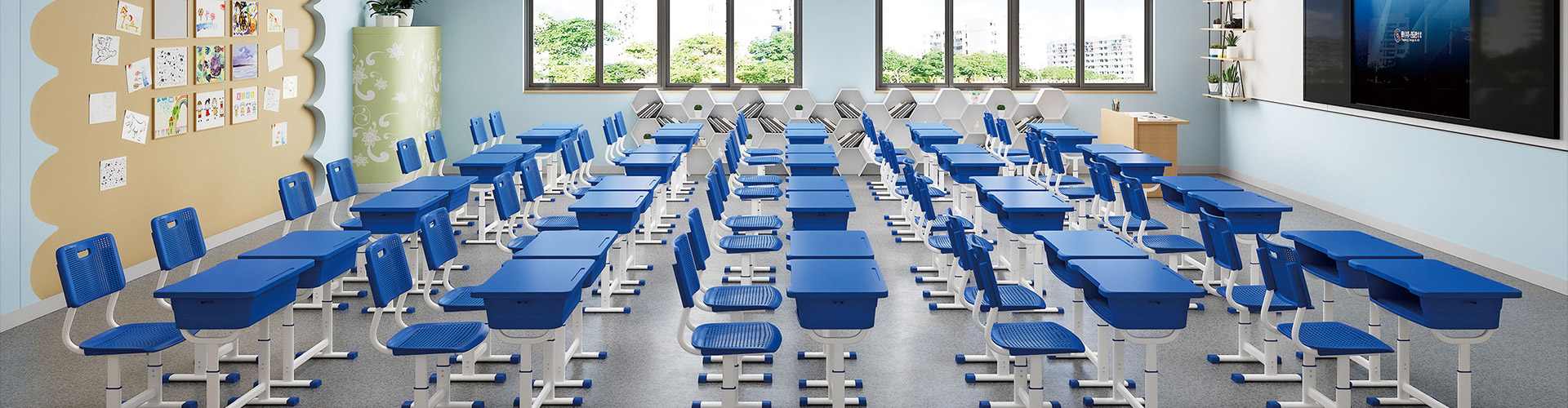
Public Seating Solutions are furniture systems designed for shared, high-use environments such as schools, universities, offices, libraries, healthcare facilities, airports, and civic buildings. I evaluate these systems by four practical priorities: durability under repeated use, accessibility for different users, cleanability between occupancy cycles, and layout flexibility. The best selection also considers dimensions, weight capacity, circulation, repair access, procurement method, and total ownership cost.
Public Seating Solutions for Large Educational and Commercial Spaces are seating products specified for shared facilities where many people use the same furniture throughout the day. They include classroom chairs, training chairs, beam seating, cafeteria benches, library lounge furniture, waiting-room seats, auditorium chairs, folding chairs, and modular public seating systems. Unlike private office seating, these products must address repeated movement, frequent cleaning, varied body sizes, circulation requirements, and public access. I treat the furniture package as part of the building’s operating system rather than as a collection of individual chairs.
The main difference between commercial public seating and residential or private office seating is exposure. A classroom, lobby, or terminal may experience hundreds of contact events per day, including sitting, standing, dragging, stacking, cleaning, and occasional impact. This makes frame construction, fastener access, surface resistance, replacement parts, and warranty terms more important than appearance alone. A supplier should also provide dimensional drawings, material samples, load data, installation guidance, and a clear process for ordering replacement components.
The following shortlist combines manufacturers that serve educational, institutional, workplace, auditorium, or public-building projects. Prices are planning ranges rather than fixed quotations because upholstery, finishes, freight, installation, order volume, contracts, and customization can change the final amount.
| Supplier | Representative product categories | Best fit | Approximate planning price |
|---|---|---|---|
| WINNER Furniture | Student chairs, training chairs, folding chairs, auditorium chairs, writing-tablet seating | International school, university, auditorium, airport, and public-hall projects | $35–$180 per movable chair; $90–$450 per auditorium seat |
| Virco | Classroom chairs, stacking chairs, mobile tables, cafeteria and library furniture | K–12 schools, campuses, libraries, dining areas, and public education procurement | $45–$250 per chair, depending on series and options |
| KI | Student seating, stack chairs, lounge seating, healthcare seating, lecture-hall seating | Higher education, healthcare, government, libraries, and multi-room specifications | $100–$700 per seat; fixed seating generally quoted by project |
| Steelcase | Contract task chairs, lounge seating, collaborative seating, workplace and higher-education furniture | Commercial offices, reception areas, corporate campuses, and premium shared environments | Approximately $549–$1,599 for selected retail task chairs; project seating varies |
Pricing should be compared as a complete installed system. A low unit price can become expensive if the product requires frequent replacement, has limited spare parts, needs special cleaning chemicals, or creates storage problems. I recommend requesting a delivered and installed price that separates furniture, freight, assembly, anchoring, layout services, samples, warranty coverage, and replacement components.
WINNER Furniture is a useful option when one project requires several seating categories instead of a single chair type. Its portfolio includes school desks and chairs, training chairs, folding chairs, auditorium chairs, plastic auditorium chairs, wooden auditorium chairs, and training chairs with writing tablets. The supplier states that its auditorium products support seat widths of 45–55 centimeters and a load rating of 150 kilograms for a listed plastic series. Its training chair with writing tablet is described with a 12-by-16-inch writing surface and a 300-pound weight capacity.
I would consider WINNER when a school, contractor, or distributor needs coordinated products across classrooms, lecture halls, training rooms, and public waiting areas. The company also reports more than 20 years of manufacturing experience, a 50,000-square-meter factory area, 50 robot arms, and more than 500 completed global projects. These figures should still be verified against the exact model, test report, warranty document, and production batch before purchase.
Factory-direct procurement usually requires more project coordination than buying a standard chair from a local dealer. The buyer should confirm shipping terms, container quantities, installation responsibility, spare-part availability, local compliance requirements, fire documentation, and the exact warranty period. For smaller projects, domestic stock may be faster even when the factory price is lower.
Virco is a strong comparison point for schools and campuses because its product range is organized around classrooms, cafeterias, libraries, media centers, higher education, offices, break rooms, and event spaces. Its catalog includes stacking chairs, mobile tables, student seating, collaborative furniture, cafeteria products, and library solutions. I would place Virco near the top of a school procurement list when the buyer needs consistent products across multiple rooms and prefers an established education-furniture supply structure.
Virco’s practical advantage is breadth within education. A district may use one supplier for classroom chairs, activity tables, cafeteria seating, library furniture, and gathering areas, reducing the number of separate specifications. Its published materials also reference factory price lists, contract purchasing, direct relationships with schools and districts, and delivery services, which may support public-sector procurement.
Virco is best suited to K–12 districts, colleges, libraries, and public agencies that need repeatable furniture specifications across many buildings. Buyers should compare frame gauge, shell material, stacking height, chair-truck compatibility, seat dimensions, warranty terms, and replacement availability. Published prices can vary by contract, so the final comparison should use the same quantity, freight terms, finish level, and installation assumptions for every supplier.
KI offers one of the broadest institutional seating categories in this comparison. Its portfolio includes stack chairs, student seating, tablet-arm chairs, nesting chairs, lounge seating, healthcare seating, bariatric seating, folding chairs, outdoor seating, auditorium seating, and lecture-hall seating. This makes KI suitable for projects that combine classrooms, libraries, student commons, patient areas, conference rooms, reception spaces, and fixed audience seating.
I would choose KI when the project needs a consistent specification language across many environments. Its product structure supports comparisons by category and includes design resources, product approvals, maintenance information, repair and replacement support, and purchasing channels such as government contracts. The buyer should still check the exact product’s weight rating, cleanability data, flame-resistance documentation, antimicrobial claims, and replacement-part schedule.
KI is particularly appropriate for universities, healthcare facilities, government buildings, and large institutional programs where the furniture package must serve several user groups. Its main tradeoff is that contract products often require dealer coordination and project quotations rather than simple online checkout. That process can improve specification accuracy, but it also makes it important to establish a written schedule of quantities, finishes, delivery phases, and installation requirements before issuing a purchase order.
Steelcase is most relevant when the project includes commercial lobby seating, office collaboration areas, reception zones, training rooms, or premium workplace environments. Its product range includes task chairs, guest chairs, lounge products, collaborative seating, and higher-education solutions. Selected retail prices provide useful budget benchmarks, including published starting prices around $549 for Series 1, $749 for Series 2, $1,199 for Karman, $1,499 for Leap, and $1,599 for Gesture.
These prices should not be applied directly to a school auditorium or cafeteria because ergonomic task chairs serve a different use case. Steelcase seating generally fits commercial work settings where adjustability, posture support, design continuity, and contract-grade specifications matter. For public-facing areas, I would compare cleanable upholstery, replaceable components, seat width, arm design, warranty coverage, and the amount of unassigned sitting time expected in the space.
Steelcase is a reasonable choice for office buildings, corporate campuses, reception environments, executive education centers, and mixed-use commercial projects. It may be unnecessarily costly for basic high-volume classroom seating where a stackable polypropylene chair meets the performance requirements. The correct comparison is not simply price per chair; it is whether the product’s ergonomics, maintenance profile, appearance, and service network justify the intended use.
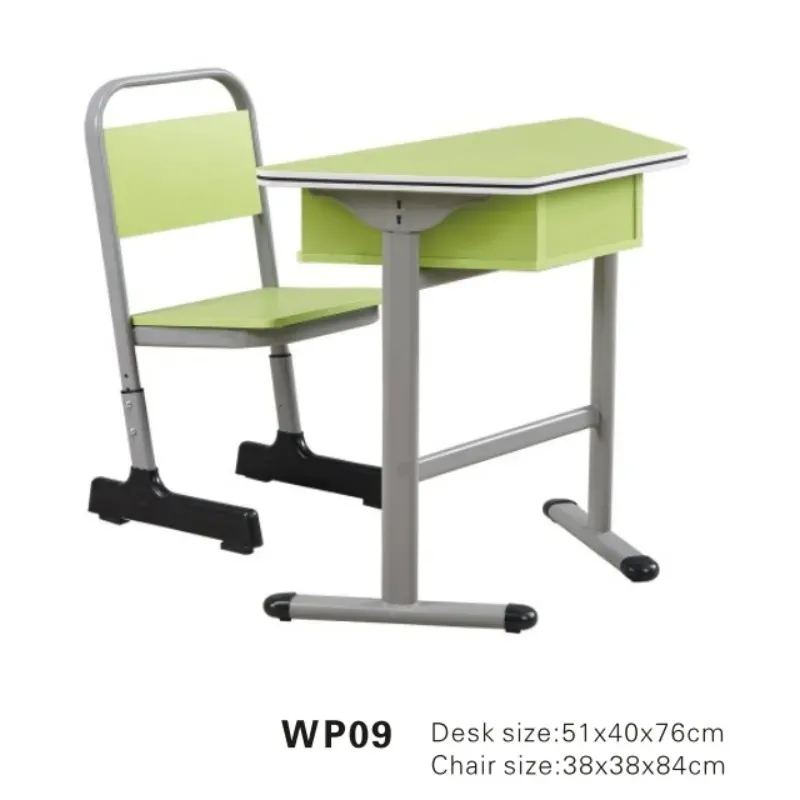
Institutional seating for schools and universities should be divided by room function rather than selected as one universal product. Classrooms typically need stackable or mobile chairs, student desks, tablet-arm chairs, and occasional adjustable-height products. Libraries benefit from a mix of individual study chairs, lounge seats, stools, soft seating, and tables that support long stays without blocking aisles. Cafeterias and student commons require wipeable surfaces, stable frames, efficient table spacing, and furniture that can tolerate rapid cleaning between meal periods.
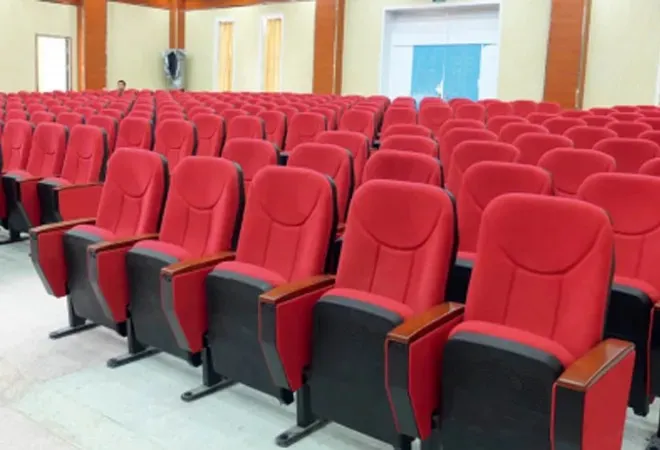
Auditoriums and lecture halls require a different specification. Fixed or row-linked seats control aisle alignment, preserve circulation, and reduce unauthorized movement, while writing tablets support note-taking and training sessions. WINNER lists automatic flip-up auditorium seats, row-linked configurations, 45–55-centimeter seat widths, and load information for selected models. For any fixed installation, I would request structural anchoring details, row spacing, aisle clearance, fire documentation, and accessibility layouts before approval.
Commercial lobby seating for large buildings must balance waiting time, turnover, cleaning, privacy, and visual clarity. Beam seating works well where users need short waits and predictable capacity, while lounge chairs and sofas suit reception areas where visitors may remain for 20–60 minutes. Modular benches and linked seats help organize queues, but they should not reduce accessible routes, door clearances, emergency paths, or space for mobility devices.
I also distinguish lobby seating from restaurant or residential lounge furniture. Public lobby furniture often uses contract fabrics, cleanable vinyl or polyurethane, reinforced frames, replaceable glides, and components that tolerate repeated cleaning. In healthcare and transportation facilities, I would prioritize non-porous surfaces, sealed edges, accessible seat heights, bariatric options, and a documented cleaning method before selecting color or decorative details.
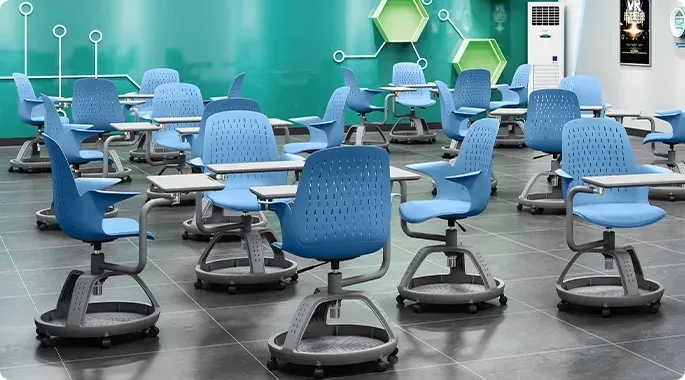
Modular seating systems for public spaces are useful when rooms must change between teaching, meetings, events, and informal work. Mobile chairs, folding chairs, nesting tables, flip-top tables, and linked auditorium seats each provide a different balance between mobility and control. Freestanding modular pieces offer the greatest layout flexibility, while fixed systems usually provide better row discipline and predictable capacity.
I plan modular systems around both use and storage. A chair that stacks four high may be practical only if the facility has a clear storage room, a suitable transport cart, and a route wide enough for movement. The calculation should include stored footprint, cart capacity, labor time, floor protection, and the number of room changes per week. A mobile product is not automatically more economical if every change requires two staff members and 30 minutes of handling.
I use the following criteria before requesting final quotations:
| Selection factor | Questions to answer | Typical specification focus |
|---|---|---|
| Capacity | How many users sit simultaneously and how many turnover cycles occur daily? | Seat count, load rating, row spacing, table ratio |
| Durability | Will users drag, stack, fold, or repeatedly impact the furniture? | Steel frame, welds, shell thickness, fatigue testing, replaceable glides |
| Cleanability | Which disinfectants and cleaning frequencies are expected? | Non-porous surfaces, sealed edges, removable upholstery, chemical resistance |
| Accessibility | Can users with mobility, sensory, or body-size differences use the space? | Clear routes, accessible positions, seat height, bariatric options, companion seating |
| Mobility | Does the room change weekly, daily, or several times per day? | Casters, nesting, folding, stacking, locking mechanisms |
| Maintenance | Can staff repair the product without replacing the entire unit? | Replacement parts, fasteners, upholstery panels, service manuals |
| Budget | Is the project funded by a bid, contract, dealer, or direct import? | Unit price, freight, installation, duty, warranty, lifecycle cost |
I also map the building by zones. A campus project may require durable classroom chairs, quieter library seating, cleanable cafeteria furniture, fixed lecture-hall seats, flexible commons furniture, and commercial lobby seating in the administration building. Coordinating these categories under one procurement plan can reduce finish variation, simplify replacement ordering, and prevent one room from receiving furniture that cannot be serviced locally.
A large-space seating plan should show capacity, circulation, zoning, acoustics, privacy, storage, and reconfiguration. I begin by marking entrances, exits, accessible routes, service counters, teaching zones, power points, windows, and cleaning access. I then position seating so that the highest-traffic paths remain visually clear and do not cut through quiet study areas or presentation zones.
Acoustics also influence product selection. Hard plastic chairs and tables are easy to clean but can increase impact noise, especially in cafeterias and student commons. Felt panels, upholstered backs, rubber glides, acoustic screens, and upholstered lounge elements can reduce reverberation, but each added textile component increases cleaning and replacement requirements. The right balance depends on the room’s sound treatment, occupancy level, and cleaning resources.
Sustainability should be measured through service life, repair access, material separation, replacement parts, refurbishment, and end-of-life handling. A chair with a replaceable seat shell or glide can remain in service after a small component fails, while a fully bonded product may require complete disposal. I ask suppliers whether frames, shells, casters, upholstery panels, tablets, and fasteners can be ordered separately.
For a simple lifecycle comparison, I calculate purchase price plus freight, installation, cleaning labor, repairs, replacement units, storage equipment, and disposal. For example, a $75 chair replaced every three years may cost more over a 12-year period than a $130 chair that remains serviceable for eight years with two $12 glide replacements. The final result depends on actual usage, but the calculation makes procurement decisions more transparent than comparing unit prices alone.
Public seating solutions are worth the investment when the selected products match the facility’s traffic, cleaning, accessibility, and layout requirements. The strongest business case usually comes from reduced replacement frequency, fewer room-change labor hours, simpler spare-part ordering, and fewer layout corrections after installation. I would not approve a product solely because it has a low initial price or an attractive finish.
Before purchase, I recommend requesting a sample chair, technical drawing, finish sample, cleaning instructions, warranty document, load data, test information, spare-part pricing, and a delivered project quotation. For larger orders, ask for a pilot installation in one classroom, lobby, library, or lecture hall. That trial can reveal noise, cleaning time, stacking difficulty, comfort complaints, aisle conflicts, and maintenance issues before the same product is installed across the entire building.
Public Seating Solutions for Large Educational and Commercial Spaces should be selected as a coordinated facility system, not as isolated furniture purchases. I recommend comparing suppliers by room function, traffic level, capacity, materials, cleanability, accessibility, mobility, repairability, lead time, and complete installed cost. WINNER is a practical option for buyers seeking factory-direct school, training, auditorium, and public-venue seating with customization support, while Virco, KI, and Steelcase provide useful benchmarks for education, institutional, and commercial projects.
The next step is to create a room-by-room schedule showing seat quantities, dimensions, load requirements, materials, cleaning standards, storage needs, accessibility positions, and budget ranges. Request comparable quotations using the same specifications, then test representative products in the most demanding environments. A successful purchase should provide measurable durability, practical maintenance, clear circulation, flexible layouts, and replacement support throughout the facility’s operating life.
Latest News
Oct. 30 2026
University Classroom Furniture Design and Seating Solutions
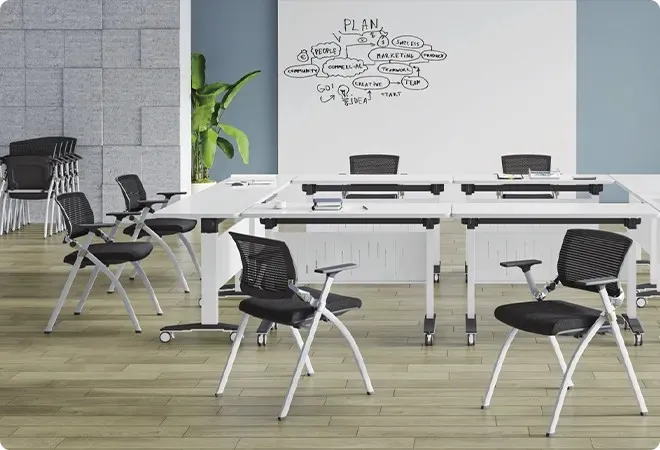
This university classroom furniture guide explains how to select flexible, ergonomic, accessible, and technology-ready seating for classrooms, lecture halls, laboratories, libraries, lounges, and learning commons.
Oct. 28 2026
Metal Frame vs Plastic Frame Student Chairs: Performance Comparison
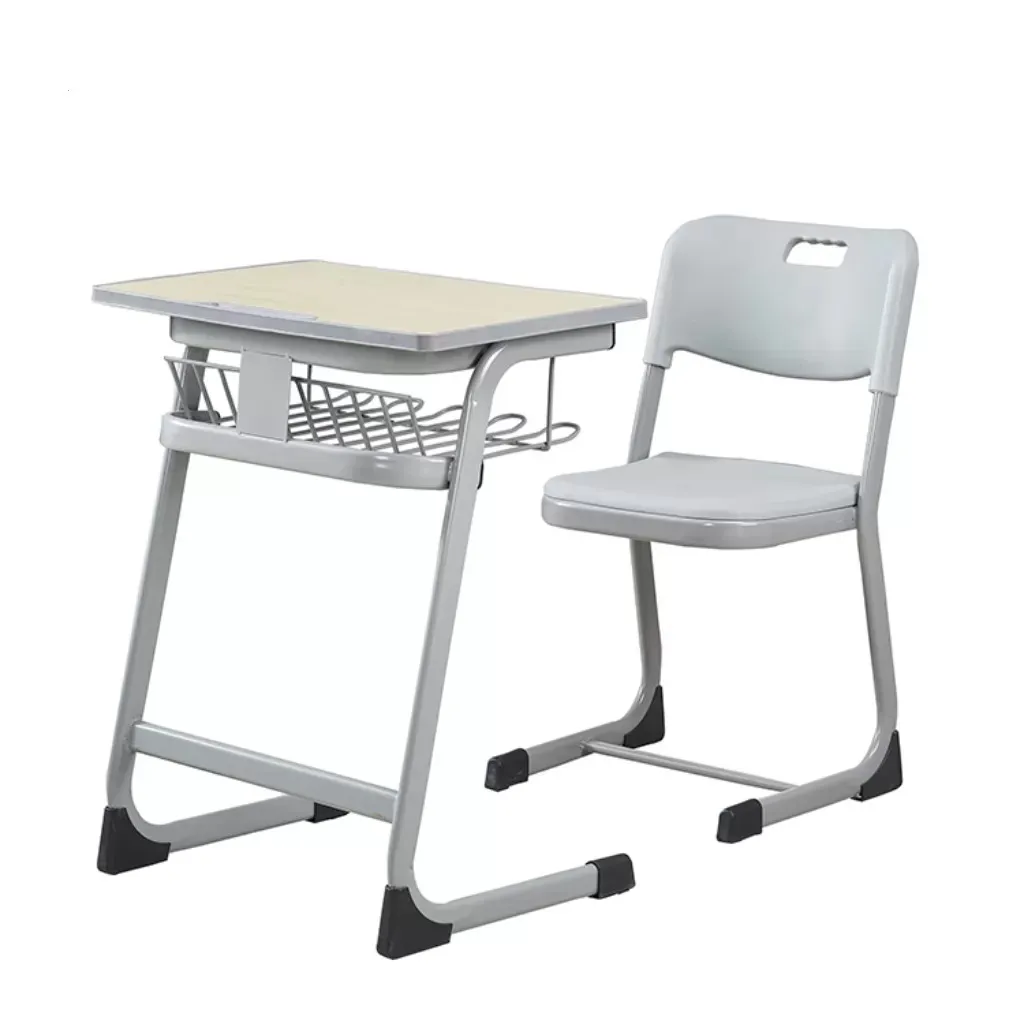
Metal Frame vs Plastic Frame Student Chairs: Performance Comparison covering durability, comfort, storage, maintenance, cost, and buyer checks for school procurement teams.
Oct. 26 2026
Public Seating Solutions for Large Educational and Commercial Spaces
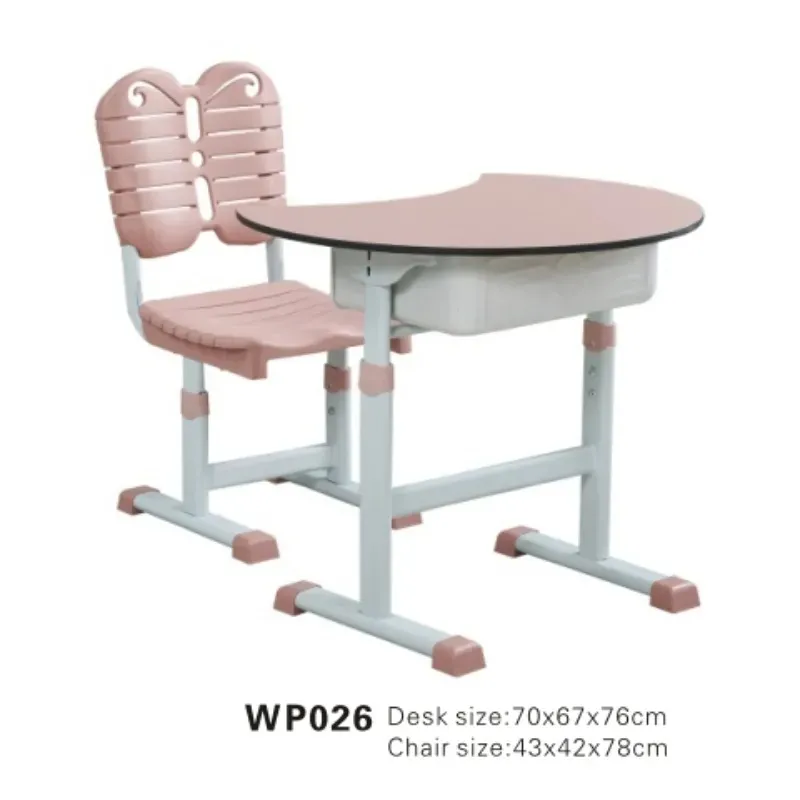
This Public Seating Solutions guide compares WINNER, Virco, KI, and Steelcase for schools, campuses, offices, auditoriums, libraries, and other high-traffic facilities.
Oct. 22 2026
Auditorium Seating Solutions for Schools and Public Institutions
This guide explains auditorium seating solutions for schools and public institutions, covering seating types, capacity planning, accessibility, pricing, procurement, installation, and lifecycle value.
Oct. 21 2026
Common Materials Used in School Furniture Manufacturing
This School Furniture Materials Guide compares wood, metal, plastic, laminate, and composite materials by durability, maintenance, safety, cost, and sustainability.
Oct. 19 2026
School Furniture Quantity Planning for Different Classroom Sizes
This school furniture quantity planning guide explains how to calculate usable classroom capacity, select layouts, and specify desks, chairs, teacher stations, and storage.
BY YOUR SIDE
Our team works with you during every phase of the project.

Tel/Wechat/WhatsApp:
/
Email:
Quick Navigation
Quick Navigation
Stay in Touch
Stay in Touch


