Tel
+86 189 2488 5105

Global public seating service provider
Foshan Winner Furniture Co., Ltd.
Tel
+86 189 2488 5105
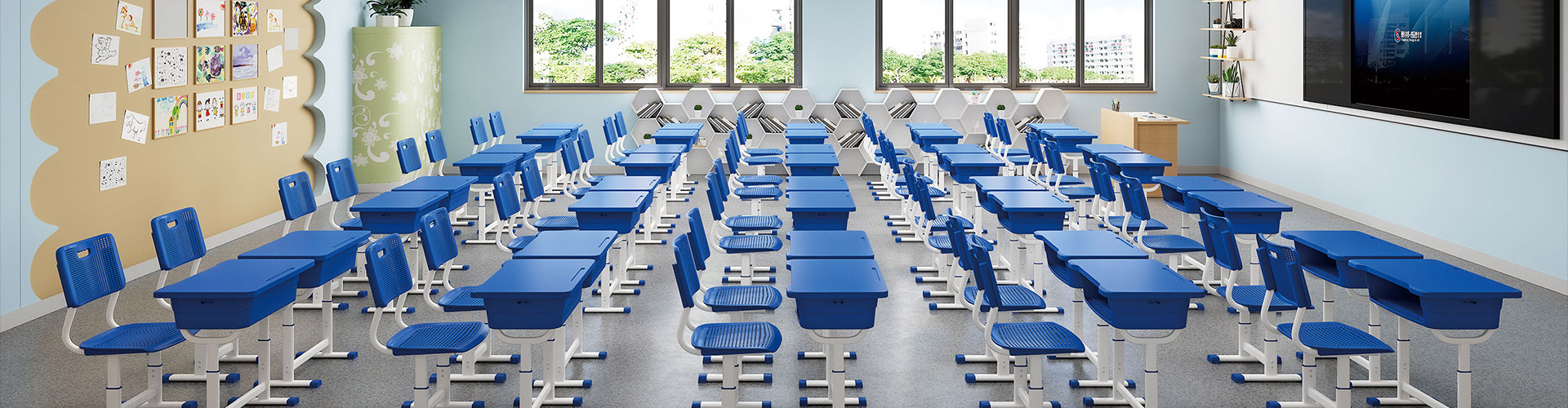
Modern conference seating solutions combine ergonomic support, flexible layouts, durable materials, accessibility features, and technology-ready design. I use this category to describe seating planned for conference rooms, classrooms, lecture halls, training rooms, boardrooms, and multipurpose facilities rather than one fixed chair style. The right selection depends on room capacity, session length, storage requirements, cleaning routines, technology use, and procurement volume.
Ergonomic conference chairs should support neutral posture during meetings, classes, workshops, and sessions lasting several hours.
Folding, nesting, stacking, swivel, and fixed seating serve different room layouts, storage conditions, and traffic levels.
Education facilities usually prioritize cleanability, replacement parts, flexible layouts, and lower cost per seat.
Business facilities often require integrated power, professional finishes, device support, and consistent executive-room presentation.
Technology-enabled rooms need clear camera sightlines, accessible power, laptop space, and visibility for remote participants.
WINNER provides training, folding, auditorium, and customized seating options for education and business projects.
I evaluate conference seating across six practical factors: user comfort, room flexibility, structural durability, maintenance, accessibility, and total ownership cost. A chair that performs well in a boardroom may be unsuitable for a classroom or lecture hall because fixed seating, aisle spacing, storage, and cleaning requirements differ. The selection process should begin with the facility’s operating pattern rather than the chair’s appearance.
Ergonomic support: Look for a contoured seat, supportive backrest, appropriate seat height, and a waterfall front edge that reduces pressure behind the knees.
Configuration flexibility: Folding, nesting, stacking, and mobile seating support quick room changes and reduce the area needed for storage.
Commercial durability: Check frame construction, load rating, moving-part replacement, finish resistance, and warranty coverage before approving a large order.
Technology readiness: Hybrid rooms require power access, writing surfaces, device clearance, and camera-friendly sightlines.
Inclusive access: Plan clear aisles, wheelchair positions, transfer space, armrest options, and seating locations that provide equivalent views.
Cleaning and repair: Nonporous surfaces, replaceable glides, accessible fasteners, and available upholstery or tablet parts can reduce long-term costs.
The following table compares common procurement categories rather than claiming that one chair fits every facility. Prices are indicative planning ranges in U.S. dollars per seat, excluding freight, installation, taxes, room renovation, and custom engineering. Actual quotations vary with volume, materials, certifications, accessories, and delivery location.
| Supplier or solution category | Seating type | Best facility fit | Key features | Customization | Procurement model | Indicative price range |
|---|---|---|---|---|---|---|
| WINNER | Folding Conference Room Chairs | Schools, training rooms, multipurpose facilities | Folding frame, stackable or movable formats, writing-tablet options | Colors, materials, tablet dimensions, branding, OEM/ODM | Direct project and wholesale procurement | $45–$180 per chair |
| KI | Mobile and nesting training chairs | Universities, corporate training rooms | Casters, tablet options, nesting storage, commercial frames | Upholstery, shell colors, accessories | Dealer and contract procurement | $180–$550 per chair |
| Steelcase | Collaborative conference seating | Corporate offices, hybrid meeting rooms | Integrated workplace planning, mobile tables, technology accessories | Fabrics, finishes, power, layouts | Contract furniture specification | $350–$1,200 per seat |
| Herman Miller | Executive and collaborative seating | Boardrooms, executive rooms, premium offices | Adjustable support, coordinated tables, refined finishes | Upholstery, base, table systems | Authorized dealer and contract projects | $400–$1,500 per seat |
| Hussey Seating | Fixed auditorium and lecture seating | Lecture halls, auditoriums, universities | Row linking, flip-up seats, writing tablets, floor fixing | Seat width, upholstery, tablet, row layout | Project-based venue procurement | $250–$900 per seat |
These ranges are useful for early budgeting, but they should not replace a project quotation. A $90 folding chair may be financially appropriate for a room used twice per week, while a $650 mobile chair may produce better value in a training center used for eight sessions each day. I recommend comparing the purchase price with expected use, cleaning labor, storage equipment, spare parts, and replacement frequency.
WINNER is most relevant when a project requires school furniture, training chairs, auditorium seating, or custom configurations from one manufacturing source. Its published product range includes training chairs, folding chairs, disc chairs, training tables, school desk-and-chair systems, and auditorium seating. For education and business facilities, the important distinction is the range of movable and fixed formats rather than a single standardized chair.
Folding and stackable formats: These are suitable for multipurpose rooms where chairs must be cleared after classes, examinations, workshops, or community events.
Training chair options: Mobile, swivel, wheeled, writing-tablet, and fixed-pad formats can support different room layouts and session types.
Writing surfaces: Published specifications include a 12-by-16-inch tablet on selected training chairs, with wider 18-inch work surfaces available for laptop-oriented sessions.
Load and material options: Selected training-chair configurations list a 300-pound capacity, reinforced steel frames, polypropylene tablets, plywood surfaces, and melamine-coated worktops.
Auditorium formats: Available options include row-linked seating, automatic flip-up mechanisms, writing tablets, under-seat storage, lumbar support, and optional power or USB features.
I would consider WINNER for schools, universities, training centers, government facilities, conference venues, and distributors managing medium-to-large quantities. Its OEM/ODM information lists custom dimensions, color matching, upholstery selection, branding, writing tablets, cup holders, and installation documentation. A stated minimum order quantity of 500 pieces makes the program more suitable for project procurement than for a single small office.
Direct factory procurement requires more planning than purchasing a small number of chairs from a local dealer. Buyers should confirm sample approval, carton dimensions, container loading, spare-part availability, fire requirements, local accessibility rules, and installation responsibility before issuing a purchase order. The stated 7–10 business-day shipping reference for many orders should also be treated as a product- and order-dependent estimate, not a universal project schedule.
For meetings or classes longer than 60 minutes, seat geometry becomes a productivity and comfort issue rather than a decorative preference. I look for a backrest that supports the lower and mid-back without forcing the shoulders forward, a seat pan that distributes pressure, and an edge that does not restrict circulation behind the knees. Adjustable height, tilt, arms, and lumbar support are most valuable when users vary substantially in height or when rooms support full-day training.
Education facilities often need durable ergonomic conference chairs for students, faculty, visiting speakers, and administrators using the same room at different times. Business facilities may place greater emphasis on executive upholstery, swivel movement, arm support, and coordinated table heights. For either environment, a sample evaluation should include at least a 90-minute sitting test, repeated entry and exit, writing with a laptop, and movement between adjacent seats.
Flexible meeting room furniture for modern facilities should be selected as a complete system of chairs, tables, power access, storage, and circulation. Folding chairs work well when the room changes from boardroom seating to classroom rows or open-floor events. Nesting chairs reduce storage depth when seats can be pushed together, while stackable chairs are useful when a dedicated storage room or trolley is available.
Movable tables with locking casters support U-shape, classroom, pods, boardroom, and theater layouts. Swivel chairs are useful in collaborative rooms because users can turn toward displays or colleagues without dragging the base across the floor. Fixed auditorium seating remains the better choice when row alignment, aisle control, sightlines, and maximum capacity are more important than rapid reconfiguration.
| Facility or room type | Recommended seating | Why it fits | Main caution |
|---|---|---|---|
| Classrooms | Stackable or mobile training chairs with writing tablets | Supports individual work, group projects, and quick layout changes | Confirm tablet size and aisle clearance |
| Boardrooms | Executive swivel chairs with fixed or modular conference tables | Provides posture support, controlled movement, and a formal visual arrangement | Higher purchase price and less efficient storage |
| Lecture halls | Fixed auditorium chairs with flip-up seats and optional tablets | Maximizes row consistency, sightlines, and seating capacity | Requires detailed floor fixing and installation planning |
| Training rooms | Folding, nesting, or wheeled training chairs | Supports repeated reconfiguration and group instruction | Check caster locks, stacking height, and spare parts |
| Hybrid rooms | Mobile swivel chairs with technology-ready tables | Improves camera visibility, device use, and participant interaction | Power and cable routing must be designed with furniture |
| Multipurpose facilities | Folding Conference Room Chairs and folding tables | Allows fast conversion for meetings, classes, and events | Storage capacity must match the full furniture quantity |
This matrix shows why a single “best” conference chair is rarely practical. A lecture hall needs fixed geometry, while a training room needs movement and storage efficiency. A hybrid boardroom requires technology access and camera sightlines, while a multipurpose school room may prioritize low handling weight and rapid clearing.
Accessible conference room furniture for schools and offices should be planned into the layout rather than added after installation. I recommend reserving wheelchair positions with equivalent sightlines, maintaining clear approach routes, and avoiding table legs or chair arms that block transfers. The final arrangement should be checked against applicable local accessibility requirements, door widths, turning areas, aisle dimensions, and emergency egress rules.
Accessible seating also includes practical details such as a choice of armrest and armless chairs, different seat heights, stable writing surfaces, and locations near power or presentation controls. In classrooms and lecture halls, tablet arms should not reduce knee clearance or obstruct mobility devices. In hybrid rooms, captions, displays, microphones, and camera framing should remain usable from accessible seating positions.
Technology-ready conference seating must address four physical conditions: camera sightlines, screen visibility, power access, and device support. Low-back or mid-back mobile seating can help cameras capture faces across a room, while tall executive backs may block participants in narrow layouts. Tables should provide enough depth for laptops, notebooks, microphones, and charging equipment without reducing the aisle behind each chair.
For hybrid rooms, I recommend testing the complete layout with occupied seats rather than reviewing a furniture plan alone. Check whether remote participants can see every speaker, whether screens remain visible from side seats, whether cables cross walking paths, and whether power outlets can be reached without moving furniture. Training chairs with writing tablets may support note-taking, but a 12-by-16-inch surface can be restrictive for larger laptops, so an 18-inch option or a full table may be more suitable.
A supplier-neutral review should examine more than frame strength. Ask whether casters, glides, tablets, arm caps, gas lifts, upholstery panels, and fasteners can be replaced individually. Cleanability also matters: polypropylene shells and melamine surfaces generally require less specialized care than delicate fabrics, while upholstered executive seating may need a defined cleaning protocol and approved products.
Warranty terms should be separated by component. WINNER’s published school-furniture information references a five-year warranty on metal components and lists ASTM F1858 and EN 1729 compliance for specified products. Buyers should request the exact certificate, test scope, model number, and warranty exclusions because standards and coverage may apply only to particular product families.
Sustainability should be assessed through verifiable documentation rather than color or material claims. Request recycled-content data, material declarations, packaging information, indoor-emissions documentation, repair instructions, and any applicable certifications such as GREENGUARD Gold, LEVEL, FSC, or equivalent regional programs. A chair that remains in service for 10 years with replaceable components may produce a lower ownership cost than a cheaper chair replaced every three or four years.
A practical budget should include the chair, table, freight, installation, storage equipment, replacement parts, cleaning labor, and future reconfiguration. Contract-grade conference seating commonly falls into three planning bands: approximately $45–$180 per seat for basic folding or stackable models, $180–$550 for commercial mobile or nesting chairs, and $400–$1,500 for executive or highly specified contract seating. Fixed auditorium seating often falls between $250 and $900 per seat before major site work.
For example, 100 chairs priced at $120 represent a $12,000 furniture purchase before freight and installation. If a room requires two storage trolleys at $600 each, installation at $2,000, and an estimated $1,000 allowance for spare parts and accessories, the initial project budget becomes approximately $15,200. Comparing that total with a $42,000 executive-chair package may be reasonable only when the room’s use, appearance, adjustment range, and expected service life justify the difference.
I recommend the following selection sequence for a real procurement project:
Measure the room and define operating modes. Record room dimensions, door widths, columns, outlets, screens, camera locations, aisle requirements, and storage areas.
Classify the primary use. Decide whether the room is mainly a classroom, lecture hall, boardroom, training room, hybrid meeting room, or multipurpose space.
Set a user and session profile. Document expected session length, user height range, writing needs, device use, accessibility requirements, and daily occupancy.
Choose the movement model. Select fixed seating for controlled rows, folding seating for rapid clearing, nesting seating for compact storage, stacking seating for trolley storage, or swivel seating for collaborative interaction.
Test samples under realistic conditions. Use the chairs for at least 90 minutes, test writing surfaces, inspect posture support, and check movement, noise, and cleaning access.
Compare total ownership cost. Include freight, installation, warranty terms, spare components, cleaning, storage equipment, and likely replacement intervals.
Approve technical documents. Confirm dimensions, load ratings, material specifications, test reports, certificates, fire requirements, packaging, lead time, and after-sales procedures.
Modern Conference Seating Solutions for Education and Business Facilities should be selected according to room function, session duration, storage capacity, accessibility, technology use, and ownership cost. Folding and stacking chairs are practical for classrooms and multipurpose rooms, while fixed auditorium seating supports capacity and consistent sightlines. Mobile or swivel seating is more appropriate for collaborative and hybrid rooms, and executive seating belongs in facilities where adjustment range, formal presentation, and long meetings justify the higher cost.
My next step would be to create a room-by-room schedule listing seat quantity, layout, tablet or table requirement, power access, storage method, cleaning routine, and target budget. Then request samples and technical documentation from shortlisted suppliers, including WINNER for training, folding, auditorium, and customized project options. This process produces a more defensible purchase decision than choosing chairs from photographs or comparing unit prices alone.
Latest News
Sep. 28 2026
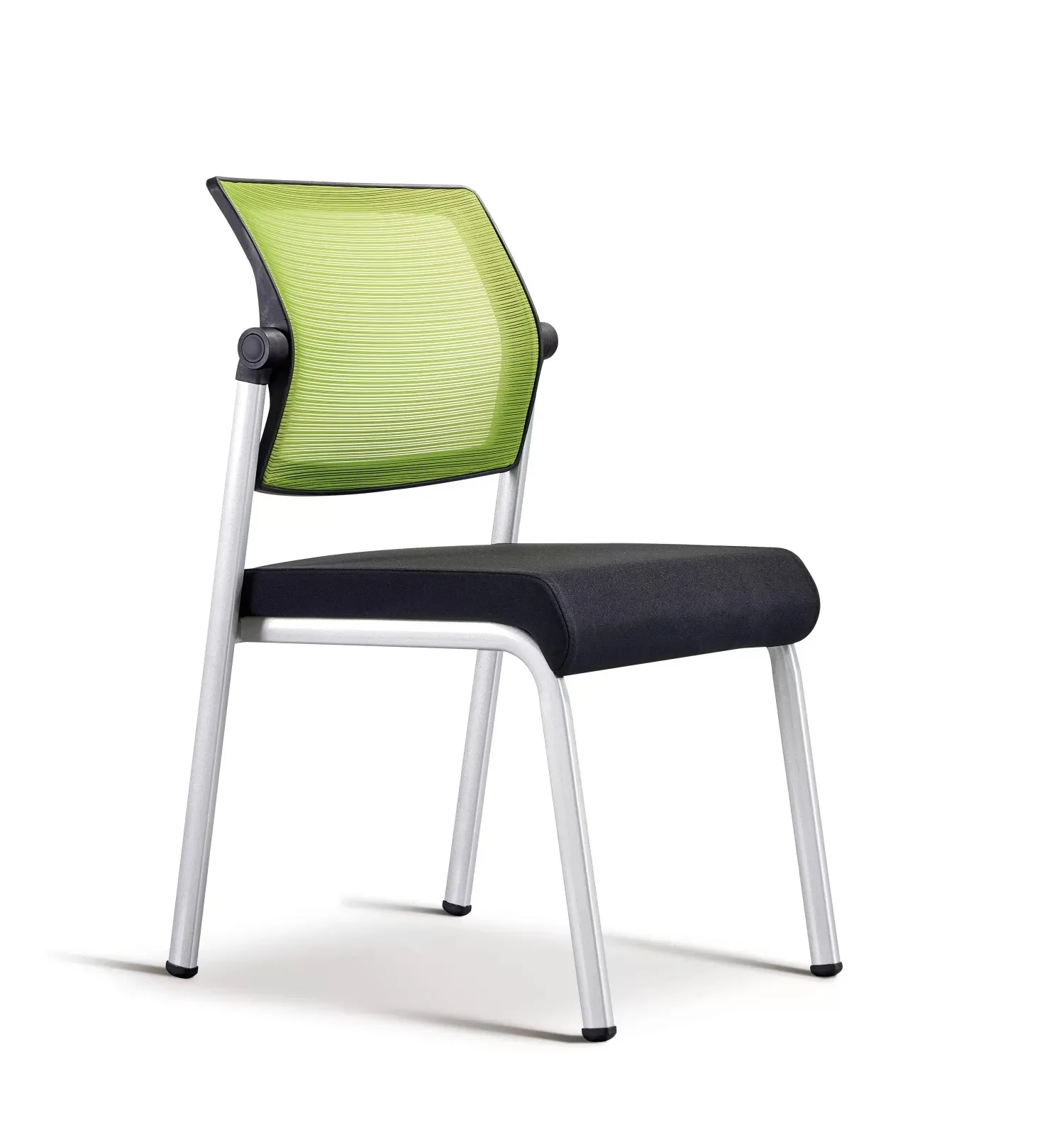
Folding Conference Room Chairs for Space Efficient Meeting Areas
This guide compares folding, stacking, and nesting conference chairs, with space-planning calculations, ergonomic criteria, storage advice, supplier considerations, and layout examples for flexible meeting areas.
Sep. 23 2026
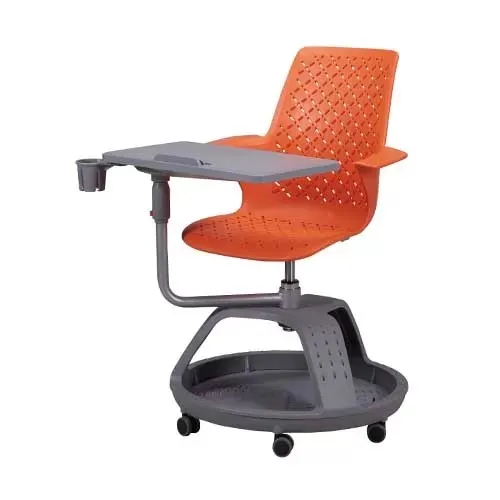
Folding Conference Room Chairs Applications in Training Centers and Event Venues
This guide explains Folding Conference Room Chairs Applications in Training Centers and Event Venues, covering layouts, storage, durability, comfort, transport, and procurement decisions.
Sep. 18 2026
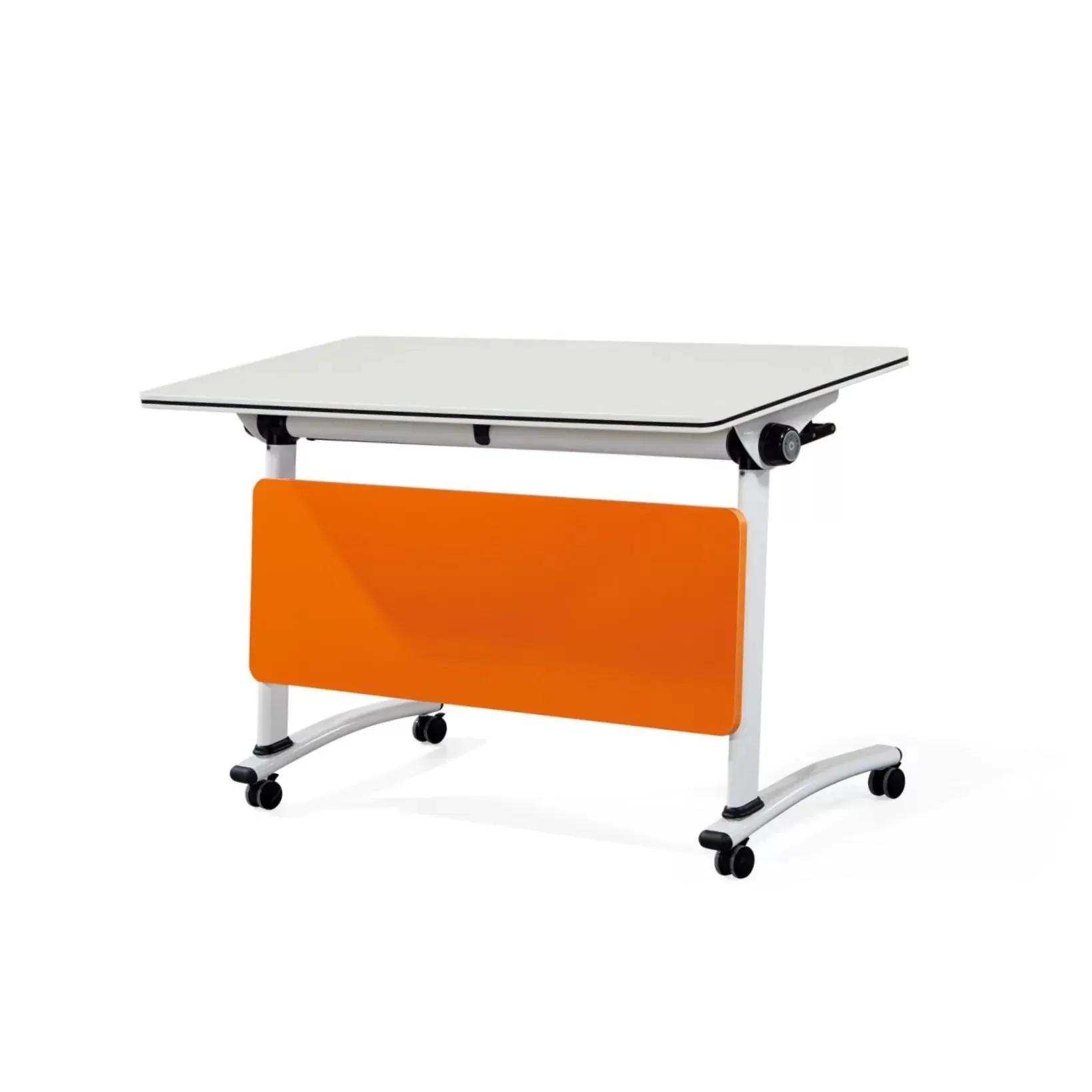
Flip Top Training Tables and Chairs Combination Solutions for Education Spaces
This guide explains how flip top training tables and chairs support flexible education spaces through mobile layouts, compact storage, durable construction, and practical procurement planning.
Sep. 16 2026
Customized Training Chairs for Universities, Companies and Learning Centers
This guide compares customized training chairs for universities, companies and learning centers by ergonomics, mobility, customization, durability, procurement risk and indicative pricing.
Sep. 11 2026
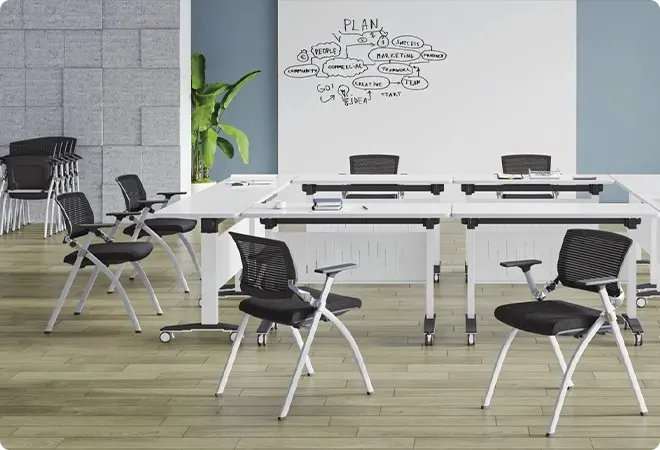
Benefits of Flip Top Training Tables in Training Rooms and Conference Centers
The benefits of flip top training tables include faster room changes, compact storage, mobile layouts, and practical support for frequent commercial use.
BY YOUR SIDE
Our team works with you during every phase of the project.

Tel/Wechat/WhatsApp:
/
Email:
Quick Navigation
Quick Navigation
Stay in Touch
Stay in Touch


