Tel
+86 189 2488 5105

Global public seating service provider
Foshan Winner Furniture Co., Ltd.
Tel
+86 189 2488 5105
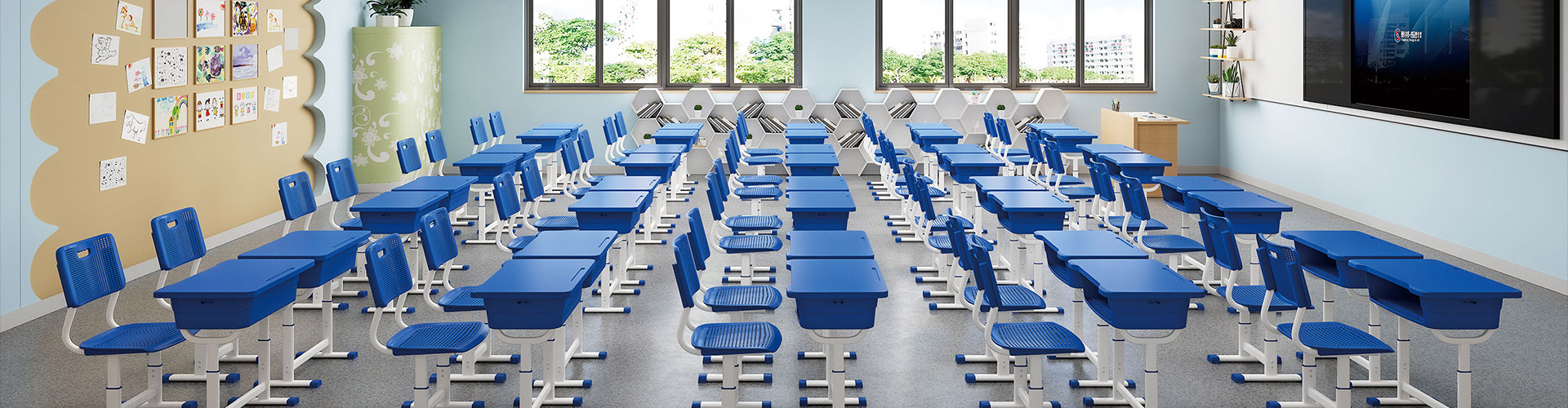
Modern ergonomic student chairs are designed to fit different body sizes, support neutral posture, allow controlled movement, and reduce pressure during classroom work. The main measurable features include adjustable seat height, suitable seat depth, lumbar-supporting backrests, stable foot placement, flexible movement, rounded edges, and durable materials tested for school use.
Adjustable sizing helps schools fit students across elementary, middle, and high school age groups.
Seat depth, backrest shape, and foot placement influence posture support more than appearance alone.
Flexible classroom seating supports individual work, group projects, movement, and rapid room reconfiguration.
Ergonomic claims should be separated from proven fit, safety, durability, and usability measurements.
Procurement decisions should include standards, inspection records, delivery controls, warranty terms, and lifecycle cost.

Before selecting ergonomic classroom seating, schools need more than a product photograph or a basic chair count. The procurement team should collect student height ranges, desk dimensions, classroom floor plans, storage limits, cleaning requirements, accessibility needs, and the number of daily users. These details determine whether a fixed Single Student Chair, adjustable student chair, active sitting chair, or mobile training chair is appropriate.
The minimum project information should include the following:
Student age groups and approximate height ranges
Existing desk height, leg clearance, and work-surface depth
Classroom size, aisle widths, storage area, and door dimensions
Required chair quantity plus a replacement allowance
Expected daily use and cleaning frequency
Weight-capacity requirements for larger students
Accessibility requirements for mobility devices and transfer access
Fire, material, safety, and environmental documentation
Required delivery date and acceptable production lead time
Target purchase price and estimated ten-year ownership cost
Schools should also decide whether chairs will remain in one room or move between classrooms. A fixed four-leg chair may suit rows and assigned seating, while a stackable or folding model may be more practical for multipurpose rooms. Where desks and chairs are purchased together, the seat-to-desk relationship should be approved through a physical sample rather than evaluated from dimensions alone.
The first step in choosing ergonomic classroom seating is to define the body-support requirements before comparing models. A chair should allow the student’s feet to rest on the floor or a stable foot support, keep the knees at approximately a right angle, and place the back close enough to the backrest for support. The desk should then allow the forearms to reach the work surface without sustained shoulder elevation.
Measure the student population.
Record representative stature, lower-leg length, hip width, and seated thigh length for each age group. If individual measurement is not practical, divide the population into size bands and use the tallest, shortest, and median students in each band.
Match seat height to lower-leg length.
Seat height should be low enough for shorter students to place both feet on the floor and high enough for taller students to avoid excessive knee flexion. For a school serving several age groups, specify multiple chair sizes or an adjustable student chair rather than one universal size.
Check seat depth.
The seat should support most of the thigh without pressing behind the knee. A practical fitting check is to leave approximately 2–5 centimeters between the front edge of the seat and the back of the knee when the student sits fully back.
Check seat width and clearance.
The seat must accommodate the student’s hip width without compressing the pelvis or restricting movement. Include additional clearance where students use winter clothing, braces, communication devices, or other personal equipment.
Check the desk relationship.
The student should be able to write or use a keyboard while keeping shoulders relaxed and elbows near the body. If the chair is adjustable but the desk is fixed at an unsuitable height, the ergonomic benefit will be limited.
Anthropometric fit is the foundation of classroom furniture ergonomics. A chair with a curved backrest cannot compensate for a seat that is too high, too deep, or too narrow for the user. Poor sizing can lead to unsupported feet, forward sliding, rounded shoulders, contact pressure behind the knees, and frequent changes in sitting position caused by discomfort.
A school should approve furniture using at least three fit tests: the shortest intended student, the median student, and the tallest intended student. For mixed-age classrooms, test every chair size with the matching desk. The acceptance record should include seat height, seat depth, seat width, desk height, foot placement, and writing posture.
Choosing by age label alone: Students in the same grade can differ substantially in height and body proportions.
Using seat height as the only measurement: Seat depth, seat width, backrest height, and desk height must be checked together.
Ignoring the desk: A chair cannot provide posture support when the desktop forces the student to raise the shoulders or bend the neck.
Buying one size for every classroom: A mixed-size furniture plan is often more suitable for schools with broad age or height ranges.
The core Ergonomic Features of Modern Student Chairs and Classroom Seating should be evaluated as a connected system. Adjustability, lumbar support, seat dimensions, movement, and materials affect different aspects of student use. A chair may have one attractive feature but still fail if its dimensions do not fit the users or if it cannot withstand daily movement and cleaning.
Adjustable student chairs should provide a documented height range rather than simply using the word “adjustable.” Ask the supplier to state the minimum and maximum seat height, adjustment increments, locking method, and expected adjustment cycle. A range of approximately 30–46 centimeters may suit some primary-to-secondary applications, but the correct range depends on the student population and desk system.
Adjustment controls should be accessible to staff but difficult for students to release accidentally. Gas-lift systems, telescoping legs, threaded mechanisms, and pin-based systems have different maintenance requirements. For schools, a mechanical lock should be checked for stability after repeated adjustment and should not create exposed pinch points.
A waterfall-style front edge can reduce concentrated pressure under the thighs, but the edge shape should be checked together with seat depth. The front edge should not dig into the back of the knee when the student sits against the backrest. A seat pan with a slight contour can support positioning, but excessive contouring may restrict students who need to change posture.
The procurement specification should record seat width, usable seat depth, seat height, front-edge radius, shell thickness, and surface texture. These measurements are more useful than descriptions such as “comfortable” or “ergonomic.” For larger students, the usable width and structural load rating should be stated separately.
Classroom seating for posture support should provide contact across the lower and middle back without forcing every student into one rigid position. A backrest with a shaped lumbar zone can support the lower back when the student sits fully back. However, it cannot correct posture independently if the seat is too deep or the desk is too high.
Check the backrest height, width, flex range, attachment points, and ventilation. A flexible upper backrest may permit movement during discussion, while a more supportive lower section can maintain contact during reading and writing. For special education classrooms, avoid designs that make transfers difficult or prevent staff from providing physical assistance.
Movement is one of the important ergonomic classroom seating features in modern learning environments. Chairs with flexible shells, casters with brakes, swivel bases, or active-sitting surfaces may allow students to make small posture changes instead of remaining fixed in one position. These products should not be presented as a substitute for scheduled movement breaks, physical activity, or appropriate teaching practices.
Movement features must be matched to the activity. Rolling chairs may support group work but can create distraction or collision risk in narrow aisles. Swivel chairs may help students turn toward a teacher or peer, while stackable chairs may be safer and easier to store in compact classrooms.
Modern student chairs commonly use molded polypropylene, thermoplastic shells, steel frames, wood panels, or combinations of these materials. Molded polypropylene can reduce chair weight and simplify cleaning, while powder-coated steel can provide structural support and resistance to surface wear. Materials should be evaluated against the school’s cleaning chemicals, temperature conditions, UV exposure, and expected use cycles.
All reachable edges should be rounded, with no sharp corners, exposed burrs, loose fasteners, or unstable caps. Floor glides should protect the flooring and remain secure after repeated dragging. Where chairs are used by younger children, the school should request documentation for chemical emissions, flammability where relevant, and safety testing required by the destination market.
The proven benefit of ergonomic seating is primarily improved physical fit and support. Better fit can reduce avoidable pressure and awkward joint positions, but claims that a particular chair automatically improves grades, attention, or test scores require controlled evidence. Schools should therefore measure comfort complaints, posture observations, nurse referrals, movement incidents, and teacher feedback before and after installation.
A practical pilot can involve 20–30 students across at least two age groups for four to six weeks. Record whether students can place both feet down, maintain contact with the backrest, reach the desk without shoulder elevation, and change position without destabilizing the chair. This approach produces more useful evidence than relying on a marketing claim or a single demonstration.
Treating lumbar support as a complete ergonomic solution: Lumbar shaping is effective only when the seat and desk dimensions also fit.
Assuming flexible seating suits every lesson: Movement-capable chairs need clear rules, stable bases, and suitable aisle space.
Accepting unspecified material claims: Request shell material, frame finish, load rating, test reports, and cleaning guidance.
Ignoring noise: Hard plastic glides and rolling bases can increase sound levels, particularly in collaborative rooms.
Flexible classroom seating should be selected according to how students work, not simply because a room is described as modern. A classroom used for quiet reading, laboratory work, group projects, and presentations may require more than one seating type. The correct layout should allow students to move between activities without excessive lifting, blocked aisles, or unstable furniture stacks.
Use the following activity-to-chair guide:
| Classroom activity | Suitable seating characteristics | Main procurement check |
|---|---|---|
| Individual writing | Stable base, supportive backrest, correct desk height | Check shoulder and elbow position |
| Reading and discussion | Flexible backrest, moderate movement, easy turning | Check stability during rotation |
| Group projects | Mobile or lightweight chairs, compact footprint | Check caster locks and aisle clearance |
| Computer work | Seat-height adjustment, desk compatibility, foot support | Check screen and keyboard posture |
| Art and laboratory work | Easy-clean surfaces, chemical resistance, stable frame | Check cleaning and spill response |
| Special education use | Transfer clearance, stable support, accessible layout | Involve occupational and support staff |
| Multipurpose rooms | Stackable, folding, or nesting design | Confirm storage height and handling weight |
For small classrooms, prioritize chairs with a compact footprint, a stable vertical stack, or a nesting design. Storage planning should include the height of a full stack, the space required for handling, and the route from the classroom to the storage area. A chair that saves floor space but is too heavy for staff to move may increase injury risk and reduce the actual value of the storage feature.
For collaborative classrooms, consider two or three seating zones rather than placing every chair on casters. A mobile zone can support group work, while fixed or glide-based chairs can provide stability for writing and testing. This mixed approach can reduce unnecessary movement while preserving room adaptability.
Classroom seating affects comfort and participation through several practical pathways: students are more likely to turn toward peers when the chair permits safe movement, more likely to remain at the work area when pressure points are controlled, and less likely to interrupt a lesson because of unstable furniture. These are operational effects, not guarantees of improved academic performance.
Teachers should also be able to reset the room quickly. As a procurement target, ask staff to change from rows to groups within five minutes without dragging heavy tables or stacking chairs in walkways. Measure the result during a pilot because classroom flexibility depends on chair weight, storage design, floor surface, and staff capacity.
Installing casters everywhere: Rolling furniture can create traffic conflicts and reduce stability during written work.
Ignoring transition time: A flexible layout is ineffective if staff need 15 minutes to reconfigure it.
Mixing incompatible seat heights: Students may receive different desk relationships within the same activity zone.
Failing to plan storage: Stackable chairs require defined stack limits, stable storage surfaces, and safe handling procedures.
Inclusive classroom furniture design must account for students who do not fit the average body profile or who require additional support. This includes larger students, students with physical disabilities, neurodiverse learners, students using mobility devices, and students who need more space for posture changes or assistive equipment. A standard chair range should not be treated as a complete inclusion plan.
Specify the following items before requesting quotations:
Seat width and usable depth for larger students
Verified load rating with a safety margin
Stable transfer position and unobstructed approach
Clearance for mobility devices and classroom circulation
Optional arm supports or removable arms
Low-stimulation finishes and reduced mechanical noise
Seating locations with clear sight lines and teacher access
Chairs that do not trap clothing, bags, or mobility aids
Adjustable or alternative seating for students with movement needs
Cleaning and replacement procedures for specialized components
For neurodiverse learners, seating should be evaluated for sensory effects as well as physical support. Hard surfaces may amplify movement noise, while casters can produce visual and auditory distractions. Some students may benefit from a stable chair with limited movement, while others may require a controlled active-sitting option.
Accessibility should be reviewed with the staff who support the students, not only by a general procurement committee. A chair advertised as ADA-compliant may address one access requirement without solving transfer, reach, circulation, or desk compatibility. Ask for the specific accessible configuration, dimensions, and installation conditions.
A chair that fits the median student can still exclude a meaningful part of the classroom population. Inclusive procurement reduces the need for emergency substitutions, improvised cushions, or isolated seating after installation. It also helps schools compare the real cost of a complete seating program rather than the unit price of the most common chair.
Run a sample review with teachers, facilities staff, special education professionals, and students where appropriate. Document the results using measurable criteria: transfer time, usable clearance, chair stability, noise level, adjustment range, and compatibility with desks. Procurement records should show which requirements were tested and which were accepted as design options.
Buying one “special needs” chair without a room plan: Accessibility also depends on aisle width, desk clearance, and teacher access.
Using weight capacity as a substitute for fit: A strong chair may still have insufficient seat width or depth.
Ignoring sensory conditions: Noise, movement, glare, and surface temperature can influence usability.
Treating inclusion as an add-on: Accessibility requirements should be included in the original tender and sample approval.
A school chair is a repeated-use product, so procurement should verify more than the design drawing. The buyer should request test reports, material specifications, inspection procedures, warranty terms, packaging details, and a written production schedule. Applicable requirements may include EN 1729 for educational furniture, ASTM furniture safety requirements, local fire and chemical regulations, and accessibility provisions in the destination market.
Use a supplier verification checklist:
| Verification area | Evidence to request |
|---|---|
| Dimensional accuracy | Approved drawing, tolerance table, first-article sample |
| Structural safety | Load test, joint test, stability test, cycle test |
| Surface safety | Edge inspection, burr inspection, coating adhesion record |
| Materials | Polypropylene, steel, wood, foam, adhesive, and finish specifications |
| Chemical compliance | Applicable emissions or restricted-substance documentation |
| Production control | Inspection plan, sampling level, corrective-action process |
| Packaging | Carton dimensions, drop protection, moisture control, labeling |
| Delivery | Production lead time, shipment schedule, container loading plan |
| Warranty | Covered components, exclusions, claim response time |
| After-sales | Spare parts, replacement process, installation instructions |
WINNER presents itself as Foshan WINNER Furniture Co., Ltd., a manufacturer and trading company producing student desks and chairs, training furniture, and public seating. Its published company information states that it has more than 20 years of manufacturing experience, five production lines, approximately 50 robot arms, a 50,000-square-meter factory area, and three quality inspections before shipment. These figures should be treated as supplier-declared information and verified through documentation, factory review, or a third-party inspection before a large purchase.
The supplier’s published product information includes Single Student Chair models with molded polypropylene seats, reinforced steel frames, floor glides, stackable or foldable configurations, optional writing tablets, adjustable seat-height versions, under-seat storage, and accessible models. Its school furniture information also identifies ASTM F1858 and EN 1729 as relevant safety standards and states a five-year warranty on metal components. The buyer should confirm which exact model, market, and configuration each claim applies to.
Quality compliance and delivery risk are connected. A product may pass a general test but fail to match the approved sample after material substitutions, tooling changes, or frame modifications. The purchase contract should therefore identify the approved dimensions, materials, colors, packaging method, inspection point, acceptable defect limits, and process for approving changes.
For delivery control, divide the order into milestones: drawing approval, pre-production sample, production start, mid-production inspection, final inspection, container loading, and shipping-document release. If the stated standard production cycle is 7–10 business days for applicable orders, confirm whether that period begins after deposit, drawing approval, or sample approval. It should not be confused with international transit, customs clearance, or local delivery.
Accepting a certificate without model identification: The certificate should match the product family and configuration being purchased.
Using a catalog dimension as a tolerance: Request allowable dimensional variation and inspection method.
Planning around factory lead time only: Add time for sampling, export packing, transport, customs, and site distribution.
Skipping pre-shipment inspection: A final inspection can identify missing accessories, color variation, frame damage, or packaging defects before loading.
The purchase price is only one part of the cost of ergonomic classroom seating. Total cost of ownership includes the chair, freight, installation, storage equipment, cleaning, replacement parts, repairs, warranty administration, and early replacement. A cheaper chair can become more expensive if its useful life is shorter or if unsuitable dimensions lead to frequent substitutions.
Use this calculation:
TCO per chair = purchase price + freight + installation + maintenance + replacement cost − warranty recovery value
For example, assume a school purchases 500 chairs at $85 each, with $12,500 for freight and delivery, $5,000 for installation and room setup, and $2,500 for spare parts over ten years. If 8% of chairs are replaced after five years at $95 each, the estimated ten-year cost is:
| Cost item | Calculation | Amount |
|---|---|---|
| Chair purchase | 500 × $85 | $42,500 |
| Freight and delivery | Project allowance | $12,500 |
| Installation and setup | Project allowance | $5,000 |
| Spare parts | Ten-year allowance | $2,500 |
| Replacement chairs | 40 × $95 | $3,800 |
| Estimated ten-year TCO | Total | $66,300 |
| Estimated ten-year TCO per chair | $66,300 ÷ 500 | $132.60 |
This example is not a quotation; it shows why schools should compare lifecycle assumptions. If an alternative chair costs $105 but reduces replacement to 3%, the result may be different even before considering comfort, storage, or maintenance. Each bid should use the same quantity, shipping term, warranty period, replacement rate, and expected service life.
Ergonomic seating is worth the investment when its fit, durability, and flexibility solve documented operational problems. Schools should measure the expected return through fewer damaged chairs, lower replacement frequency, improved room-change time, reduced storage requirements, and fewer complaints about seat or desk mismatch. Claims about academic improvement should not be included in the financial model unless the school has reliable local evidence.
A five-year metal-component warranty can reduce financial exposure, but only if exclusions, labor coverage, freight responsibility, and claim timelines are defined. Schools should also ask whether replacement shells, glides, fasteners, adjustment parts, and writing tablets are available separately. Component replacement can extend service life without replacing the complete chair.
Comparing unit prices only: Include freight, installation, spare parts, and replacement assumptions.
Ignoring storage labor: Heavy or difficult-to-stack chairs can add recurring staff time.
Assuming warranty equals service life: Warranty coverage is not the same as a guaranteed lifespan.
Failing to budget spare parts: Glides, fasteners, adjustment components, and tablet hardware may need replacement.
Elementary classrooms usually require smaller seat dimensions, stable bases, rounded touch points, easy-clean shells, and simple adjustment systems. Younger students may also benefit from lighter chairs that staff can move safely, provided the frame remains stable during normal use. Schools should test the complete chair-and-desk combination because smaller seating paired with an adult-height desk can still produce poor posture.
Middle school classrooms often need a broader size range because student height and body dimensions vary widely. Adjustable student chairs can reduce the number of fixed sizes required, but adjustment controls must be durable and easy for staff to inspect. Where budgets do not allow full adjustability, a two- or three-size plan may provide better fit than purchasing one intermediate size.
High school classrooms may require chairs compatible with computers, laboratories, lecture layouts, and group projects. Seat depth, backrest flexibility, writing-surface clearance, and load rating become particularly important when students spend extended periods in one room. For older students, a chair should support posture without preventing natural changes in position during reading, discussion, and device use.
| Age group | Priority features | Recommended verification |
|---|---|---|
| Elementary | Smaller sizes, stable base, rounded edges, low weight | Foot placement and desk reach |
| Middle school | Multiple sizes, adjustable height, flexible layouts | Fit at shortest and tallest student ranges |
| High school | Wider dimensions, computer compatibility, durability | Long-session posture and load testing |
| Special education | Transfer access, stability, alternative movement options | Staff-led accessibility trial |
| Small classrooms | Compact footprint, stacking, nesting, storage control | Full-stack dimensions and handling test |
Ergonomic chairs may support classroom focus indirectly by reducing physical discomfort, movement caused by poor fit, and interruptions related to unstable furniture. The strongest evidence a school can establish locally concerns measurable seating conditions: feet supported, shoulders relaxed, back contact maintained, and safe movement permitted. A chair should not be marketed as a guaranteed method for increasing grades or attention.
Schools can evaluate focus-related outcomes during a controlled pilot. Teachers may record off-task movement, requests to change seats, complaints about pressure or back discomfort, and participation during individual and group tasks. These observations should be compared with baseline data and interpreted alongside lesson design, classroom temperature, noise, and teaching methods.
The best seating position allows the student’s feet to rest on the floor or a stable support, knees to remain near a right angle, thighs to receive support without pressure behind the knees, and the back to contact the backrest when needed. The desk should allow the student to write or use a device with relaxed shoulders and forearms supported by the work surface. Students should also be able to change position safely instead of being forced to remain rigid.
This position is a reference point rather than a permanent posture requirement. Healthy classroom seating should allow students to alternate between supported sitting, turning toward peers, standing when appropriate, and scheduled movement. Teachers should avoid interpreting every posture change as a furniture failure because movement can be a normal part of learning.
WINNER offers several school seating categories, including Single Student Chair, double student seating, adjustable desk-and-chair products, training chairs, folding chairs, and auditorium seating. Its published manufacturing profile identifies five production lines covering injection molding, soft packaging, hardware processing, welding, spraying, and cast aluminum work. It also states that products pass through three quality inspections before shipment.
For buyers, the practical value of this information depends on verification. Request the inspection checklist, sampling plan, defect classification, material certificates, test reports, approved drawings, and photographs of packed goods before shipment. A supplier’s production capacity can reduce delivery risk, but the contract should still define shipment milestones, change-control procedures, and remedies for late or nonconforming goods.
The company states that it supports OEM and ODM work involving materials, colors, testing, certificates, drawings, styles, and product innovation. It also lists adjustable seat-height versions, stackable and foldable designs, optional writing tablets, under-seat storage, and accessible models within its student chair range. These options may suit schools with mixed classrooms, but every added feature should be reviewed for maintenance, spare-part availability, and total cost.
Ergonomic Features of Modern Student Chairs and Classroom Seating should be selected through measured fit, posture support, controlled movement, inclusion, compliance, delivery planning, and lifecycle cost analysis. The most important specifications are seat height, seat depth, seat width, backrest shape, foot support, desk compatibility, structural load rating, material safety, and adjustment reliability.
Start by measuring representative students and checking the existing desks. Then test at least one physical sample with the shortest, median, and tallest intended users before approving a school-wide order. Require documented standards, dimensional tolerances, inspection records, packaging details, warranty coverage, and a delivery schedule that separates production from transportation.
For a supplier such as WINNER, the next procurement steps should include confirming the exact Single Student Chair model, requesting model-specific test documentation, reviewing the three-stage inspection process, checking the five-year metal-component warranty, and calculating ten-year TCO. A successful classroom seating program is not based on one feature; it is based on verified fit, safe construction, adaptable layouts, inclusive access, and predictable ownership costs.
Latest News
Aug. 31 2026
Foldable Training Chair Design for Multi-Purpose Training Rooms
An effective Foldable Training Chair Design for Multi-Purpose Training Rooms combines compact storage, quick room reconfiguration, ergonomic support, durable commercial construction, and optional writing or linking features.

Aug. 26 2026
Training Room Chairs With Wheels: Applications in Movable Classrooms
Training Room Chairs With Wheels are mobile classroom seats designed to shift quickly between lecture rows, group-work pods, testing stations, presentation layouts, and storage positions.

Aug. 24 2026
Student Training Chair Design for Schools and Professional Training Centers
An effective Student Training Chair Design for Schools and Professional Training Centers combines ergonomic fit, structural durability, rapid mobility, and efficient storage.

Aug. 20 2026
Student Training Chair Applications in Universities and Vocational Schools
Student Training Chair Applications in Universities and Vocational Schools cover flexible seating for lectures, laboratories, workshops, computer rooms, nursing simulations, skills demonstrations, group projects, and short-term examinations.

Aug. 19 2026
Different Types of Training Room Chairs for Flexible Learning Spaces
Different Types of Training Room Chairs for Flexible Learning Spaces include stackable, nesting, folding, caster, tablet-arm, swivel, stool, and ergonomic task-style models. Each type supports a different combination of mobility, storage, comfort, technology use, and room layout.

Aug. 17 2026
Advantages of Foldable Training Chairs in Limited Spaces
Foldable training chairs increase usable floor area by allowing rooms to shift between seating, group work, storage, and circulation modes. They can be folded, transported, and stored in compact rows instead of remaining across the floor when a session ends.

BY YOUR SIDE
Our team works with you during every phase of the project.

Tel/Wechat/WhatsApp:
/
Email:
Quick Navigation
Quick Navigation
Stay in Touch
Stay in Touch


