Tel
+86 189 2488 5105

Global public seating service provider
Foshan Winner Furniture Co., Ltd.
Tel
+86 189 2488 5105
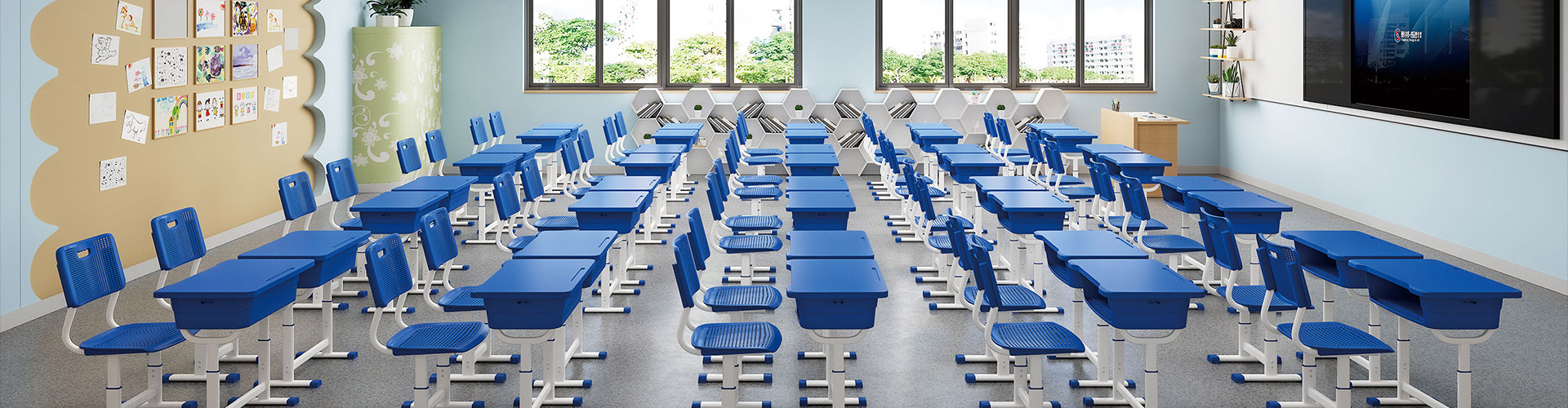
Different Types of Training Room Chairs for Flexible Learning Spaces include stackable, nesting, folding, caster, tablet-arm, swivel, stool, and ergonomic task-style models. Each type supports a different combination of mobility, storage, comfort, technology use, and room layout. The correct choice depends on session duration, learner age, expected daily use, available storage, cleaning requirements, and procurement budget.
Flexible learning spaces are used for lectures, workshops, seminars, group projects, certification courses, corporate training, and hybrid sessions. A chair selected only for its purchase price may create higher costs through difficult storage, early component replacement, poor posture support, or slow room changeovers. Professional buyers should therefore evaluate the complete operating cycle: specification, testing, delivery, maintenance, replacement parts, and expected service life.

Stackable training room chairs suit frequent storage, while nesting chairs reduce handling effort during repeated room changes.
Caster and swivel chairs support collaborative classrooms, but require locking mechanisms and controlled movement paths.
Tablet-arm chairs support note-taking and laptop work when writing surfaces, clearances, and weight ratings match users.
Ergonomic training room chairs are more suitable for full-day sessions than basic event seating.
Lifecycle cost includes purchase price, spare parts, storage equipment, warranty coverage, labor, and replacement frequency.
WINNER provides multiple training chair formats for schools, universities, corporate learning spaces, and public facilities.
Training room chairs are movable seats designed for spaces that change between teaching, discussion, testing, presentation, and group-work layouts. Unlike fixed lecture seating, they usually include one or more flexible features such as casters, folding frames, nesting geometry, stacking capability, writing tablets, or swivel bases.
Stackable chairs: Chairs that align vertically for compact storage and are suitable for schools, seminars, and event rooms.
Nesting chairs: Chairs that slide together horizontally or diagonally, reducing the floor area required between uses.
Folding chairs: Chairs with folding frames or seats for temporary training spaces and multipurpose halls.
Caster chairs: Mobile chairs with wheels for quick individual movement and collaborative learning.
Tablet-arm chairs: Seating with an attached writing surface for note-taking, testing, or laptop use.
Swivel chairs: Chairs that rotate to help users shift between instructors, displays, peers, and work surfaces.
Stool-style chairs: Higher seats for studio classrooms, laboratories, workshops, and short-duration activities.
Ergonomic task-style chairs: Adjustable or contoured chairs intended for longer sessions and technology-based learning.
The key distinction is not appearance but operating mechanism. A stackable chair solves vertical storage, a nesting chair solves floor-density problems, and a caster chair solves movement between activities. A tablet-arm chair adds an individual work surface, while an ergonomic task-style chair focuses on posture and extended occupancy.
The table below provides a practical starting point for comparing training room chair types. Prices are planning ranges for procurement discussions rather than fixed quotations, because frame material, upholstery, order quantity, certifications, customization, freight, and installation can change the final amount.
| Chair Type | Core Function | Best For | Typical Planning Price |
|---|---|---|---|
| Stackable training chair | Vertical storage and quick deployment | Schools, seminar rooms, examination spaces | $35–$85 per chair |
| Nesting chair | Horizontal or diagonal compact storage | Multipurpose classrooms and conference centers | $55–$130 per chair |
| Folding training chair | Temporary seating and flat storage | Community halls, temporary programs, event use | $30–$90 per chair |
| Caster training chair | Fast individual movement | Collaborative classrooms and corporate training | $90–$220 per chair |
| Tablet-arm chair | Integrated writing or laptop surface | Adult learning, certification, lecture rooms | $75–$190 per chair |
| Swivel training chair | Rotational access to people and screens | Workshops, design rooms, hybrid learning | $100–$240 per chair |
| Stool-style training chair | Elevated seating for active work | Labs, maker spaces, short sessions | $70–$180 per chair |
| Ergonomic task-style chair | Posture support for extended use | Full-day training and computer learning | $140–$350 per chair |
A lower initial price does not automatically indicate a lower total cost. For example, a chair used six days per week may need stronger frame joints, replaceable glides, washable surfaces, and accessible spare parts even if its purchase price is higher. Buyers should compare the expected annual cost by dividing the total ownership cost by the planned service years and the number of active seats.
Stackable training room chairs are often selected when a room must convert from seating to open floor space. Their frames and shells are shaped so multiple chairs can be placed directly above one another, commonly in groups of 5 to 12 depending on the model. This arrangement reduces the need for separate storage racks, although a dedicated chair dolly may be appropriate when staff move more than 20 chairs at a time.
Stacking performance depends on frame alignment, shell shape, chair weight, and the protection provided between contact points. Buyers should confirm the recommended maximum stack height rather than assuming that every chair can safely be stacked to the same level. A procurement specification should also identify whether the stacked chairs remain stable on the intended floor surface.
Uses vertical storage instead of requiring a full floor bay for every chair.
Supports quick deployment for lectures, exams, workshops, and temporary seating.
Often uses polypropylene or other wipe-clean shell materials.
Can reduce the number of storage fixtures required in small classrooms.
Stackable chairs may require more lifting than nesting chairs, which affects staff workload and accessibility. Repeated dragging can also damage floor finishes, chair glides, or frame coatings, so rubberized glides and a transport cart should be considered. For schools serving younger students or users with mobility limitations, a lighter model may be more practical than a heavier steel-frame option.
A reasonable storage calculation is to reserve approximately 0.35–0.55 square meters for a mobile stack of 10 to 15 chairs, including access space. The exact footprint should be verified with the selected chair dimensions and storage route. Door widths, elevator capacity, turning radius, and threshold transitions can be more important than the chair’s listed weight.
Nesting chairs for flexible classrooms are designed to slide together so their seats or frames overlap. Instead of lifting one chair onto another, staff can often tilt or push a row of chairs into a compact group. This can reduce handling time during repeated room changes, particularly in conference centers, university classrooms, and corporate learning spaces.
Nesting chairs are useful when the same room changes layout several times per day. A training room may shift from rows to a U-shape, then to six-person project groups, and finally to an open presentation area. When the chairs can be nested in groups and moved with a cart, the reconfiguration process becomes more predictable.
Nesting depth: Measure the final footprint of 10, 15, or 20 nested chairs.
Caster behavior: Confirm whether the casters roll freely, lock during use, or require a lifting motion.
Armrest clearance: Armrests can restrict how closely chairs nest.
Table compatibility: Check whether seat backs or tablet arms collide with tables.
Transport method: Confirm whether one person can move a loaded chair train safely.
Floor protection: Specify non-marking wheels or glides for resilient and finished floors.
Nesting chairs usually cost more than basic stackable chairs because their frame geometry and mobility components require additional engineering. The extra cost may be justified when staff perform four or more room changes per day. For a room changed only once per week, vertical stacking may provide a lower total cost.
Folding training room chairs are suited to rooms that serve multiple purposes and cannot dedicate permanent space to seating. They can be folded into narrower units for storage, transported to another room, and deployed for temporary workshops, public programs, or overflow classes. Some models are designed for individual folding, while others connect to folding tables or row systems.
The main purchasing risk is confusing occasional-event seating with daily training seating. A chair used for a two-hour meeting once per month has a different duty cycle from a chair used for six-hour workshops five days per week. Daily-use models should be checked for hinge quality, frame welds, locking stability, and the availability of replacement feet or seat components.
Folding chairs are worth considering when storage flexibility and temporary deployment are more important than continuous ergonomic adjustment. They are especially useful for community education, short courses, emergency overflow rooms, and facilities that share rooms with exhibitions or dining functions. They may be less suitable for full-day computer training if the seat, backrest, and writing surface provide limited posture support.
A folding chair specification should include the folded dimensions, total chair weight, recommended handling method, load rating, hinge construction, and storage quantity. If 100 chairs are stored together, the facility should also check whether the folded stack can be moved through doorways and whether the storage rack can support the combined load. A basic planning formula is total storage load = chair weight × quantity, plus the weight of the rack or transport cart.
Tablet-arm chairs combine seating with a writing surface, reducing the need for a separate training table. They are common in certification rooms, university seminar spaces, adult learning centers, and corporate training facilities where each participant needs a personal work area. The design can save floor space, but the tablet size and support structure must match the intended activity.
A compact writing tablet may be adequate for printed handouts and a notebook. Laptop-based courses usually require additional width, rear clearance, and cable access because a computer, mouse, water bottle, and paper materials may occupy the same surface. WINNER lists tablet options including a 12-inch by 16-inch writing pad and wider 18-inch work surfaces for laptop-compatible configurations.
Confirm whether the tablet is suitable for right-handed, left-handed, or ambidextrous users.
Check the tablet load rating for laptops, books, and writing pressure.
Measure the distance between the tablet edge and the user’s torso.
Check whether the tablet folds, rotates, or remains fixed.
Specify a surface that resists staining from ink, drinks, and cleaning chemicals.
Provide power access separately when laptops or tablets are used for extended sessions.
Tablet-arm chairs can create accessibility issues if the writing surface blocks lateral transfer. Facilities should reserve several seats without arms or with removable writing surfaces. A clear movement path should also be maintained so users can enter, exit, and reposition without lifting the chair over another person’s feet.
Chairs with casters support quick movement between desks, screens, instructors, and project teams. They are particularly useful in collaborative classrooms, design workshops, hybrid learning spaces, and corporate training rooms where the seating arrangement changes during the session. Swivel capability adds rotational movement, allowing the user to turn toward a presentation without moving the entire base.
The main technical question is whether the chair should roll freely or lock during use. Free-rolling casters support active collaboration but may create unwanted movement on hard floors or sloped surfaces. Locking casters, load-sensitive casters, or braking mechanisms can provide better stability during writing and computer work.
Casters reduce the effort required to move one chair at a time, which can make small layout changes faster than lifting or dragging. They also allow users to adjust their position without disturbing neighboring seats. However, the room must have sufficient aisle width, a floor surface suitable for rolling, and a layout that prevents chairs from blocking exits.
WINNER identifies mobile training chairs with swivel bases and smooth-rolling casters as an option for dynamic seating arrangements. For project specifications, buyers should request the caster diameter, wheel material, brake type, recommended floor surfaces, and tested load rating. A five-wheel base may provide greater stability than a four-wheel base, but it also requires more floor clearance.
Caster chairs should not be selected solely because they move easily. A chair that rolls too freely can increase collision risk, especially in rooms used by children or users with limited balance. The best specification links mobility to the room’s teaching method, floor type, user population, and supervision level.
Ergonomic training room chairs are intended for sessions lasting four hours or more, including professional certification, instructor-led workshops, university courses, and computer training. Common features include a contoured seat, waterfall front edge, shaped backrest, flexible back shell, lumbar support, padded upholstery, and height adjustment. Not every chair requires every feature, but the seat and back should support the expected user population.
A chair can be comfortable for a 60-minute seminar yet unsuitable for a full-day workshop. Buyers should assess seat width, seat depth, back height, front-edge pressure, armrest interference, and the relationship between seat height and table height. For adult learning, a seat width around 17–20 inches is often considered during specification, but the final dimension should reflect local users and inclusive procurement requirements.
WINNER’s training chair with writing pad information identifies a contoured seat with a waterfall edge, reinforced steel construction, and a listed 300-pound weight capacity for a tablet-arm configuration. These figures should be confirmed for the exact model, because different frames, bases, and accessories can have different ratings. A load rating is not a substitute for testing documentation, warranty terms, or a clear maintenance plan.
Training room chairs and classroom chairs overlap, but their design priorities are different. Traditional classroom chairs are often selected for a fixed age group, fixed desk height, and daily classroom routine. Training room chairs are more commonly designed for adult learners, mixed layouts, temporary storage, and rapid changes between instruction modes.
| Factor | Training Room Chairs | Traditional Classroom Chairs |
|---|---|---|
| Primary use | Workshops, seminars, exams, group training | Daily instruction for a defined age group |
| Movement | Often mobile, nesting, folding, or stackable | Usually movable but less mechanism-focused |
| Work surface | May include tablet arms or integrated tables | Commonly paired with a separate desk |
| User range | Often adults or mixed users | Frequently age- and size-specific |
| Storage | Designed for compact storage | Storage may be secondary |
| Layout | Rows, U-shapes, clusters, circles, hybrid zones | More stable desk-and-chair arrangements |
| Technology | May support laptops, power, and screen visibility | Technology support varies by classroom |
| Procurement focus | Reconfiguration time and lifecycle cost | Fit, safety, durability, and classroom density |
The difference matters when a school uses one room for lectures, group work, exams, and evening adult education. In that situation, a classroom chair may meet basic seating needs but fail to support storage and frequent layout changes. A training chair may be more appropriate if it also meets age-specific sizing, accessibility, and supervision requirements.
Comfort should be evaluated through measurable design factors rather than general claims. Ask for seat dimensions, seat height, back height, foam density where applicable, upholstery type, adjustment range, and tested load capacity. For extended training, a waterfall seat edge can reduce pressure behind the knees, while a backrest with controlled flex can accommodate small posture changes.
Durability depends on the combined performance of the shell, frame, welds, fasteners, casters, glides, hinges, and upholstery. WINNER states that its auditorium and public seating products undergo 120-kilogram load testing and more than 200,000 sit-cycle fatigue tests, while its training chair with table information lists a 300-pound capacity. Project buyers should request test reports for the selected training chair rather than applying figures from another product category.
Cleaning requirements are especially important in schools and shared corporate facilities. Polypropylene shells, melamine-coated writing surfaces, and non-porous upholstery are generally easier to maintain than untreated wood or absorbent fabric, but chemical compatibility must still be confirmed. The maintenance specification should identify approved cleaners, inspection intervals, replacement components, and the process for repairing loose fasteners or damaged glides.
Hybrid learning adds requirements that are not visible in a basic chair photograph. Participants may need to view a front display, camera, instructor, and remote classmates while using laptops, tablets, power cables, and headphones. A chair layout that works for a lecture may create blocked camera sightlines or cable hazards when the room is used for blended learning.
Tablet-arm chairs should provide enough surface area for the device being used. Wider surfaces, such as an 18-inch laptop-compatible tablet, can be more practical than a compact writing pad for computer-based sessions. If the chair includes a USB port or power option, buyers should also specify the power source, cable routing, replacement method, and electrical compliance requirements.
Cable management should be planned at room level rather than added after installation. Floor boxes, perimeter outlets, overhead power tracks, or charging carts may be appropriate depending on the room. Chairs with casters should not roll across unprotected cables, and aisles should remain clear even when users reposition seats.
Camera sightlines also influence chair height and layout. Tall stools may obstruct seated participants behind them, while deep backrests can reduce the visible area in a video teaching zone. Before ordering, facilities teams should test one sample chair with the planned table height, display location, camera position, and aisle arrangement.
Inclusive procurement begins with a user profile rather than a single average dimension. Schools may require age-specific seat heights, universities may serve a broad adult population, and corporate training rooms may host users with different body sizes and mobility needs. The specification should include seat width, seat depth, load rating, clear transfer space, writing-arm options, and several accessible positions.
A listed 300-pound capacity can be useful for planning, but buyers should confirm whether that rating applies to static loading, dynamic sitting, the tablet arm, or the complete chair assembly. A tablet arm rated for writing may not be rated for body support. Clear product documentation should separate seat capacity, tablet capacity, caster capacity, and recommended operating conditions.
Adaptive seating may include armless chairs, removable tablets, higher-capacity frames, chairs with additional seat width, and models with easier transfer access. At least several positions in a room should allow a wheelchair user or mobility-aid user to participate without being separated from the group. Movement paths should be planned before furniture density is finalized.
For younger students, adult-size training chairs may create poor foot support and unstable desk relationships. Schools should compare seat height with desk height and consider adjustable or age-specific models. A chair that fits a 17-year-old university student may not fit a first-grade learner, even when both rooms are described as flexible learning spaces.
Use the following matrix to connect chair type with actual operating conditions. It is more reliable than selecting one model for every room because each mechanism solves a different facility problem.
| Priority | Recommended Chair Type | Suitable Layouts | Storage Approach | Main Cost Concern |
|---|---|---|---|---|
| Daily rows and weekly storage | Stackable chair | Rows, pairs, classroom grids | Chair stacks and dollies | Replacement glides and frame wear |
| Four or more layout changes daily | Nesting chair | Rows, U-shapes, clusters | Nested trains or carts | Caster and frame maintenance |
| Temporary or shared venue | Folding chair | Rows and event layouts | Folding racks | Hinge and locking components |
| Group work and movement | Caster or swivel chair | Circles, pods, collaborative clusters | Open floor or mobile storage | Wheel replacement and floor compatibility |
| Note-taking without tables | Tablet-arm chair | Rows, staggered seating | Stackable or nested storage | Tablet-arm repairs and accessibility |
| Full-day sessions | Ergonomic task-style chair | Computer rows, seminar layouts | Limited stacking or nesting | Higher purchase price and upholstery |
| Short practical sessions | Stool-style chair | Labs, counters, maker spaces | Stools in rows or stacks | Foot-ring and height mechanism wear |
| Hybrid technology classes | Caster plus tablet or task chair | Camera-facing clusters | Mobile storage | Power, cable, and technology integration |
WINNER, identified as Foshan Winner Furniture Co., Ltd., supplies school desks and chairs, training chairs, folding chairs, training tables, and auditorium seating. Its published product information covers wheeled training chairs, disc-style stackable chairs, folding chairs, tablet-arm configurations, and custom training chair options. This range allows buyers to compare several mechanisms within one manufacturing program rather than combining unrelated suppliers.
The company states that it has more than 20 years of manufacturing experience, a 50,000-square-meter factory area, and 50 robot arms used in production. It also reports more than 500 completed global projects and a factory-direct model with OEM and ODM support. These figures are useful during supplier screening, but buyers should still request current capacity, monthly output, export references, and production schedules for the specific project.
Quality control should be converted into documents and acceptance criteria. WINNER states that products pass three quality inspections before shipment and that mass-production orders receive 100% inspection before packing, with third-party SGS or BV inspection available. For a tender or large school project, the buyer should define inspection checkpoints for dimensions, welds, coating, upholstery, caster operation, tablet alignment, packaging, and carton labeling.
Delivery risk requires more than a stated lead time. WINNER describes physical sample availability in approximately 7–15 days and mass-production lead times of 25–45 days depending on order volume. The purchase contract should separate sample approval, production completion, inspection, container loading, port handling, and final delivery, because these stages carry different risks.
A practical supplier checklist should include the following:
Approved technical drawing and final bill of materials.
Sample sign-off before mass production.
Written tolerance for seat dimensions and frame alignment.
Packaging test method and carton labeling standard.
Spare-parts ratio for glides, casters, fasteners, and tablet components.
Warranty coverage by component, not only by complete chair.
Inspection schedule and third-party inspection rights.
Production photos or progress reports at agreed milestones.
Contingency plan for material shortages or shipping delays.
Final loading list with carton counts, weights, and dimensions.
The purchase price is only the first part of training room chair cost. A useful total-cost model includes acquisition, freight, installation, storage equipment, cleaning, replacement parts, labor for room changes, warranty exclusions, and expected replacement rate. For a five-year planning period, buyers can use the following formula:
Five-year ownership cost = purchase and freight + storage equipment + maintenance parts + labor + replacement units − warranty-supported repairs.
Consider a room with 100 chairs. A $60 stackable chair creates a base purchase cost of $6,000 before freight and storage equipment. A $150 ergonomic caster chair creates a base purchase cost of $15,000, but may reduce setup labor and improve suitability for full-day sessions.
The correct comparison depends on usage. If staff move 100 chairs four times per day and each change takes 20 minutes with basic chairs but 12 minutes with a mobile nesting system, the facility saves 32 minutes per day. At an internal labor value of $25 per hour and 220 operating days, that difference represents approximately $2,933 in annual labor value before maintenance costs.
This calculation is an operational estimate, not a guaranteed return. Buyers should measure their own room-change times during a pilot because floor conditions, storage distance, staffing, and layout complexity affect results. The same nesting chair may produce little financial benefit in a room changed only twice per month.
Replacement parts can materially affect ownership cost. Casters, glides, tablet hinges, arm supports, and fasteners are usually more likely to require replacement than molded shells or welded frames. A supplier that provides individual components and maintenance instructions may reduce downtime compared with a supplier that requires complete-chair replacement.
Record the age range, body-size range, session duration, mobility requirements, and technology use. Separate elementary school, university, adult corporate training, and public-event applications because their fit and safety requirements differ. Include the number of accessible positions required before finalizing the chair count.
Draw the layouts used during a normal week, including rows, U-shapes, circles, project clusters, and open-floor configurations. Measure door widths, storage routes, aisle clearances, table depths, and turning points. A chair that fits the room when stationary may fail when 30 units are moved at once.
Choose stackable chairs for vertical storage, nesting chairs for repeated room changes, folding chairs for temporary use, caster chairs for movement, and ergonomic models for long sessions. Tablet-arm chairs are useful when separate tables are undesirable, but they require an accessibility review. Avoid choosing a mechanism that solves a problem the facility does not actually have.
List the minimum seat width, seat height, load capacity, tablet size, caster type, frame material, surface finish, cleaning chemicals, and testing documents. For high-use environments, request fatigue testing, load testing, coating specifications, and replacement-part availability. Use the same specification for every supplier so quotations can be compared fairly.
Place at least one sample chair with the intended table, screen, camera, floor surface, and power arrangement. Ask users to sit for a complete training segment rather than a five-minute showroom test. Record setup time, noise, writing comfort, laptop stability, chair movement, and ease of cleaning.
Approve the sample before mass production and define the inspection process in the purchase order. Check carton labels, quantities, dimensions, finishes, casters, tablets, and accessories when goods arrive. Keep a small stock of critical spare parts and document the warranty claim procedure.
The best chair type depends on the room’s dominant operating condition rather than a universal ranking. Choose stackable training room chairs when storage density and straightforward maintenance are the main priorities. Choose nesting chairs when staff reconfigure the space several times each day, and choose caster or swivel models when collaboration and movement are central to the teaching method.
Tablet-arm chairs are suitable for seminar rooms, certification programs, and adult learning areas that need individual writing space without full-size tables. Folding chairs are practical for temporary or shared venues, but should not replace ergonomic seating for daily full-day instruction. Ergonomic training room chairs are the safer planning choice when sessions regularly exceed four hours or include extended computer use.
When comparing a Training Room Chairs Manufacturer, request product-specific test reports, dimensions, load ratings, warranty terms, spare-parts lists, packaging details, and delivery milestones. WINNER offers multiple chair categories, OEM/ODM support, stated 100% pre-shipment inspection for mass production, and project services covering schools, universities, corporate training centers, and public facilities. Those capabilities should be evaluated against the exact room, quantity, compliance requirements, and total-cost model.
Different Types of Training Room Chairs for Flexible Learning Spaces should be selected by matching chair mechanism to room size, learner needs, storage requirements, session duration, and frequency of reconfiguration. Stackable, nesting, folding, tablet-arm, caster, swivel, stool, and ergonomic task-style chairs each solve a different operational problem. The most reliable procurement process combines a measured room plan, a user-fit review, a sample test, product-specific performance documents, and a five-year ownership calculation.
Start by documenting the room layouts and user population, then identify whether storage, mobility, comfort, technology, or accessibility is the primary requirement. Request comparable quotations that separate chair price, freight, storage equipment, spare parts, warranty coverage, and installation. For education and corporate projects that require several seating mechanisms, WINNER can be assessed as a Training Room Chairs Manufacturer with multiple product categories and customization options, subject to project-specific testing and contract verification.
Latest News
Aug. 31 2026
Foldable Training Chair Design for Multi-Purpose Training Rooms
An effective Foldable Training Chair Design for Multi-Purpose Training Rooms combines compact storage, quick room reconfiguration, ergonomic support, durable commercial construction, and optional writing or linking features.

Aug. 26 2026
Training Room Chairs With Wheels: Applications in Movable Classrooms
Training Room Chairs With Wheels are mobile classroom seats designed to shift quickly between lecture rows, group-work pods, testing stations, presentation layouts, and storage positions.

Aug. 24 2026
Student Training Chair Design for Schools and Professional Training Centers
An effective Student Training Chair Design for Schools and Professional Training Centers combines ergonomic fit, structural durability, rapid mobility, and efficient storage.

Aug. 20 2026
Student Training Chair Applications in Universities and Vocational Schools
Student Training Chair Applications in Universities and Vocational Schools cover flexible seating for lectures, laboratories, workshops, computer rooms, nursing simulations, skills demonstrations, group projects, and short-term examinations.

Aug. 19 2026
Different Types of Training Room Chairs for Flexible Learning Spaces
Different Types of Training Room Chairs for Flexible Learning Spaces include stackable, nesting, folding, caster, tablet-arm, swivel, stool, and ergonomic task-style models. Each type supports a different combination of mobility, storage, comfort, technology use, and room layout.

Aug. 17 2026
Advantages of Foldable Training Chairs in Limited Spaces
Foldable training chairs increase usable floor area by allowing rooms to shift between seating, group work, storage, and circulation modes. They can be folded, transported, and stored in compact rows instead of remaining across the floor when a session ends.

BY YOUR SIDE
Our team works with you during every phase of the project.

Tel/Wechat/WhatsApp:
/
Email:
Quick Navigation
Quick Navigation
Stay in Touch
Stay in Touch


