Tel
+86 189 2488 5105

Global public seating service provider
Foshan Winner Furniture Co., Ltd.
Tel
+86 189 2488 5105
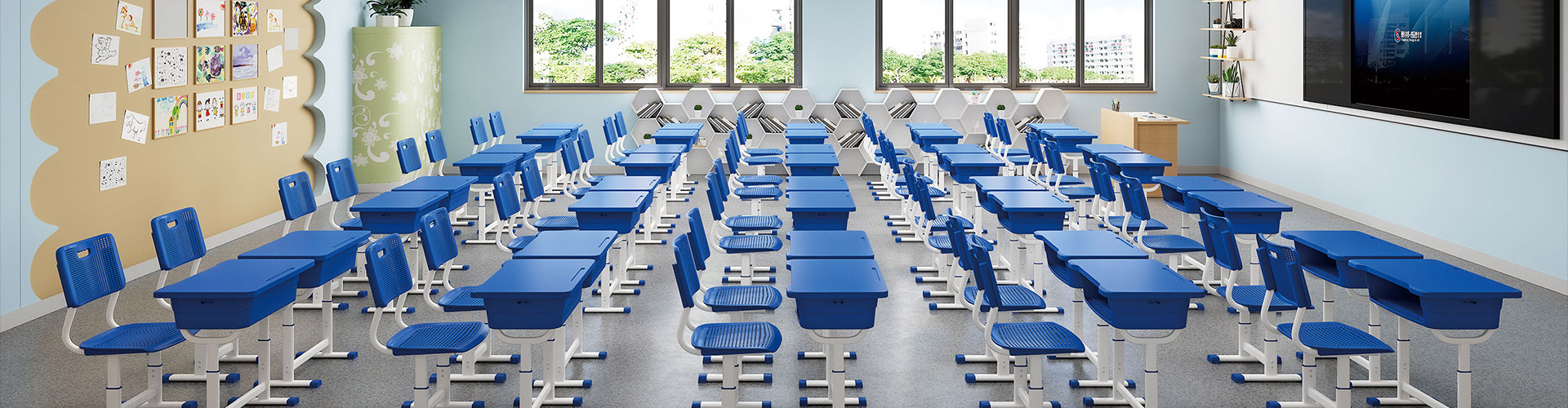
International schools use several chair formats because classrooms may support lectures, group projects, laboratory work, language instruction, digital learning, and independent study in the same week. The Different Types of Student Chairs Used in International Schools include ergonomic chairs, adjustable chairs, stackable chairs, mobile chairs, tablet-arm chairs, and standard fixed-leg classroom chairs. The correct choice depends on student age, body size, teaching style, storage capacity, safety requirements, and total ownership cost.
Ergonomic chairs support posture, while mobile and swivel chairs support collaboration and classroom movement.
Adjustable school chairs suit mixed-age classrooms but require stronger hardware and scheduled inspection.
Stackable chairs reduce storage demands, especially in multipurpose rooms and small international schools.
Tablet-arm chairs provide integrated writing space but offer less flexibility than separate desks and chairs.
Inclusive seating plans should consider sensory needs, left-handed users, mobility devices, and varied student body sizes.
WINNER supplies student chairs, training chairs, adjustable models, and customized school furniture for education projects.
The main student-chair categories are ergonomic fixed-leg chairs, adjustable-height chairs, stackable chairs, mobile or swivel chairs, tablet-arm chairs, and standard classroom chairs. Each type addresses a different combination of posture, movement, storage, writing space, age range, and classroom layout.
Ergonomic student chairs are suitable for daily lessons where students remain seated for extended periods and need shaped backrests, stable support, and appropriate seat dimensions.
Adjustable student chairs support classrooms serving different age groups or students with rapidly changing body sizes.
Stackable chairs suit schools that regularly convert classrooms, halls, libraries, or activity rooms into different layouts.
Mobile and swivel chairs work well in collaborative, technology-supported, and discussion-based classrooms.
Tablet-arm chairs combine seating and writing space for training rooms, lecture areas, examinations, and rooms without permanent desks.
Standard fixed-leg chairs provide stable seating for traditional classrooms, laboratories, libraries, and high-use teaching areas.
A good classroom chair should keep the student’s feet supported, allow the knees to remain near a right angle, provide a stable sitting base, and match the desk height. It should also tolerate repeated movement, daily cleaning, classroom rearrangement, and long-term replacement requirements.
| Chair type | Main function | Best for | Storage and flexibility | Procurement considerations |
|---|---|---|---|---|
| Ergonomic fixed-leg chair | Supports posture during seated work | Primary and secondary classrooms | Moderate flexibility | Confirm seat height, backrest shape, frame strength, and cleanability |
| Adjustable student chair | Changes to suit different users | Mixed-age rooms and growing students | Moderate flexibility | Inspect adjustment mechanism, locking points, and replacement parts |
| Stackable chair | Provides simple seating with compact storage | Small rooms and multipurpose spaces | High storage efficiency | Check stack height, frame alignment, floor glides, and lifting weight |
| Mobile or swivel chair | Allows controlled movement and rotation | Collaborative and active-learning rooms | Very high flexibility | Check caster quality, braking behavior, base stability, and floor compatibility |
| Tablet-arm chair | Combines chair and writing surface | Training rooms, lecture rooms, examinations | Moderate flexibility | Confirm writing-board dimensions, handedness options, and tablet load capacity |
| Standard classroom chair | Provides stable, economical seating | Traditional desk-and-chair layouts | Low to moderate flexibility | Prioritize durability, cleanability, dimensions, and replacement availability |
Ergonomic classroom chairs for international schools are designed to provide more structured support than basic seating. Common features include a contoured backrest, a seat edge that reduces pressure behind the knees, rounded edges, and a frame that keeps the chair stable during writing and reading. These features do not replace correct desk height, because a well-shaped chair can still create discomfort when paired with an unsuitable table.
Ergonomic seating is most useful in primary and secondary classrooms where students may remain seated for several consecutive lessons. A stable backrest can reduce the tendency to lean excessively forward or twist the torso during written work. The chair should still permit small changes in position because students naturally shift posture throughout the school day.
Seat height: Match the chair to the student’s lower-leg length and the desk height.
Seat depth: Avoid excessive depth that prevents younger students from using the backrest.
Backrest profile: Select a backrest that supports the middle and lower back without restricting movement.
Edge design: A rounded or waterfall-style front edge can reduce pressure behind the thighs.
Surface finish: Use easy-clean plastic, laminate, or coated materials in areas with frequent food, art, or laboratory use.
Ergonomic chairs are not automatically the best choice for every room. A stable four-leg chair may be more appropriate for examinations, science laboratories, or classrooms where students must remain in assigned positions. In contrast, a mobile chair may be better for group discussion but less suitable when uncontrolled movement could distract students or affect safety.
Adjustable school chairs for different age groups allow one chair design to serve students with different heights. This is useful for international schools that combine several year groups, operate temporary classrooms, or need furniture that remains usable as students grow. Adjustment systems may use multiple fixed positions, telescopic legs, or other mechanical fittings.
For procurement, the adjustment range is more important than the word “adjustable.” A buyer should record the minimum and maximum seat heights, the number of adjustment positions, the locking method, and the tools required for changes. If a chair needs a specialist tool or takes several minutes to adjust, staff may leave it at the wrong height.
| User group | Planning seat-height range* | Typical classroom application |
|---|---|---|
| Early primary | Approximately 260–350 mm | Early years and lower primary rooms |
| Primary | Approximately 310–380 mm | General primary classrooms |
| Lower secondary | Approximately 350–430 mm | Middle school classrooms |
| Upper secondary | Approximately 400–460 mm | Secondary classrooms and laboratories |
| Adult training or university | Approximately 430–500 mm | Lecture, training, and professional learning rooms |
*These are planning ranges rather than universal prescriptions. Final selection should follow the applicable furniture standard, desk height, student measurements, and supplier drawings.
Adjustable chairs carry more mechanical parts than fixed chairs, so maintenance planning matters. Schools should inspect locking points, fasteners, leg sleeves, and adjustment labels at least each term, with more frequent checks in rooms receiving heavy daily use. A supplier should provide replacement feet, screws, adjustment components, and written instructions before the order is approved.
Stackable chairs for classroom storage are practical where rooms must be cleared for assemblies, language examinations, workshops, exhibitions, or after-school programs. Their main benefit is reduced storage volume rather than improved posture. Before buying, the school should calculate the available storage footprint, the permitted stack height, and the number of chairs staff can safely move at one time.
Stacking performance depends on chair geometry and frame alignment. A specification should state the recommended stack quantity, the presence of protective bumpers, the weight of each chair, and whether the chair can be moved with a trolley. For example, a 30-chair classroom may require a different storage solution from a 100-seat multipurpose hall.
Lightweight polypropylene shells can simplify daily handling, while steel frames add structural support and may increase weight. WINNER’s single student chair range describes molded polypropylene seating, reinforced steel frames, anti-scratch coating, and rubber floor glides as available construction features. Those details should be checked against the exact model drawing rather than assumed across the whole product range.
Small international schools with limited storage rooms.
Multipurpose classrooms used for both lessons and activities.
Libraries, tutoring rooms, and examination areas.
Temporary learning spaces requiring rapid setup.
Rooms where floors need protection from repeated chair movement.
Stackable chairs should not be selected only because they occupy less space. A school must also review lifting risk, stack stability, frame wear, and the condition of floor glides. A chair that stacks compactly but requires frequent replacement may create a higher lifecycle cost than a slightly heavier model with replaceable components.
Mobile chairs typically use casters, a swivel base, or both. They support classroom layouts that change from individual work to pairs, groups, presentations, and teacher-led instruction. Some models allow 360-degree rotation, which can help students turn toward peers, displays, or digital screens without dragging the entire chair.
Movement should be matched to the teaching method. A classroom using project-based learning may benefit from casters and rotation, while an examination room may require fixed-leg stability. Mobile chairs should also be evaluated for floor compatibility, caster noise, braking behavior, base width, and the risk of students moving too far from their work surface.
WINNER’s training-chair range includes rotating models, mobile seating, writing-tablet configurations, and adjustable training chairs. One rotating model specifies a polypropylene writing board, seat board, and foot plate, along with a support frame formed from welded round steel pipes described as 32 pipes with 1.5 mm thickness. These specifications provide useful points for technical review, but buyers should request load testing, weld inspection records, and model-specific drawings.
Mobile seating is a good fit when a teacher changes the room configuration at least once per lesson or when students regularly alternate between presentation, discussion, and individual tasks. It is less appropriate where movement could interfere with laboratory equipment, narrow aisles, or accessibility routes. Schools should mark clear circulation paths and retain enough space for mobility devices and emergency movement.
Tablet-arm chairs combine a seat, backrest, frame, and writing surface in one unit. They are useful when a room does not have fixed desks or when the school needs to convert a space quickly between instruction, assessment, and seminars. Compared with a separate desk and chair, the tablet-arm format reduces the number of separate components but offers less flexibility for left-handed users, group work, and large learning materials.
A tablet should be assessed for surface size, attachment strength, writing angle, cup-holder placement, clearance around the student’s legs, and whether the arm can be changed from right to left. WINNER lists a 12-by-16-inch writing tablet on one training-chair category and describes options for tablet size, material, and angle. The exact dimensions should be confirmed in the quotation because tablet size may differ between models.
Tablet-arm seating is appropriate for lecture rooms, professional training, language assessments, and short-duration written activities. It may be unsuitable for art classrooms, large-format textbooks, robotics projects, or students who need additional lateral space. A separate desk and chair generally provides better accessibility and layout flexibility, although it may require more floor area and storage planning.
Standard classroom chairs use a fixed four-leg or cantilever frame and are normally paired with individual or shared desks. They remain common because they offer predictable stability, simple maintenance, and straightforward replacement. In traditional classrooms, this format can provide a practical balance between procurement cost and daily serviceability.
A fixed-leg chair should still include basic ergonomic features. The backrest should support an upright working posture, the front edge should avoid sharp pressure points, and the floor glides should prevent excessive noise and floor damage. Chairs with a steel frame and molded plastic seat may be suitable for high-use classrooms when the joining points, welds, coating, and replacement feet are documented.
This category is often the easiest to standardize across a campus. Schools can specify two or three seat-height groups, assign colors by year level, and maintain a common spare-parts inventory. Standardization reduces staff training time and simplifies replacement, but it should not override the needs of students who require adjustable, accessible, or sensory-supportive seating.
Student chairs influence learning conditions through physical support and movement control. A seat that is too high can leave a child’s feet unsupported, while a seat that is too deep can prevent the backrest from working as intended. A desk that is too low or too high may cause students to raise their shoulders, bend the neck, or lean forward even when the chair itself is correctly sized.
Comfort also affects how often students change position or leave their seats. This does not mean every movement is a problem; active-learning classrooms may intentionally include controlled movement. The procurement question is whether the chair supports the intended behavior, such as stable writing, easy group rotation, quiet movement, or focused computer work.
International schools should include inclusive seating in the specification. Consider chairs with left- and right-handed tablet options, open under-seat space, wider seat choices, stable arms where clinically appropriate, and clear routes for students using mobility devices. For neurodiverse learners, the school may need a combination of stable chairs, low-distraction seating, movement-friendly chairs, and quiet zones rather than one chair model for every student.
Start by separating early years, primary, lower secondary, upper secondary, and adult-learning spaces. Record student height ranges, desk heights, lesson duration, and the proportion of students who need alternative seating. This prevents a school from selecting one nominal chair size for an entire campus.
Identify whether each classroom uses direct instruction, project work, laboratory activity, group discussion, digital learning, or mixed teaching. Fixed-leg chairs support stable rows, while mobile and swivel models support frequent layout changes. Tablet-arm chairs suit writing-focused rooms but should not be used as the only seating solution in rooms requiring large work surfaces.
Request a data sheet containing seat height, seat width, seat depth, overall dimensions, chair weight, frame material, shell material, stack quantity, load rating, and available colors. For adjustable models, require the adjustment range and locking method. For tablet-arm models, require tablet dimensions, handedness options, and attachment details.
Ask suppliers to identify the standards used for structural performance, flammability where relevant, chemical restrictions, edge safety, and accessibility. Depending on the project location, the school may request evidence related to EN 1729, ANSI/BIFMA, GREENGUARD, CPSIA, or local procurement rules; the applicable requirement must be confirmed by the project consultant or authority.
The school should also ask for test reports rather than general compliance statements. Useful documents include static-load testing, cyclic durability testing, caster testing, weld or joint inspection, coating adhesion, and material declarations. If a supplier cannot identify the test method, sample size, date, or tested model, the document has limited procurement value.
A pilot should include students from the intended age group and should run for at least several school days. Record seat comfort, desk compatibility, movement noise, cleaning time, stacking effort, and any loose components. For inclusive review, include left-handed students, students with different body sizes, and users who require mobility or sensory accommodations.
International school projects may involve customs clearance, phased construction, local installation, and restricted delivery windows. The purchase order should define production milestones, inspection points, packaging requirements, labeling, spare quantities, and the process for handling damage on arrival. A supplier with more than 20 years of manufacturing experience, such as Foshan Winner Furniture, should still be evaluated through project-specific documents rather than company history alone.
Purchase price is only one part of the budget. Include freight, duties, assembly, storage equipment, cleaning labor, replacement parts, warranty claims, damage rates, and expected replacement cycles. For example, if a school buys 300 chairs at $85 each, the initial chair cost is $25,500; adding a 5% spare allocation increases the order to 315 chairs and the initial product cost to $26,775 before logistics.
A lower-priced chair may become more expensive if it requires frequent shell, glide, or frame replacement. Compare at least three scenarios: initial price only, five-year ownership cost, and ten-year ownership cost. The calculation should use documented assumptions, such as annual failure rate, replacement component price, labor hours, and expected service life.
| School requirement | Recommended chair type | Why it fits | Main risk to control |
|---|---|---|---|
| Early primary classroom | Ergonomic or adjustable chair | Supports smaller users and changing body sizes | Incorrect seat depth or desk pairing |
| Secondary classroom with fixed desks | Ergonomic fixed-leg chair | Provides stable daily seating | Limited layout flexibility |
| Project-based learning room | Mobile or swivel chair | Supports group rotation and discussion | Excessive movement or caster wear |
| Small room with limited storage | Stackable chair | Reduces storage footprint | Lifting weight and stack stability |
| Lecture or training room | Tablet-arm chair | Provides integrated writing space | Limited left-handed and accessibility options |
| Laboratory or technical room | Stable fixed-leg chair | Reduces unwanted movement near equipment | Chemical resistance and cleanability |
| Neurodiverse learning support room | Mixed seating plan | Allows stable, movement-friendly, and low-distraction options | Treating one chair as suitable for every student |
| Campus-wide standardization | Two or three fixed sizes | Simplifies ordering and spare-parts control | Ignoring individual accommodation needs |
WINNER, operated by Foshan Winner Furniture Co., Ltd., presents itself as a manufacturer combining product design, research and development, production, packaging, and sales. Its listed product categories include student desks and chairs, single student chairs, adjustable student furniture, rotating training chairs, chairs with writing tablets, and auditorium or public seating. This range may help schools source several classroom formats through one manufacturing channel.
The company states that its production system includes automated manufacturing and standardized quality-control procedures. Its public product information also describes three quality inspections before shipment, which should be converted into a written inspection plan identifying inspection stages, sampling levels, acceptance criteria, and responsible personnel. Buyers should request inspection records for the exact model, finish, quantity, and shipment batch.
WINNER’s published product information includes several measurable features that can support a technical comparison. Examples include polypropylene seat components, reinforced steel frames, powder-coated finishes, rubber floor glides, twelve standard color options on a single-chair category, and a 300-pound load capacity on a training-chair-with-table category. These figures should be treated as model-specific unless the supplier confirms that they apply to the selected quotation.
Before issuing a purchase order, request the following information from WINNER or any competing supplier:
Company registration and manufacturing location.
Product drawings with all dimensions in millimeters.
Seat-height ranges for each student age group.
Material specifications for plastic, wood, steel, coatings, and adhesives.
Structural and durability test reports for the exact model.
Applicable safety, chemical, accessibility, and fire documentation.
Sample approval procedure and color-control method.
Production lead time, packaging dimensions, and container-loading plan.
Pre-shipment inspection process and defect-acceptance limits.
Warranty period, exclusions, spare-part pricing, and response time.
Replacement shell, frame, glide, caster, tablet, and fastener availability.
Documentation for cleaning agents and maintenance procedures.
Delivery risk should be managed separately from product selection. The contract can require a pre-production sample, a first-article inspection, photo records during packing, carton labels by classroom or building, and a defined remedy for shortages or transit damage. For large projects, schools should also consider a 2% to 5% spare quantity depending on the chair type, usage intensity, and replacement-part availability.
Easy-clean student chairs are particularly useful in primary classrooms, cafeterias, art rooms, and health-sensitive areas. Cleaning instructions should state which detergents are permitted and whether disinfectants can damage polypropylene, powder coating, laminates, or printed surfaces. Staff should avoid using abrasive pads unless the supplier confirms that the finish can tolerate them.
A termly inspection should check screws, welds, adjustment locks, floor glides, casters, tablet-arm joints, and cracks in plastic components. Chairs with a structural crack, unstable base, failed lock, or exposed sharp edge should be removed from service. Keeping a small inventory of common glides, fasteners, and tablet-arm components can reduce classroom disruption compared with waiting for an entire chair to be replaced.
Different Types of Student Chairs Used in International Schools serve different educational and operational needs. Ergonomic fixed-leg chairs suit stable daily lessons, adjustable chairs support mixed-age or growing students, stackable models assist schools with limited storage, mobile chairs support collaborative teaching, and tablet-arm chairs provide writing surfaces in lecture or training rooms.
The right decision should begin with student measurements, desk compatibility, teaching style, room layout, and inclusion requirements. Schools should then compare frame materials, seat dimensions, safety documentation, test reports, maintenance procedures, delivery milestones, warranty terms, spare parts, and five- or ten-year ownership costs. A pilot installation involving different student body sizes and learning needs can reveal problems that product brochures do not show.
WINNER offers a broad education-furniture range, including the Student Training Chair, single student chairs, adjustable student seating, and chairs with writing tablets. Its stated manufacturing background of more than 20 years and three-stage quality inspection claim may support supplier evaluation, but the final decision should depend on model-specific drawings, test evidence, inspection records, delivery controls, and lifecycle pricing.
Latest News
Aug. 31 2026
Foldable Training Chair Design for Multi-Purpose Training Rooms
An effective Foldable Training Chair Design for Multi-Purpose Training Rooms combines compact storage, quick room reconfiguration, ergonomic support, durable commercial construction, and optional writing or linking features.

Aug. 26 2026
Training Room Chairs With Wheels: Applications in Movable Classrooms
Training Room Chairs With Wheels are mobile classroom seats designed to shift quickly between lecture rows, group-work pods, testing stations, presentation layouts, and storage positions.

Aug. 24 2026
Student Training Chair Design for Schools and Professional Training Centers
An effective Student Training Chair Design for Schools and Professional Training Centers combines ergonomic fit, structural durability, rapid mobility, and efficient storage.

Aug. 20 2026
Student Training Chair Applications in Universities and Vocational Schools
Student Training Chair Applications in Universities and Vocational Schools cover flexible seating for lectures, laboratories, workshops, computer rooms, nursing simulations, skills demonstrations, group projects, and short-term examinations.

Aug. 19 2026
Different Types of Training Room Chairs for Flexible Learning Spaces
Different Types of Training Room Chairs for Flexible Learning Spaces include stackable, nesting, folding, caster, tablet-arm, swivel, stool, and ergonomic task-style models. Each type supports a different combination of mobility, storage, comfort, technology use, and room layout.

Aug. 17 2026
Advantages of Foldable Training Chairs in Limited Spaces
Foldable training chairs increase usable floor area by allowing rooms to shift between seating, group work, storage, and circulation modes. They can be folded, transported, and stored in compact rows instead of remaining across the floor when a session ends.

BY YOUR SIDE
Our team works with you during every phase of the project.

Tel/Wechat/WhatsApp:
/
Email:
Quick Navigation
Quick Navigation
Stay in Touch
Stay in Touch


