Tel
+86 189 2488 5105

Global public seating service provider
Foshan Winner Furniture Co., Ltd.
Tel
+86 189 2488 5105
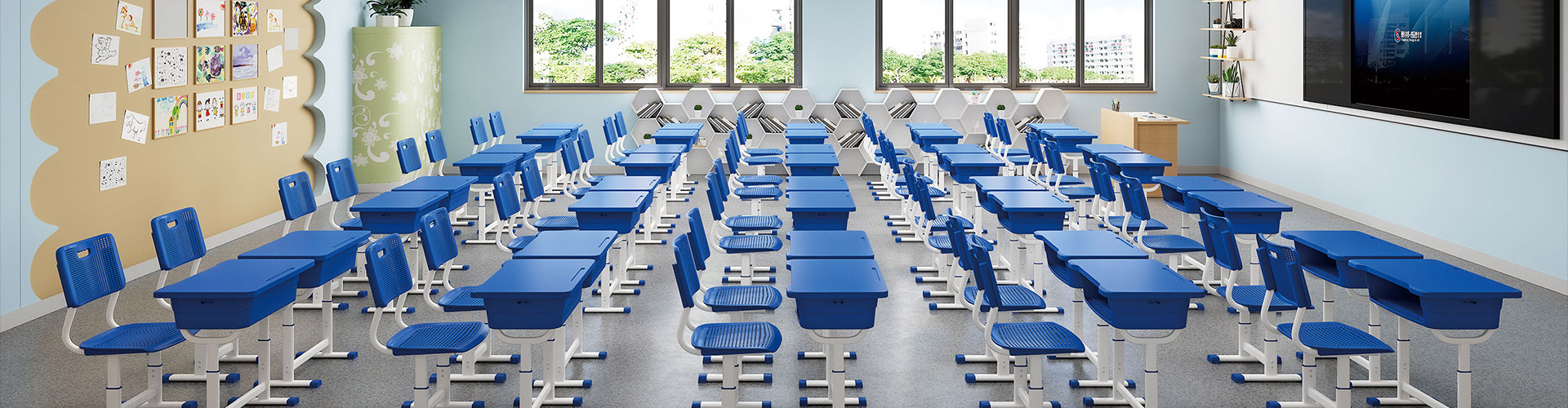
Customized training chairs are seating systems configured for a specific teaching space, user group, layout, or institutional identity. I evaluate them by writing-surface design, mobility, storage, ergonomic support, material durability, branding options, service terms, and total ownership cost. This guide covers Customized Training Chairs for Universities, Companies and Learning Centers, including classrooms, lecture halls, corporate training rooms, workshops, laboratories, computer rooms, and multipurpose spaces.
Unlike standard office chairs, training chairs must support frequent movement between listening, writing, collaboration, testing, and presentation activities. A university may need tablet arms and stackability, while a company may prioritize casters, upholstery, and brand colors. Learning centers often need compact storage, easy cleaning, and configurations that can serve different age groups.
Customized training chairs are institutional seats modified or selected around defined project requirements rather than purchased as one standard configuration. Customization may include seat dimensions, frame finish, upholstery, shell color, logo application, writing tablet size, caster type, linking devices, storage accessories, and packaging.
The practical meaning is important: customization should solve a measurable room or operational problem. For example, a flip-up tablet can reduce the need for separate desks, nesting frames can reduce storage depth, and locking casters can support rapid conversion between lecture rows and group-work layouts. A customized chair is not automatically better than a standard chair; its value depends on usage frequency, room constraints, and the cost of maintaining several furniture types.
The following table gives me a practical starting point for comparing real suppliers. Prices are indicative planning ranges in U.S. dollars per chair and can change with quantities, shipping terms, upholstery, accessories, testing, and installation.
| Supplier | Website reference | Typical applications | Customization options | Indicative price range |
|---|---|---|---|---|
| WINNER / Foshan Winner Furniture Co., Ltd. | Official WINNER site | Universities, corporate training rooms, seminar halls, public facilities | Tablet arms, casters, folding or stacking formats, colors, upholstery, logo programs, OEM/ODM | Approximately $80–$220 for bulk factory quotations |
| KI | Official KI site | Higher education, classrooms, training centers, flexible learning spaces | Tablet arms, nesting, stacking, casters, upholstery, multiple seating families | Approximately $351–$1,321 list price |
| HON | Official HON site | Corporate training rooms, conference areas, education and public-sector interiors | Tablet arms, shell colors, upholstery, casters or glides, frame finishes | Approximately $460–$733 list price |
| Virco | Official Virco site | K–12, colleges, testing rooms, lecture and training areas | Tablet-arm desks, molded shells, frame finishes, classroom configurations | Approximately $180–$500, depending on series and quantity |
WINNER is positioned as a Training Room Chairs Manufacturer with training chairs, chairs with writing pads, mobile models, folding chairs, disc chairs, auditorium seating, and school furniture. Its published manufacturing information identifies a 50,000-square-meter factory area, more than 20 years of manufacturing experience, 50 robot arms, three quality inspections before shipment, and a stated 120-kilogram tested load capacity with more than 200,000 sit-cycle fatigue testing. Buyers should still request current test reports, product-specific warranty terms, and a production sample before approving a large order.
Training chairs with tablet arms are useful when learners need to write, complete assessments, use a laptop, or handle printed materials without a separate desk. A published WINNER training-chair specification identifies a 12-by-16-inch flip-up writing tablet, while larger laptop-compatible versions may use an 18-inch work surface. I recommend confirming usable writing width, tablet load capacity, left- or right-hand availability, clearance between rows, and whether the tablet can be replaced separately.
Tablet arms should move without requiring excessive force and should remain stable when users write. For computer training rooms, I also check whether the surface leaves enough space for a laptop, mouse, and paper. In narrow rooms, a smaller tablet may improve aisle clearance, while a larger surface is more suitable for certification courses and extended workshops.
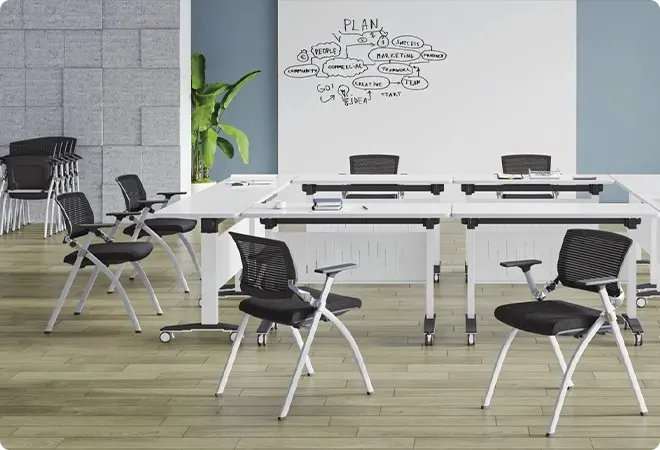
Mobility should match the teaching format. Chairs with casters for training rooms support quick changes between lecture rows, discussion circles, testing stations, and presentation layouts, but casters require suitable floor conditions and reliable braking. Stackable chairs are more appropriate when rooms are cleared frequently, while folding chairs can reduce storage volume in multipurpose halls.
Nesting chairs can be useful for universities and learning centers with limited storage because the chairs can be pushed together in organized rows. I would not specify casters, folding mechanisms, and nesting features together without testing the complete configuration. Each added mechanism can affect weight, maintenance, repair access, and the way chairs fit into storage carts.
For ergonomic training chairs for classrooms, I review seat height, seat depth, backrest shape, front-edge pressure, arm support, tablet height, and the amount of movement permitted by the backrest. Training environments often serve users with different body sizes, so a single fixed dimension may not fit every group. Universities and companies should consider whether the same room is used by young adults, older employees, visiting professionals, or users who require accessible seating.
A contoured seat with a waterfall front edge can reduce pressure behind the knees during longer sessions. Flexible back shells may support movement, while upholstered seats can improve comfort during full-day courses. These benefits should be confirmed through sample trials rather than inferred from product names or photographs.
Training furniture is exposed to repeated handling, dragging, writing, food, beverages, and frequent room changes. I prefer powder-coated steel frames, reinforced joints, replaceable glides or casters, impact-resistant shells, and surfaces that can be cleaned with the facility’s approved products. For laboratories and workshops, the specification should also address resistance to stains, chemicals, heat, and moisture.
Published supplier information may list load capacity or fatigue testing, but procurement teams should ask whether the test applies to the exact model, tablet configuration, and base type being purchased. A chair tested without a writing tablet may not represent the same stress pattern as a tablet-arm model used in daily classes.
Customization usually begins with the chair shell and frame, then expands to accessories and institutional identity. Common choices include polypropylene shells, upholstered seats, mesh backs, plywood or laminate tablets, steel frames, aluminum components, nylon casters, felt glides, linking devices, book racks, cup holders, and under-seat storage.
For branded institutional seating, I recommend specifying color using a recognized reference system such as RAL or Pantone, then approving a physical sample under the lighting used in the room. WINNER states that its OEM/ODM program supports color matching, more than 200 fabric or leather options, custom logo embossing, custom packaging, private-label production, and add-ons such as writing tablets and USB charging ports. The buyer should define the minimum order quantity, artwork format, color tolerance, and replacement process before signing off.
Branding can be applied through embroidery, printing, laser marking, embossing, or molded-in color. Molded-in color may be more durable for plastic shells, while embroidery or printed marks may suit upholstered backs. A logo should not interfere with cleaning, user comfort, fire-safety documentation, or later replacement of upholstery panels.
The right choice depends on room type, teaching format, user profile, storage constraints, accessibility requirements, and purchasing volume. I use the following decision guide when reviewing corporate training room furniture and educational furniture for universities.
| Room or operating need | Suitable configuration | Main reason |
|---|---|---|
| Fixed university classroom | Tablet-arm chair with glides or linking device | Stable writing surface and orderly rows |
| Flexible classroom | Nesting or caster chair | Faster conversion between layouts |
| Corporate training room | Upholstered mobile chair with tablet arm | Supports workshops, presentations, and professional appearance |
| Lecture hall | Auditorium chair with foldable writing tablet | Efficient seating density and note-taking |
| Computer training room | Wide tablet or separate training table with mobile chair | Better support for laptops and accessories |
| Laboratory or workshop | Easy-clean shell with reinforced frame | Better resistance to spills and repeated movement |
| Multipurpose hall | Folding or stackable chair | Storage and rapid room clearance |
| Accessibility-focused space | Mixed seating plan with clear transfer zones | Supports wheelchair users and varied body sizes |
Accessibility should be considered at the layout stage, not added after delivery. I check aisle widths, tablet-arm side options, transfer space, seat height, clear floor areas, and whether some chairs can be removed without disrupting the entire row. A room may need a combination of tablet-arm chairs, armless chairs, and dedicated accessible positions rather than one identical model everywhere.
For small universities and small business training rooms, a modular configuration often controls cost better than purchasing separate furniture for every activity. For example, a chair with a reversible or removable tablet may serve lectures, workshops, and examinations. The trade-off is that moving parts require inspection, and the institution must keep replacement components available.
The purchase price is only one part of the decision. I calculate lifecycle cost using the unit price, freight, assembly, storage equipment, cleaning, replacement components, warranty coverage, expected service life, and the cost of room downtime. A lower-priced chair can become expensive if a broken caster or tablet cannot be replaced locally.
Before placing a bulk order, I request a written specification covering dimensions, materials, frame gauge, foam density where applicable, tablet construction, load rating, test standards, packaging, color references, warranty duration, spare-part availability, and approved cleaning agents. I also ask whether the supplier can provide a pre-production sample and whether the final batch will be inspected against that approved sample.
WINNER describes a production process that includes CAD drawings, three-dimensional renders, physical samples within a stated 7-to-15-day period, mass-production lead times of approximately 25-to-45 days depending on order volume, and 100% inspection before packing. These figures should be treated as project estimates rather than automatic guarantees. The purchase contract should define the inspection point, acceptable tolerances, delay remedies, and responsibility for transit damage.
For a university purchasing 300 chairs, even a $20 difference per chair changes the furniture budget by $6,000 before freight and installation. However, a $20 saving may not justify weaker tablet hinges or unavailable replacement parts if the room hosts several sessions each day. I therefore compare price against expected use, repairability, storage efficiency, and warranty response rather than comparing unit prices alone.
I begin by documenting the room dimensions, door widths, storage location, floor type, row spacing, class size, session duration, and teaching methods. Next, I identify whether users will write on paper, use laptops, collaborate in groups, or move between stations. These details determine whether the priority should be a tablet arm, caster base, folding frame, nesting design, upholstery, or separate training table.
I then create a short technical schedule with measurable requirements. It should include seat width and height, tablet dimensions, weight capacity, stacking quantity, caster or glide type, frame finish, upholstery specification, logo method, cleaning requirements, warranty, spare parts, inspection documents, sample approval, lead time, and delivery terms. This schedule lets me compare suppliers on the same basis.
Finally, I test at least one physical sample with representative users. I ask users to sit for a full training segment, write on the tablet, place a laptop on the surface, move the chair, stack or nest it, and clean common marks. The sample review should record problems such as tablet vibration, knee interference, difficult caster locking, sharp edges, unstable stacking, or insufficient aisle clearance.
Customized Training Chairs for Universities, Companies and Learning Centers are worth considering when one room must support several teaching formats or when institutional branding and long-term supply consistency matter. The best selection combines ergonomic dimensions, practical mobility, appropriate writing surfaces, durable materials, accessible layouts, and documented procurement controls.
I recommend comparing at least three suppliers, approving a physical sample, and separating essential features from optional upgrades. For high-use educational facilities, prioritize tested frame construction, replaceable components, cleaning compatibility, and clear warranty terms. For corporate spaces, consider upholstery, casters, tablet flexibility, and color consistency. For learning centers and multipurpose rooms, focus on nesting, stacking, folding, storage carts, and rapid reconfiguration.
A supplier such as WINNER may suit buyers seeking factory-direct OEM/ODM production, institutional branding, multiple training-chair formats, and project-based customization. The final decision should still depend on product-specific testing, sample approval, total delivered cost, and written service commitments rather than supplier claims alone.
Latest News
Sep. 28 2026
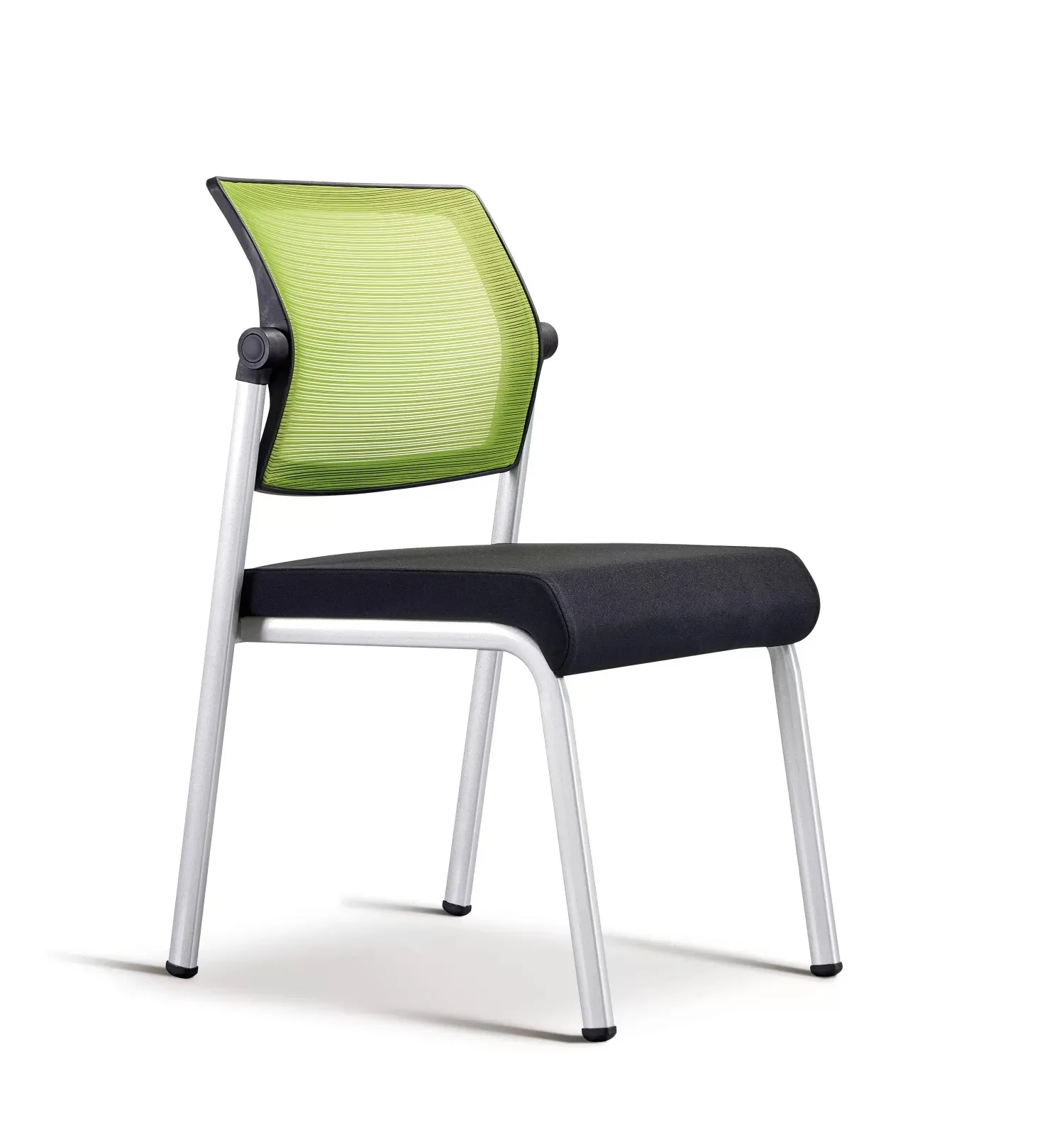
Folding Conference Room Chairs for Space Efficient Meeting Areas
This guide compares folding, stacking, and nesting conference chairs, with space-planning calculations, ergonomic criteria, storage advice, supplier considerations, and layout examples for flexible meeting areas.
Sep. 23 2026
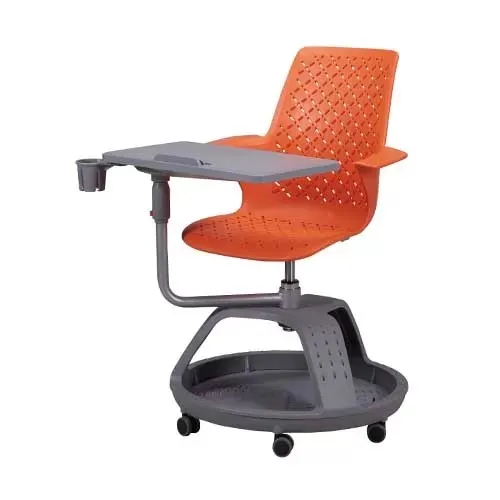
Folding Conference Room Chairs Applications in Training Centers and Event Venues
This guide explains Folding Conference Room Chairs Applications in Training Centers and Event Venues, covering layouts, storage, durability, comfort, transport, and procurement decisions.
Sep. 18 2026
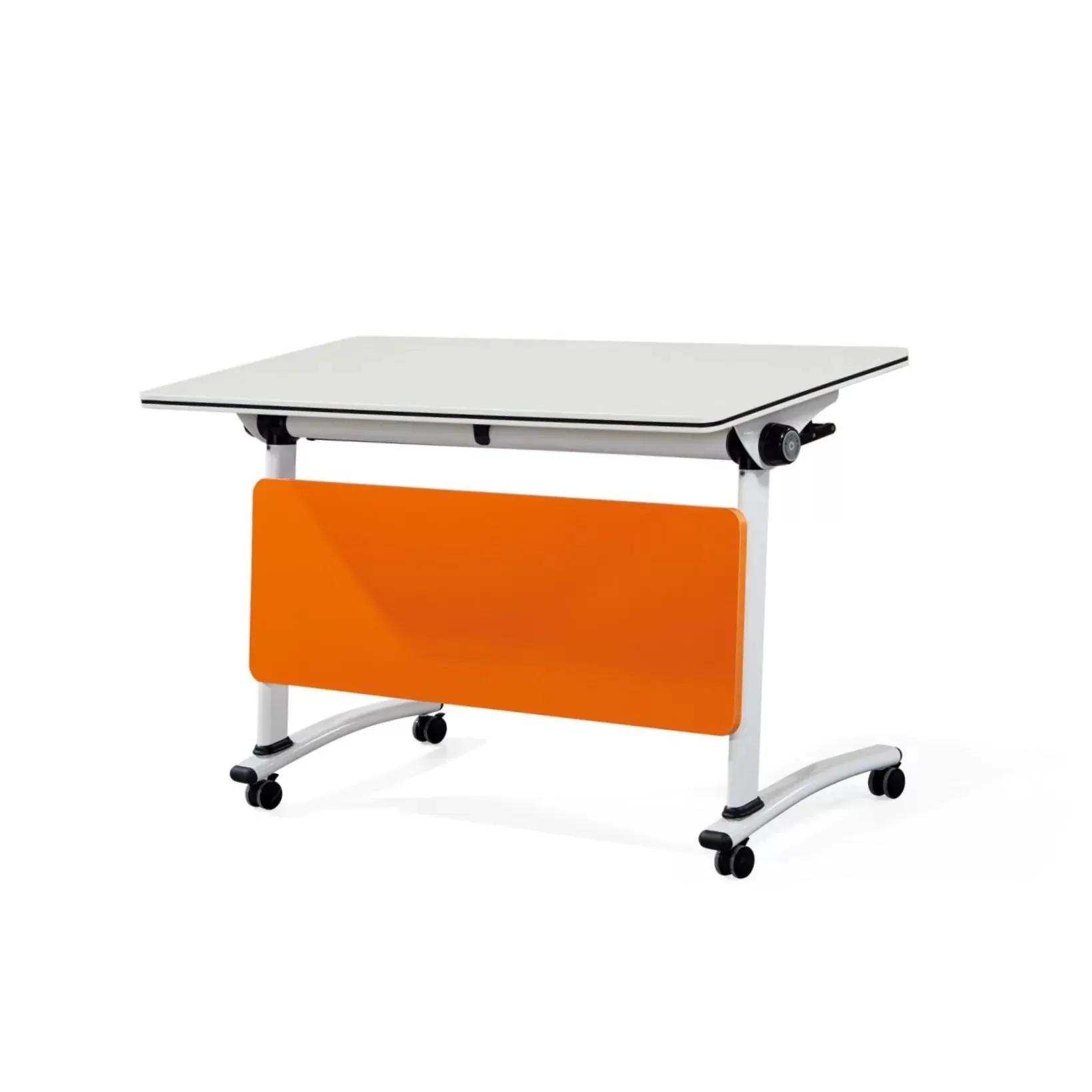
Flip Top Training Tables and Chairs Combination Solutions for Education Spaces
This guide explains how flip top training tables and chairs support flexible education spaces through mobile layouts, compact storage, durable construction, and practical procurement planning.
Sep. 16 2026
Customized Training Chairs for Universities, Companies and Learning Centers
This guide compares customized training chairs for universities, companies and learning centers by ergonomics, mobility, customization, durability, procurement risk and indicative pricing.
Sep. 11 2026
Benefits of Flip Top Training Tables in Training Rooms and Conference Centers
The benefits of flip top training tables include faster room changes, compact storage, mobile layouts, and practical support for frequent commercial use.
BY YOUR SIDE
Our team works with you during every phase of the project.

Tel/Wechat/WhatsApp:
/
Email:
Quick Navigation
Quick Navigation
Stay in Touch
Stay in Touch


