Tel
+86 189 2488 5105

Global public seating service provider
Foshan Winner Furniture Co., Ltd.
Tel
+86 189 2488 5105
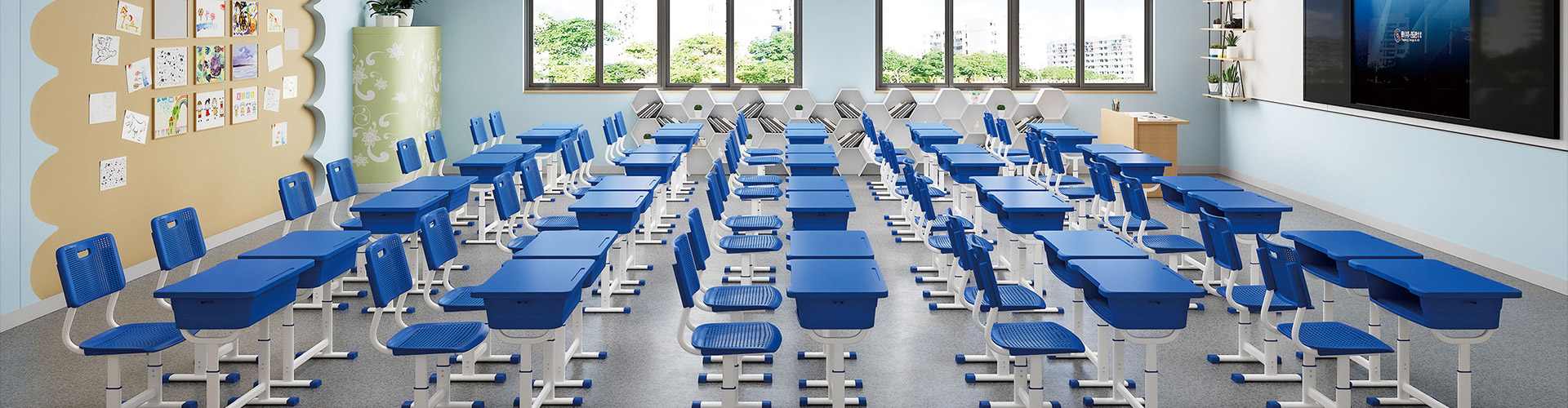
Selecting the right materials affects the durability, safety, maintenance cost, classroom flexibility, and environmental performance of every desk, chair, table, and storage unit. In this guide to Common Materials Used in School Furniture Manufacturing, I explain how manufacturers process, finish, assemble, and test the main material categories used in educational furniture. I also compare practical service-life factors, repair requirements, climate suitability, and total cost of ownership.
For buyers reviewing suppliers, material names alone are not enough. A “wood desk” may use solid wood, plywood, MDF, particleboard, or a laminate-covered composite panel, while a “metal chair” may differ significantly by steel gauge, weld quality, coating thickness, and corrosion protection. I recommend evaluating the complete construction rather than selecting a product based only on appearance or initial price.
!
The most common materials are steel, solid wood, plywood, MDF, particleboard, plastic, laminate, and mixed-material assemblies. Steel is generally used for structural frames, wood-based panels form desk and table surfaces, and polypropylene or ABS plastic is common in molded student chairs. Laminate and melamine are surface finishes rather than structural materials, while composite products combine panels, frames, coatings, and hardware.
The best selection depends on student age, classroom type, cleaning practices, humidity, transport requirements, expected use intensity, budget, safety requirements, and repair access. A primary classroom may need lightweight, rounded, easy-clean furniture, while a technical laboratory may require chemical-resistant work surfaces and reinforced frames. For institutional buyers, the correct material combination normally provides better results than using one material throughout an entire school.
| Material | Typical application | Main advantages | Main limitations |
|---|---|---|---|
| Powder-coated steel | Desk and chair frames, bases, supports | Strong structure, recyclable, suitable for high-use areas | Can corrode if coating or weld protection fails |
| Solid wood | Tabletops, chair parts, auditorium components | Repairable, natural appearance, strong when properly dried | Heavier, affected by moisture, requires consistent finishing |
| Plywood | Desk tops, seats, writing tablets | Layered strength, stable dimensions, good screw holding | Edge sealing and grade selection are important |
| MDF | Desk panels, cabinet doors, molded profiles | Smooth surface, uniform machining, cost control | Sensitive to water if edges are unsealed |
| Particleboard | Affordable tables, storage, cabinet panels | Low material cost, efficient panel production | Lower moisture resistance and screw-holding capacity |
| Polypropylene | Student chairs, seat shells, tablet surfaces | Lightweight, washable, moldable, available in many colors | Can become brittle under unsuitable UV exposure or formulation |
| ABS plastic | Chair shells, edges, writing tablets, protective components | Impact resistance, smooth finish, precise molding | Usually costs more than basic polypropylene |
| Laminate or melamine | Desk and table surfaces | Scratch resistance, stain resistance, easy cleaning | Damaged edges can allow moisture into the panel |
| Recycled plastic | Chairs, outdoor or flexible learning furniture | Diverts material from disposal, washable, weather-tolerant options | Recycled content and performance must be verified |
Solid wood is used for selected tabletops, chair components, armrests, auditorium seating, and furniture that requires a natural visual finish. Common species vary by region, but manufacturers must control moisture content, grading, joint design, and finishing before assembly. Properly dried wood can be sanded and repaired, although it is heavier than many molded or panel-based alternatives.
Plywood is often a practical choice for school desks because its cross-laminated layers improve dimensional stability and screw retention compared with some lower-density panels. Manufacturers cut plywood with CNC equipment or panel saws, seal the edges, sand exposed surfaces, and apply laminate, paint, veneer, or another finish. The supplier should identify panel thickness, grade, number of layers, formaldehyde-emission class where applicable, and the type of adhesive used.
MDF provides a smooth, uniform surface for painted desks, cabinet doors, and shaped components. It machines consistently and avoids some natural grain variation, but exposed edges require sealing because water can cause swelling. Particleboard is often selected for cost-sensitive tables and storage units, but it should be specified with appropriate density, edge banding, fasteners, and moisture protection for classroom environments.
Powder-coated steel is one of the most widely used materials for school furniture frames because it supports repeated loading, movement, and daily handling. Tubular steel is cut, bent, drilled, and welded before surface preparation and powder coating. The final specification should include tube dimensions, wall thickness or steel gauge, weld inspection criteria, coating type, corrosion testing, and the design load for the finished product.
Aluminum is useful when low weight and corrosion resistance are priorities. It is commonly used for mobile tables, folding components, chair supports, and transport-oriented furniture, but its performance depends on alloy selection, joint design, and connection hardware. Aluminum may reduce lifting effort, while steel usually provides a greater margin for heavy-duty frame applications at comparable dimensions.
Powder coating creates a dry-finished protective layer that can improve resistance to scratches, cleaning, and oxidation when the metal is correctly prepared. It does not eliminate corrosion risk if water enters through damaged coating, unsealed tube ends, poor welds, or exposed cut edges. For coastal schools, humid regions, and facilities using frequent wet cleaning, buyers should request salt-spray or corrosion-test information and inspect sample welds before approving production.
Polypropylene is common in classroom chairs because it can be injection molded into a contoured shell with rounded edges and a consistent surface. It is light enough for students and staff to move, resists many everyday spills, and can be produced in multiple colors. Manufacturers should state the resin type, ultraviolet stabilizer where outdoor or sun-exposed use is expected, wall thickness, weight rating, and whether the material includes recycled content.
ABS plastic is used when a harder surface, sharper molded detail, or higher impact resistance is required. It may appear in chair shells, desk edges, writing tablets, caps, and protective components. Plastic parts are normally produced through injection molding, followed by trimming, inspection, and assembly with steel frames or fasteners.
Laminate is a surface layer rather than a structural core. High-pressure laminate may be bonded to plywood, MDF, or particleboard to create a desk surface that resists stains, abrasion, and routine cleaning. Melamine-faced panels provide a similar visual and maintenance function, but buyers should check surface thickness, edge treatment, adhesive quality, and the panel’s moisture resistance rather than treating all laminated products as equivalent.
Composite construction combines materials to balance performance and cost. A typical school desk may use a powder-coated steel frame, plywood or MDF core, laminate top, ABS edge band, and nylon or polypropylene feet. This approach allows manufacturers to place each material where it provides the most useful function, but it also creates more interfaces that must be inspected during assembly and long-term maintenance.
There is no single best material for every desk and chair. For high-traffic classrooms, I generally recommend a powder-coated steel frame combined with a sealed plywood, MDF, or laminate work surface, depending on the moisture and budget requirements. For younger students, molded polypropylene chairs with rounded edges can reduce lifting effort and simplify cleaning, while adjustable steel frames can support changing student sizes.
| Requirement | Suitable material combination | Reason |
|---|---|---|
| Elementary classrooms | Polypropylene chair shell and rounded steel frame | Lightweight handling, washable surfaces, stable support |
| High-use secondary classrooms | Powder-coated steel frame and laminate-covered plywood | Strong structure and practical surface maintenance |
| Science or technical laboratories | Chemical-resistant laminate and reinforced steel | Better resistance to spills and repeated cleaning |
| Flexible learning rooms | Aluminum or light steel frame with molded plastic components | Easier movement and frequent reconfiguration |
| Humid or coastal climates | Galvanized or well-protected steel, sealed panels, plastic components | Reduced moisture-related deterioration |
| Budget-constrained projects | Particleboard or MDF with sealed edges and protective laminate | Lower initial cost when moisture exposure is controlled |
| Premium or heritage interiors | Solid wood, plywood, veneer, and steel reinforcement | Repairable construction with a traditional appearance |
Durability depends on the complete assembly, not only on the material label. A thick panel can fail at an unsealed edge, and a strong steel frame can become unstable if the welds, fasteners, or floor glides are underspecified. I assess durability through load capacity, repeated-use testing, surface abrasion, moisture resistance, joint strength, coating adhesion, and the availability of replacement parts.
Maintenance requirements should be matched to the school’s cleaning routine. Smooth polypropylene, ABS, laminate, and powder-coated surfaces are generally easier to wipe than unfinished wood or fabric upholstery. However, cleaning chemicals can damage some coatings, so the supplier should identify approved cleaning agents, maximum exposure conditions, and instructions for disinfectant use.
Climate also changes material selection. In humid locations, sealed panel edges, moisture-resistant cores, corrosion-protected steel, and non-absorbent plastic components reduce risk. In classrooms with strong direct sunlight, UV-stabilized plastic and light-resistant finishes are more appropriate than unprotected materials that may discolor or become brittle.
The manufacturing process normally begins with material inspection and cutting plans that control dimensions and waste. Steel components are cut, formed, welded, deburred, cleaned, and coated, while panels are cut, drilled, edge-sealed, surfaced, and finished before assembly. Plastic parts are molded, trimmed, checked for defects, and joined to frames or hardware according to the product design.
Testing should cover both individual materials and the finished product. Useful checks include dimensional tolerance, weld appearance, coating adhesion, surface abrasion, edge impact, static load, repeated sit cycles, tipping resistance, fastener security, and stability on uneven floors. WINNER describes a production system using 50 robot arms, three quality inspections before shipment, 120-kilogram chair load testing, and more than 200,000 sit-cycle fatigue tests for its chair products.
Supplier verification is essential before approving a large order. I recommend requesting the following information in writing:
Eco-friendly materials for school furniture manufacturing include certified wood, recycled plastic, recyclable steel, recyclable aluminum, low-emission MDF, and durable finishes that extend product life. Sustainability should be measured across the entire product cycle rather than judged by one recycled-content claim. A material that lasts longer, can be repaired, and has an established recycling route may produce a lower overall environmental burden than a cheaper product requiring frequent replacement.
Certified wood and plywood can support responsible sourcing when the chain of custody is documented. Recycled plastic may be suitable for chair shells and outdoor furniture, but buyers should confirm the percentage of post-consumer or post-industrial content, color consistency, impact performance, and end-of-life options. Steel and aluminum are also practical choices because they can be separated from mixed assemblies and recycled through established metal-processing systems.
Low-emission panels and water-based finishes can reduce indoor chemical exposure, but the supplier should provide the applicable test classification rather than using broad terms such as “green” or “non-toxic.” Furniture should also be designed for disassembly, with replaceable glides, seats, tabletops, and fasteners where possible. Repairable construction can reduce replacement cost and extend the useful life of classroom furniture.
Initial price is only one part of the purchasing decision. A low-cost particleboard desk may be suitable for a dry, low-intensity room, but replacement costs rise if moisture damage occurs within two years. A more expensive laminate-covered plywood surface or reinforced steel assembly may produce a lower annual cost when it lasts longer, requires fewer repairs, and retains usable components after partial damage.
I recommend comparing each quotation using five measures: purchase price, expected service life, annual maintenance burden, repairability, and replacement cost. Include freight weight, packaging damage, spare parts, cleaning supplies, labor for repairs, and disposal costs. Suppliers should provide a warranty period and define which components are covered, because a frame warranty may not include panels, upholstery, casters, or surface finishes.
WINNER, identified as China's Leading School Furniture Manufacturer, produces school desks and chairs, training chairs, training tables, auditorium seating, and related public seating products. Its published manufacturing information identifies Foshan Winner Furniture Co., Ltd., more than 20 years of manufacturing experience, a 50,000-square-meter facility, 50 robot arms, and OEM/ODM support for customized sizes, colors, materials, and configurations.
For material-focused procurement, WINNER’s stated options include molded polypropylene seats, powder-coated steel frames, solid wood components, plywood, PP plastic, and material selections matched to durability and budget requirements. The company also describes sample development, CAD and 3D design support, physical samples within 7–15 days for approval, mass-production lead times of 25–45 days depending on order volume, and 100% inspection before packing for OEM projects.
These figures should still be confirmed against the specific quotation, product model, destination, and contract terms. Buyers should request a construction drawing, bill of materials, coating information, test documentation, packaging details, warranty conditions, and a physical sample before placing a large school furniture order.
Common Materials Used in School Furniture Manufacturing include steel, solid wood, plywood, MDF, particleboard, polypropylene, ABS plastic, laminate, and recycled or certified alternatives. The correct choice depends on classroom age group, usage intensity, humidity, cleaning chemicals, UV exposure, mobility requirements, budget, safety requirements, and the school’s maintenance capacity.
For most high-use classrooms, a powder-coated steel frame with a sealed engineered-wood or laminate surface provides a practical balance of structure, maintenance, and cost. Molded polypropylene is useful for lightweight student chairs, while plywood and solid wood offer repairability and a more traditional finish when moisture is controlled. I recommend comparing material specifications, testing reports, warranty coverage, service-life assumptions, and replacement-part availability before approving a supplier.
A disciplined selection process should finish with sample inspection and written verification of thickness, grade, steel gauge, coating, recycled content, load capacity, and applicable safety requirements. This approach helps schools select durable, maintainable, and environmentally responsible furniture instead of relying on material names or appearance alone.
Latest News
Oct. 28 2026
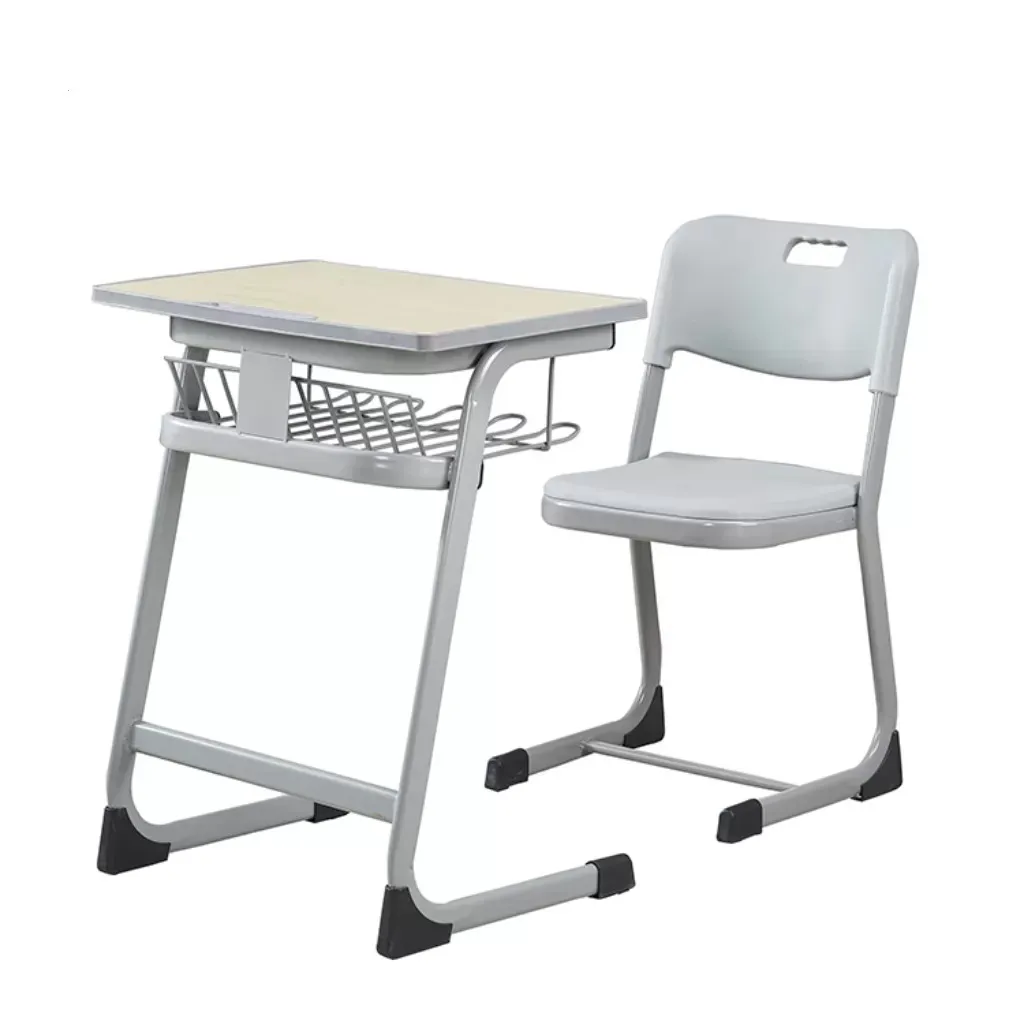
Metal Frame vs Plastic Frame Student Chairs: Performance Comparison
Metal Frame vs Plastic Frame Student Chairs: Performance Comparison covering durability, comfort, storage, maintenance, cost, and buyer checks for school procurement teams.
Oct. 26 2026
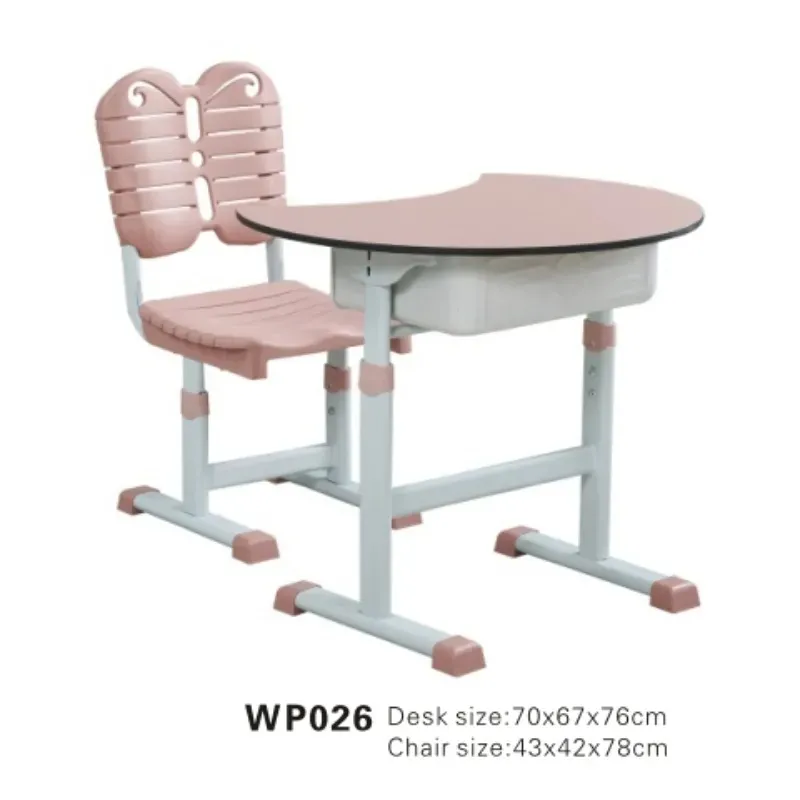
Public Seating Solutions for Large Educational and Commercial Spaces
This Public Seating Solutions guide compares WINNER, Virco, KI, and Steelcase for schools, campuses, offices, auditoriums, libraries, and other high-traffic facilities.
Oct. 22 2026
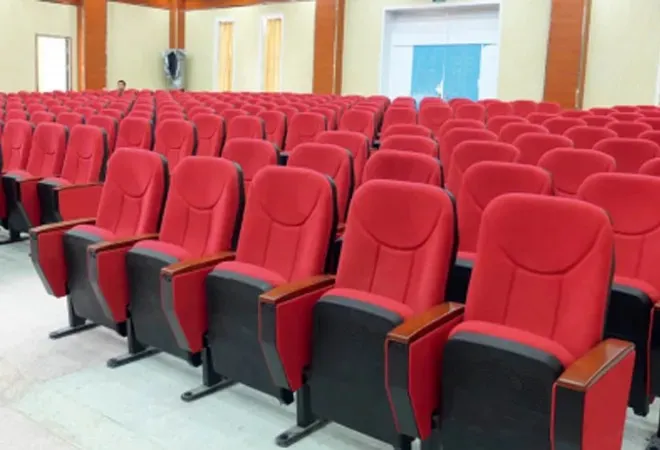
Auditorium Seating Solutions for Schools and Public Institutions
This guide explains auditorium seating solutions for schools and public institutions, covering seating types, capacity planning, accessibility, pricing, procurement, installation, and lifecycle value.
Oct. 21 2026
Common Materials Used in School Furniture Manufacturing
This School Furniture Materials Guide compares wood, metal, plastic, laminate, and composite materials by durability, maintenance, safety, cost, and sustainability.
Oct. 19 2026
School Furniture Quantity Planning for Different Classroom Sizes
This school furniture quantity planning guide explains how to calculate usable classroom capacity, select layouts, and specify desks, chairs, teacher stations, and storage.
BY YOUR SIDE
Our team works with you during every phase of the project.

Tel/Wechat/WhatsApp:
/
Email:
Quick Navigation
Quick Navigation
Stay in Touch
Stay in Touch


